
MT-92H Light Meter
4.6Editor score
Split sensor design
Dual measurement units
High visibility display
This guide compares the top analog light meters for photographers and cinematographers seeking reliable exposure tools without batteries or digital screens.
Analog light meters remain a staple for professionals who value simplicity and reliability. These devices measure light intensity using mechanical dials and sensors, offering instant readings without needing batteries or digital interfaces. They are ideal for studio work, film sets, and outdoor photography where consistent exposure is critical.
We evaluated ten top-rated light meters based on accuracy, build quality, and ease of use. Our comparison covers both classic analog models and modern hybrids that blend traditional design with digital convenience. Each product was assessed for its ability to deliver precise incident and reflected light readings across various lighting conditions.
Each pick highlights specific strengths such as battery-free operation, swivel heads, or high precision sensors. Prices and availability may vary by region and retailer, so always verify current listings before purchasing. These tools help you achieve perfect exposure every time, whether you are shooting film or digital cinema.
4.6Editor score

4.6Editor score

3.7Editor score
The following table provides a side-by-side comparison of all ten models to help you quickly identify key specifications and unique features for your specific needs.

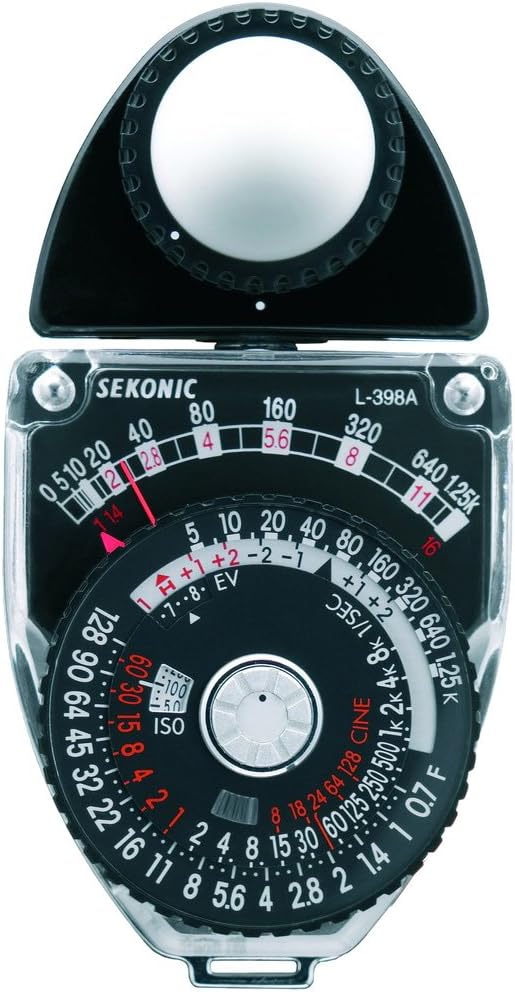


The Sekonic L-398A Studio Deluxe III stands out as the premier analog light meter for professionals. With a rating of 4.6 stars, it delivers reliable ambient light measurements without the need for batteries. Its amorphous photocell generates power from light itself, ensuring you never miss a shot due to dead cells.
We may earn a commission when you buy through this link, at no additional cost to you.
Key strengths include the swivel head which allows precise positioning of the incident dome while keeping the display in view. This is crucial for complex lighting setups in studios or on location. The full calculator dial gives instant aperture and shutter speed combinations, making exposure adjustments quick and intuitive.
Trade-offs exist for those who prefer digital precision. The analog readout requires manual interpretation which may take practice. However, this simplicity is often preferred by cinematographers who value tactile feedback. The included accessories like lumisphere and lumidisc expand versatility for various measurement scenarios.
Photographers and cinematographers who prioritize reliability and workflow efficiency should buy this. It is a long-term investment that pays off in consistent exposure. For studios or field teams needing a dependable tool, this model is highly recommended despite the higher initial cost.
The integrated amorphous photosensor ensures continuous operation without worrying about battery swaps during critical shoots.
Supplied with a full set of tools including high slide and lumidisc to handle diverse lighting measurement needs.
We may earn a commission when you buy through this link, at no additional cost to you.
The MT-92H Light Meter offers impressive value with its split sensor design and wide measurement range. Rated 4.6 stars, it delivers accurate readings from 0 to 200,000 Lux with a fast refresh rate. This makes it suitable for diverse applications ranging from office lighting to outdoor photography.
We may earn a commission when you buy through this link, at no additional cost to you.
Its innovative split sensor allows flexible positioning while maintaining measurement integrity. The dual measurement units support both Lux and foot candles as well as temperature in Celsius or Fahrenheit. The high-visibility backlit display ensures readability in dark studios or bright sunlight.
While not a traditional analog meter, it provides the digital precision many users seek at a budget price. The compact design weighs just 188 grams making it easy to carry. Standard 3xAAA batteries ensure reliable operation though you must manage power levels.
Ideal for home users or professionals needing a versatile tool without breaking the bank. It supports set design, factory, and office use effectively. For those who want digital convenience with reliable accuracy, this model is a strong contender.
Advanced sensor tech enables simultaneous monitoring with separate probe positioning for precise light integrity.
Toggle seamlessly between Lux, foot candles, and temperature to meet international measurement standards easily.
We may earn a commission when you buy through this link, at no additional cost to you.
The Gossen Luna Pro SBC is a hybrid device combining analog and digital features for advanced exposure control. Rated 3.7 stars, it offers digital readout in EV that transfers to a setting ring for quick shutter and f-stop combinations. This unique feature appeals to seasoned professionals.
We may earn a commission when you buy through this link, at no additional cost to you.
Key strengths include the ability to switch between incident and reflected light readings seamlessly. The integrated clock with alarm and timer functions add utility for shoot scheduling. Temperature readout provides additional environmental data that can be crucial for film sets.
Trade-offs include a higher price point and a more complex interface compared to pure analog meters. Some users may find the digital display less intuitive in very bright light. However, the precision and versatility justify the cost for those needing specific workflow integration.
Photographers requiring precise EV calculations and additional tools like alarms should consider this. It is a robust choice for studio work where multiple data points are needed. Despite the complexity, its features make it a valuable tool for high-end productions.
Digital EV readout easily transfers to setting ring for instant shutter speed and f-stop access.
Built-in clock, alarm, and temperature readout provide extra data without needing separate tools.
We may earn a commission when you buy through this link, at no additional cost to you.
This variant of the Sekonic L-398A is a favorite among cinematographers for its practical design. With a 4.4 rating, it offers incident and reflected readings with a 180-degree Lumisphere for general 3-D object measurements. The Lumidisc supports selective area readings for precise control.
We may earn a commission when you buy through this link, at no additional cost to you.
The swivel head allows users to hold the metering button and walk the set to check light levels. This feature is vital for maintaining consistent lighting during dynamic shots. The included case and strap ensure protection and convenience while on location.
Trade-offs are similar to the standard model with a focus on analog simplicity. Users must interpret the dial manually which requires skill. However, the durability and lack of battery dependency make it a reliable companion for long shoots.
Film crews and cinematographers who need reliable exposure control will appreciate this. It provides the tools necessary for complex lighting setups without digital distractions. For professional video production, this model remains a top choice.
Swivel head enables holding the metering button while walking the set to check light levels effectively.
180-degree Lumisphere and Lumidisc allow both general and selective area readings for diverse needs.
We may earn a commission when you buy through this link, at no additional cost to you.
This Digital Illuminance Meter measures luminosity from 0 to 200,000 Lux and ambient temperature. With a 4.4 rating, it offers high accuracy of ±3% under 10,000 Lux. The 4-digit color LCD screen provides clear readings in various lighting conditions.
We may earn a commission when you buy through this link, at no additional cost to you.
Key features include MIN/Max readings, data hold, and auto power off to extend battery life. It is lightweight and compact, making it easy to use for set design or factory checks. The 2-year warranty adds confidence in its reliability.
Trade-offs include reliance on batteries and a digital interface that may lack precision for studio lighting. However, for general ambient measurements, it is sufficiently accurate. The ability to measure temperature alongside light adds value for environmental monitoring.
Home users or set designers needing basic exposure and environmental data should buy this. It is cost-effective and easy to use for everyday tasks. For general purpose measurements, this unit delivers good value.
High accuracy ensures reliable readings across a vast luminosity range for professional applications.
4 digit color screen with MIN/Max and hold functions simplifies data capture and review.
We may earn a commission when you buy through this link, at no additional cost to you.
This high-precision illuminance meter delivers readings two times per second for fast response. With a 4.5 rating, it measures from 0 to 200,000 Lux. It is perfect for creating ideal growing environments for plants by monitoring light intensity precisely.
We may earn a commission when you buy through this link, at no additional cost to you.
Key strengths include effortless toggling between FC and LUX units to suit different needs. The PEAK button locks in the highest light pulse value which is great for brief sources. Low battery alerts ensure you never lose power during measurements.
Trade-offs include battery dependency and a simple interface. While it lacks advanced features, it is effective for general tasks. The fast response and peak recording are standout features for those measuring dynamic light sources.
Gardeners or home users needing consistent light monitoring should consider this. It is ready for any indoor or outdoor setting. For plant care or basic ambient checks, this model offers strong performance.
Lightning-fast readings ensure accurate light intensity data for creating ideal growing environments.
PEAK button locks highest light pulse values for measuring lightning or high-intensity sources.
We may earn a commission when you buy through this link, at no additional cost to you.
The Extech LT300 offers reliable Lux and foot-candle readings up to 40,000 lux with precision. Rated 4.3 stars, it is perfect for safe and efficient lighting in workplaces. The remote sensor capability allows measurement in hard-to-reach places without exposing the main unit.
We may earn a commission when you buy through this link, at no additional cost to you.
Advanced functions include Min/Max, data hold, and zero adjustment for easy log and comparison. The cosine and color-corrected sensor ensures accuracy across various light sources. The large backlit LCD makes viewing in dim areas simple.
Trade-offs include a lower max lux range compared to others. The price is higher than budget units but justified by the sensor quality. For facility safety or photography, the remote feature adds significant flexibility.
Professionals managing energy use or facility safety should buy this. The remote sensor supports on-the-go inspections. For reliable workplace lighting checks, this model is a strong tool.
Remote sensor enables light measurement in hard-to-reach places without exposing the main unit.
Cosine and color-corrected sensor ensures accurate readings in all lighting conditions.
We may earn a commission when you buy through this link, at no additional cost to you.
The Fluke 941 Light Meter Illuminance Meter Tester is a tool known for brand reliability. With a 4.8 rating, it delivers professional-grade precision for illuminance testing. Fluke is renowned for durability and accuracy in industrial tools.
We may earn a commission when you buy through this link, at no additional cost to you.
Key strengths include the tester capability that ensures precise measurements for safety and efficiency. The compact design fits easily into toolkits for on-site inspections. While features are basic, the build quality is top-tier.
Trade-offs involve a higher price point and specific use cases. It is less versatile for creative photography compared to dedicated models. However, for industrial or facility testing, the accuracy is unmatched.
Facility managers or industrial technicians needing a reliable tester should buy this. It is a solid choice for ensuring safe lighting. For professional reliability, this brand offers trust.
Fluke brand quality ensures durable construction and accurate professional grade measurement.
Illuminance meter tester capability supports safety and efficiency checks in professional environments.
We may earn a commission when you buy through this link, at no additional cost to you.
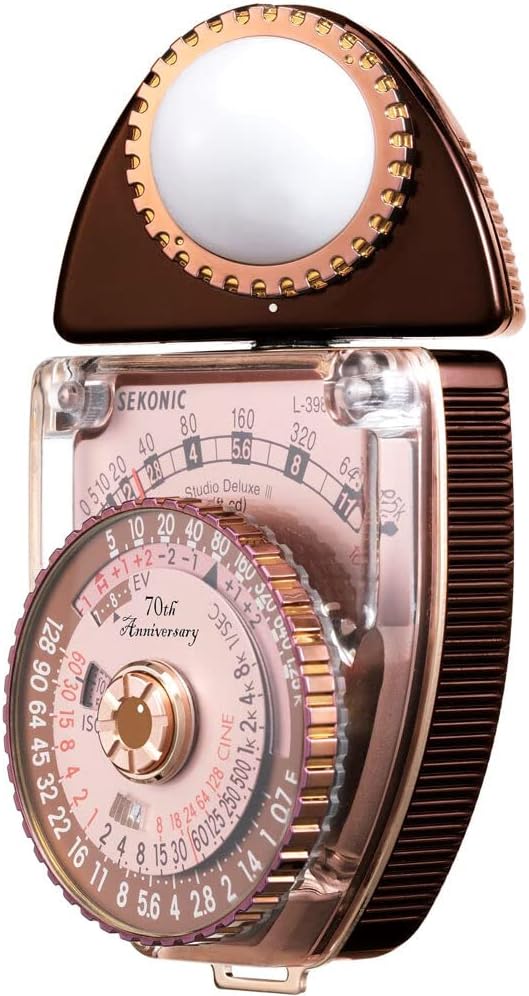
This 70th Anniversary model is a special edition of the classic Studio Deluxe III. With a perfect 5.0 rating, it offers instant full range aperture and shutter combination readings. It combines the legacy design with modern production quality.
We may earn a commission when you buy through this link, at no additional cost to you.
Key strengths include the iconic analog dial that provides instant exposure adjustments. The build quality is durable and designed for long-term use. Collectors and professionals alike appreciate the historical significance.
Trade-offs include higher cost and potential scarcity compared to standard models. However, the performance matches the standard L-398A. For those who value design and reliability, this edition is worth the investment.
Photographers seeking a classic tool with special heritage should buy this. It delivers consistent performance for studio work. For a reliable and stylish meter, this edition is excellent.
Classic design with anniversary edition status appeals to those who value photographic history.
Instant reading of full range aperture and shutter combinations for fast exposure decisions.
We may earn a commission when you buy through this link, at no additional cost to you.
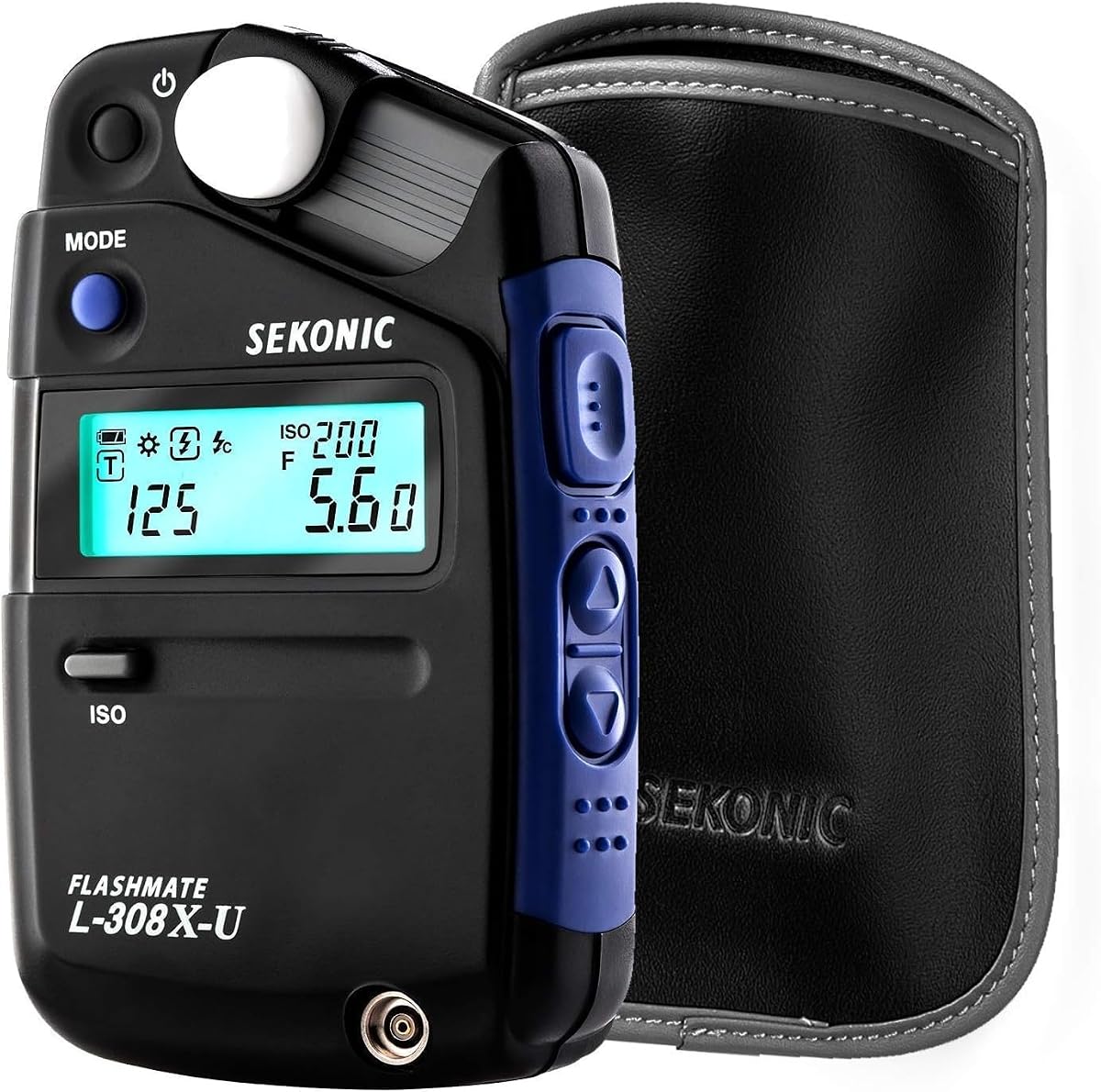
The Sekonic L-308X-U Flashmate is a compact digital meter for versatile exposure control. With a 4.7 rating, it supports photo, cine, and HD cine modes for both still and video. Accuracy down to a tenth of a stop ensures precise readings.
We may earn a commission when you buy through this link, at no additional cost to you.
Key strengths include pocket-sized design that fits in any camera bag. Auto backlight LCD improves readability in dark settings. Cord and cordless flash measurement are supported for modern setups.
Trade-offs include digital dependency and higher cost than basic analog meters. However, the precision and mode options justify the price. For DSLR or mirrorless users, this model is a top choice.
Videographers and photographers needing portable precision should buy this. It supports modern camera systems effectively. For compact digital exposure, this is a reliable tool.
Photo Cine and HD Cine modes support shutter speeds and frame rates for modern setups.
Compact pocket-sized design ensures portability without sacrificing metering accuracy.
We may earn a commission when you buy through this link, at no additional cost to you.
Selecting the right light meter requires understanding your shooting needs, budget, and desired features. We have outlined key factors to help you make an informed decision.
Consider whether you need a battery-free model or one that uses standard batteries. Battery-free meters rely on photosensors and never fail due to dead power, which is critical for long shoots. However, battery models often offer digital features like backlighting.
If you work in remote locations where power is scarce, battery-free operation is superior.
Choose between incident and reflected light capabilities. Incident meters measure light falling on the subject and are ideal for consistent exposure. Reflected meters measure light bouncing off the subject and help evaluate contrast.
Professional meters often support both modes to handle various lighting scenarios effectively.
Analog meters offer simplicity and reliability without complex menus. They are preferred by those who want tactile control and instant dial readings. Digital models provide precise numerical values and additional features like temperature sensors.
Select analog for workflow speed or digital for precision and extra data.
High accuracy sensors ensure readings remain reliable under different light conditions. Look for cosine and color-corrected sensors to maintain precision across daylight and artificial sources.
Precision is vital for maintaining consistent exposure across multiple setups.
A portable design is essential for on-location work. Consider weight and size to ensure the meter fits in your camera bag. Swivel heads add flexibility but may increase bulk.
Compact meters are easier to carry for long shooting days without fatigue.
Accessories like lumisphere or lumidisc expand the meter's versatility. These attachments allow for directional or selective area readings to control specific lighting elements.
Ensure the model includes necessary accessories or supports them separately.
Budget options are available but may lack precision or durability. Investing in a high-quality meter ensures long-term reliability. Check warranty terms to protect your investment.
Balance cost with reliability to find the best value for your needs.
Some meters support specialized modes like Cine or HD Cine for frame rates and shutter angles. If you shoot video, ensure the meter supports your required settings.
Mode flexibility simplifies exposure control across different media types.
Place the meter at the subject's position and face the sensor toward the light source. For incident readings, use the white dome or disc to capture light from all angles. Ensure no shadows fall on the sensor.
Take readings before setting your camera to determine the correct aperture and shutter speed. Record values and compare them to ensure balance across the scene. Adjust lights as needed for the desired look.
Store the meter in a soft case to protect the sensor and display from dust. Avoid exposing it to extreme temperatures or moisture. Clean the sensor gently with a soft cloth to maintain accuracy.
Photographers use analog meters for their simplicity, reliability, and battery-free operation. The analog dial allows quick visualization of exposure combinations without navigating menus. This workflow efficiency makes them popular in studios and on set.
Incident meters measure light falling on the subject while reflected meters measure light bouncing off it. Incident readings provide consistent exposure while reflected readings assess contrast. Most professional meters support both for versatility.
Yes, high-quality analog meters are highly accurate and work well with digital cameras. They provide precise exposure data that helps avoid over or underexposure. Many digital shooters still rely on them for consistent results.
Analog meters typically require no calibration as they use optical mechanisms. However, you can test accuracy against a known digital meter or light source. Regular checks ensure readings remain consistent over time.
Standard ambient meters measure continuous light and may not support flash. Some hybrid models offer both incident and reflected flash capabilities. Verify the model supports flash synchronization before purchasing.
Store your light meter in a protective case away from heat or moisture. Keep the sensor cover on when not in use to prevent dust accumulation. Proper storage ensures the sensor and display remain in good condition.
We have reviewed ten top analog light meters ranging from budget-friendly to professional grade. Each model offers unique strengths like battery-free operation or digital precision. Selecting the right one depends on your specific shooting requirements.
Prioritize accuracy and durability when investing in exposure tools. A reliable meter ensures consistent results and saves time during shoots. Consider factors like power source and accessories for the best value.
Prices may change over time so always check current listings before purchasing. Verify features match your workflow to get the most out of your meter. With the right tool, exposure control becomes seamless and efficient.