
Channel Master TV Antenna Signal Strength Meter
3.9Editor score
Supports all ATSC TV frequencies
Displays RF signal level and SNR
Built-in rechargeable battery
Finding the right cellular signal meter for antenna aiming is crucial for boosting connectivity in remote or weak signal areas. A quality device ensures your antenna is perfectly aligned for maximum signal strength and stability.
We compared ten top-rated meters based on frequency range, measurement accuracy, portability, and user feedback. Each product offers unique strengths suited for different installation needs and technical expertise levels.
Each pick highlights real-world performance and key specifications to help you choose confidently. Keep in mind that pricing and availability may change, so verify current details before purchasing.
3.9Editor score

4.3Editor score

4.6Editor score
As an Amazon Associate we earn from qualifying purchases.
This side-by-side comparison highlights the core specifications and capabilities of each cellular signal meter to help you quickly identify the best fit for your antenna alignment needs.


The SureCall Five-Band RF Signal Meter is a top-rated tool for antenna aiming, rated 4.3 stars by users. It delivers precise measurements across five cellular bands making it essential for signal booster setups.
We may earn a commission when you buy through this link, at no additional cost to you.
Its high receiving sensitivity of -110dBm ensures accurate detection even in weak signal areas. The rechargeable NiMH batteries provide up to 3.5 hours of continuous use with a controllable backlight for low-light conditions.
While it relies on NiMH batteries and carries a higher price, the reliability and band coverage justify the investment. The device excels where precision and endurance matter most during installation.
Ideal for professionals and DIYers installing cell phone signal boosters, this meter simplifies aiming with clear readouts. Its robust performance earns it a strong recommendation for antenna alignment tasks.
Covers PCS, Cellular, AWS, and LTE bands to ensure full compatibility with modern networks.
Rechargeable design with up to 3.5 hours of operation reduces downtime during installations.
We may earn a commission when you buy through this link, at no additional cost to you.
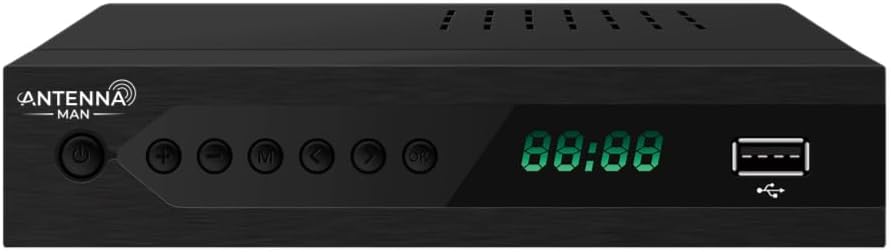
The Antenna Man Signal Meter focuses on over-the-air TV antenna alignment with real-time strength feedback. It includes an ATSC digital converter box and TV tuner for expanded functionality.
We may earn a commission when you buy through this link, at no additional cost to you.
Its plug-and-play design makes it accessible for beginners needing quick setup without complex configurations. Users appreciate the ability to get more channels with clear signal strength indicators.
Though limited to ATSC frequencies and offering basic features, it suits budget-conscious users targeting TV antennas. The added tuner enhances value for those seeking extra channel options.
Best for home TV installations, this meter balances simplicity and functionality. Its ease of use and affordable pricing make it a practical choice for basic antenna aiming.
Provides immediate visual cues to adjust antenna position for optimal reception.
No complicated setup required, allowing users to start testing right out of the box.
We may earn a commission when you buy through this link, at no additional cost to you.
The Berkeley Varitronics Octopus 4G LTE Cellular Signal Meter offers professional-grade accuracy with true RSRP RSRQ RSSI measurements. It supports all U.S. carriers without needing SIM cards or apps.
We may earn a commission when you buy through this link, at no additional cost to you.
Its advanced metrics ensure precise antenna aiming for EV charging stations IoT devices and boosters. Designed and manufactured in the U.S.A it stands out for reliability and comprehensive coverage.
The high price and complexity may be excessive for casual users, but professionals will value the detailed insights. Its lack of subscription requirements adds long-term value.
Best for commercial or technical installations, this meter delivers unmatched precision. Its robust features justify the investment for those needing reliable carrier-agnostic measurements.
Measures true RSRP RSRQ and RSSI for deeper insight into signal quality.
Works with all U.S. carriers without SIM cards or subscriptions for versatile testing.
We may earn a commission when you buy through this link, at no additional cost to you.
The RF Explorer Pro Spectrum Analyzer combines spectrum analysis power meter, and tracking generator in a portable unit. It features an 8-inch HD touchscreen for real-time visualization of RF signals.
We may earn a commission when you buy through this link, at no additional cost to you.
Its wide frequency range from 15MHz to 6.1GHz supports diverse testing needs. Modular design allows users to select configurations for specific RF analysis requirements.
Despite lacking rating data and having a steep learning curve, it delivers professional-grade performance. Advanced tools like GPS heatmaps enhance its utility for complex diagnostics.
Best for engineers and RF professionals, this analyzer offers exceptional versatility. Its portability and high-resolution display make field testing more efficient and accurate.
The 8-inch HD touchscreen provides clear real-time views of RF signals and measurement data.
Choose from 3.3GHz 6GHz or 7.5GHz setups to match specific RF analysis needs.
We may earn a commission when you buy through this link, at no additional cost to you.
The NetAlly AirCheck G3 Pro Kit excels in Wi-Fi 6/6E and Bluetooth testing with tri-band physical location detection. It includes an external directional antenna and spectrum analyzer adapter.
We may earn a commission when you buy through this link, at no additional cost to you.
Its 5-star rating reflects exceptional performance in site surveys and remote collaboration via Link-Live. Automated topology mapping streamlines network analysis and management tasks.
The high cost and specialized focus limit it to enterprise needs but justify the investment for critical services. Complete kit contents ensure readiness for demanding deployments.
Best for network engineers managing complex Wi-Fi environments, this kit offers unmatched capabilities. Its collaborative features save travel costs and speed up troubleshooting.
Quickly locate Wi-Fi access points and clients across 2.4GHz 5GHz and 6GHz bands.
Enable remote engineers to troubleshoot with on-site technicians via Link-Live platform.
We may earn a commission when you buy through this link, at no additional cost to you.
The Extech 480836 RF EMF Strength Meter measures high-frequency EMF from 50MHz to 3.5GHz with a non-directional isotropic probe. It stores up to 99 sets for manual recall.
We may earn a commission when you buy through this link, at no additional cost to you.
Its design targets EMF measurements of mobile phones base stations and microwave leakage. The triaxial probe ensures accurate multi-directional detection for safety assessments.
While excellent for EMF tasks it is less suited for cellular antenna aiming. The high frequency range and storage features add value for technical professionals.
Best for safety and EMF testing, this meter offers dependable readings. Its isotropic measurement capability makes it ideal for evaluating electromagnetic field exposure.
Non-directional probe provides consistent readings regardless of signal orientation.
Manually store and recall up to 99 measurement sets for tracking trends over time.
We may earn a commission when you buy through this link, at no additional cost to you.
The MINI1300 Antenna Analyzer supports 0.1 to 1300MHz coverage for HF VHF and UHF tuning with a 4.3 inch touch LCD. It offers single-point scanning and TDR modes for versatile measurements.
We may earn a commission when you buy through this link, at no additional cost to you.
Its portable design and low SWR measurement range make antenna tuning accessible for hobbyists and technicians. The touch screen enhances ease of use compared to button-only interfaces.
Firmware cannot be updated and cellular band support is limited. However, its affordability and feature set suit amateur radio and general antenna testing well.
Best for ham radio and HF antenna tuning, this analyzer balances performance and price. Its large display and compact size facilitate field and bench work.
The 4.3 inch LCD touching screen simplifies navigation and measurement selection.
Single-point frequency sweep and TDR modes provide flexibility for different tuning needs.
We may earn a commission when you buy through this link, at no additional cost to you.
The SA6 6GHz Portable Spectrum Analyzer integrates spectrum analysis and signal generation in a handheld unit. It covers 35 to 6200MHz for testing Wi-Fi LTE GSM and GLONASS signals.
We may earn a commission when you buy through this link, at no additional cost to you.
Its 3.2-inch color touchscreen and physical buttons offer flexible control. The rechargeable battery provides 3 to 4 hours of runtime with USB-C connectivity for PC logging.
Lacking rating data the unit delivers solid portability and broad frequency coverage. The tracking generator supports component analysis adding value for repair and debug tasks.
Best for field technicians needing versatile RF testing, this analyzer is compact and capable. Its dual functionality simplifies troubleshooting and signal validation.
Built-in signal generator allows instant switching to analyze filters and amplifiers.
Compact and lightweight at 380g for easy carrying during on-site RF testing.
We may earn a commission when you buy through this link, at no additional cost to you.
The For Sa6 6GHz Handheld analyzer offers comprehensive RF analysis from 35 to 6200MHz with integrated tracking generator support. It includes accessories like extension cables and a stylus for immediate use.
We may earn a commission when you buy through this link, at no additional cost to you.
Its rugged compact housing supports real-time spectral measurements with rapid full-span scans. The battery delivers up to 3 hours of runtime for field evaluations.
Lacking rating data and brand recognition it compensates with affordability and accessory completeness. Fast scan speeds make it practical for quick RF environment assessments.
Best for technicians seeking value, this analyzer provides essential features without premium costs. The included accessories ensure readiness straight out of the box.
Enables SWR and return loss measurements with optional directional coupler.
Less than 0.25 sec full-span scans below 100MHz for rapid RF assessments.
We may earn a commission when you buy through this link, at no additional cost to you.
The Channel Master TV Antenna Signal Strength Meter supports all over-the-air ATSC TV frequencies in the USA with clear displays of RF signal level and SNR. It includes a stylus pen and carrying case.
We may earn a commission when you buy through this link, at no additional cost to you.
Its color touch-screen and built-in rechargeable battery enhance user convenience. The affordable price and comprehensive kit make it accessible for home antenna installations.
While limited to ATSC frequencies and offering basic functionality it meets core alignment needs. The included carrying bag and stylus add practical value for daily use.
Best for budget-conscious TV antenna setups, this meter delivers reliable performance. Its simple interface and complete accessories simplify installation for DIY users.
Shows both signal level and signal-to-noise ratio for precise alignment.
Includes stylus pen and protective carrying case for convenience.
We may earn a commission when you buy through this link, at no additional cost to you.
Selecting the right cellular signal meter depends on your specific installation needs technical expertise and budget. This guide outlines key factors to consider.
Ensure the meter supports the bands used by your cellular carrier or device such as LTE PCS AWS or 5G. Limited coverage may prevent accurate aiming for modern networks.
Look for multi-band meters to future-proof your installation and support multiple carriers.
Accuracy determines how precisely the meter reflects signal strength. Tools showing true RSRP RSRQ or RSSI provide deeper insight than simple strength indicators.
Prioritize devices with high sensitivity to detect weak signals reliably during alignment.
Field installations require lightweight devices with sufficient battery runtime. Rechargeable batteries or long-lasting cells reduce interruptions during extended work.
Choose meters weighing under 500g with 3 or more hours of continuous use.
A clear display with intuitive controls speeds up setup and reduces errors. Touchscreens or large LCDs enhance visibility outdoors or in low light.
Opt for models with backlighting or high-contrast screens for better readability.
Verify compatibility with your target carriers without needing SIM cards or subscriptions. Universal support avoids extra costs and simplifies testing.
Meters supporting all U.S. regional carriers offer the most flexibility.
Features like tracking generators TDR modes or GPS heatmaps add value for advanced diagnostics. Consider if these capabilities align with your technical needs.
Avoid overly complex tools if basic signal strength reading suffices for your tasks.
Rugged housings protect against drops and weather during outdoor installations. Quality materials ensure the meter withstands field conditions over time.
Check for IP ratings or reinforced designs if using in harsh environments.
Balance price with included accessories and warranty support. Some kits come with cases cables or tools that save additional expenses.
Select meters with at least a one-year warranty to protect your investment.
Begin by powering on the meter and selecting the correct frequency band for your cellular carrier. Connect any external antennas securely to ensure accurate signal detection.
Move the antenna slowly while watching the signal strength display or readout. Note peaks where the signal is strongest and adjust accordingly to lock in alignment.
Store the meter in its case away from extreme heat or moisture. Regularly charge batteries and clean the screen and connectors to maintain optimal performance.
A cellular signal meter measures RF signal strength to help align antennas for optimal connectivity. It ensures boosters or antennas point toward the strongest cell tower signals.
Most professional meters like the Berkeley Varitronics Octopus work without SIM cards. Budget options may require carrier-specific setups, so check product details before buying.
Look for meters covering LTE PCS AWS and 5G bands used by major carriers like Verizon AT&T and T-Mobile. Multi-band support ensures compatibility with current networks.
Some meters like the Channel Master focus on ATSC TV frequencies. Ensure the device supports cellular bands if your goal is to boost cell phone signals.
Budget meters offer general signal strength indicators while professional ones provide detailed metrics like RSRP. Accuracy varies, but higher-end models deliver more precise data for tuning.
Most handheld meters come pre-calibrated for immediate use. High-end analyzers may need periodic calibration for lab-grade accuracy, but typical installation tools do not.
The SureCall Five-Band RF Signal Meter Berkeley Varitronics Octopus and Channel Master meter stand out for their balance of features and performance across different budgets.
Prioritize frequency coverage accuracy and portability to ensure your meter meets specific installation demands without unnecessary complexity or cost.
Always check current pricing and availability as details may change. Selecting the right tool will simplify antenna aiming and improve your signal quality.