
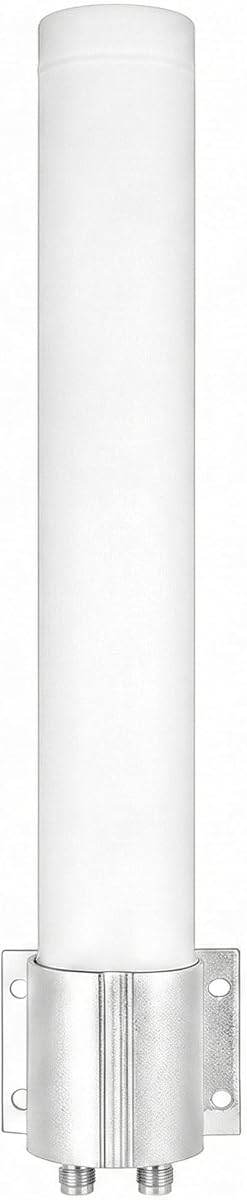
Poynting Omni-496 Dual Band WI-FI Marine Antenna
5.0Editor score
Dual-band Wi-Fi support
Saltwater resistant design
8 dBi maximum gain
Compare the top 10 marine WiFi antennas for boats and yachts to find the best dual band outdoor signal booster for reliable connectivity.
Marine WiFi antennas are essential for maintaining reliable internet connectivity while on the water. These specialized devices extend range and signal strength to keep you connected during voyages or at anchor in remote areas.
We evaluated ten top-rated models based on durability, gain specifications, and weather resistance. Our analysis focuses on antennas designed specifically for marine environments to ensure consistent performance in harsh conditions.
Each selection highlights unique features and performance capabilities suited for different maritime needs. Prices vary based on specifications and features so always verify current availability before making your final purchasing decision.
5.0Editor score
4.5Editor score

4.7Editor score
This side-by-side comparison highlights key specifications across all ten selected marine WiFi antennas to help you identify the best fit for your vessel and connectivity requirements.


The Poynting Omni-496 stands out as the premium choice for serious boaters seeking reliable internet connectivity. Its perfect rating reflects exceptional build quality and performance in demanding marine environments.
We may earn a commission when you buy through this link, at no additional cost to you.
This antenna supports Wi-Fi 6E and Wi-Fi 7 along with 5G frequencies offering future proof capabilities. The robust fiberglass housing resists UV and saltwater corrosion ensuring long-term durability.
While the price is higher than standard options the investment ensures you maintain stable connections even in rough weather conditions. The included mounting brackets fit standard marine rails easily.
Ideal for yacht owners and commercial vessels needing dependable high-speed data at sea. This model delivers professional-grade performance where reliability is non-negotiable.
Supports Wi-Fi 6E and Wi-Fi 7 ensuring compatibility with latest routers and devices.
IP68 rating and salt spray testing guarantee operation in harsh coastal conditions.
We may earn a commission when you buy through this link, at no additional cost to you.
The Pro-Gain antenna offers enterprise-level performance at a competitive price point making it a favorite among remote users and boaters. Its optimized VSWR ensures minimal signal reflection for maximum efficiency.
We may earn a commission when you buy through this link, at no additional cost to you.
Designed to penetrate dense obstacles this antenna maintains stable speeds even in challenging environments like wooded coves. The MIMO connectivity supports high throughput for multiple devices simultaneously.
Installation requires specific low-loss cables to maximize performance which adds to the total cost. However the stability gains justify the extra effort for critical connectivity needs.
Best suited for remote dock setups or boats requiring consistent video conferencing and streaming. This model balances performance and price effectively for demanding applications.
VSWR below 1.8 minimizes reflection loss improving overall signal strength significantly.
Architectural fiberglass construction resists degradation from UV and salt spray exposure.
We may earn a commission when you buy through this link, at no additional cost to you.
The Eifagur antenna provides exceptional value with its high 9dBi gain at an accessible price point. This makes it an ideal upgrade for smaller vessels or budget conscious boaters.
We may earn a commission when you buy through this link, at no additional cost to you.
Its dual-band compatibility ensures it works with most modern routers and access points. The outdoor ready construction handles weather well though it lacks specialized saltwater treatments.
Installation is straightforward requiring no complex tools or custom cables. You can easily replace existing antennas to boost range without significant system modifications.
Perfect for casual cruisers or RVs near water needing extended WiFi range without breaking the bank. This option delivers strong performance for its price category.
The 9dBi gain significantly extends range compared to standard stock antennas.
Works with routers cameras and various wireless devices for flexible setups.
We may earn a commission when you buy through this link, at no additional cost to you.
The OMNI-496 offers a streamlined approach to marine connectivity focusing on essential dual-band performance. It delivers consistent omni-directional coverage suitable for varied boat orientations.
We may earn a commission when you buy through this link, at no additional cost to you.
With IP68 protection this antenna withstands heavy rain and salt spray effectively. The marine standard mount simplifies installation on most rail systems without extra hardware.
It lacks the advanced frequency range of higher end models but covers standard WiFi bands well. The absence of included L-brackets may require separate purchase for pole mounting.
Suitable for day boats and small yachts needing reliable internet access near shorelines. This model provides solid performance for general recreational boating needs.
360-degree radiation pattern ensures connectivity regardless of boat heading.
1-inch marine standard mount integrates seamlessly with existing rail fixtures.
We may earn a commission when you buy through this link, at no additional cost to you.
This 3-in-1 combination antenna simplifies deck wiring by combining cellular WiFi and GPS functions into one unit. The through-hole design keeps the deck clean and organized.
We may earn a commission when you buy through this link, at no additional cost to you.
With pre-attached leads installation is faster than running separate cables for each system. The weatherproof construction ensures all integrated elements remain protected from moisture.
The fixed cable length may limit placement options compared to custom run setups. Users should measure mounting locations carefully to ensure leads reach connection points.
Ideal for boats with limited space needing multiple connectivity types without clutter. This solution offers convenience for integrated navigation and communication systems.
Combines 4G LTE WiFi and GPS to reduce cable clutter on deck.
Through-hole mounting with pre-attached leads speeds up the setup process.
We may earn a commission when you buy through this link, at no additional cost to you.
The ALFA antenna delivers strong 9 dBi gain with a lightweight design that is easy to install on any vessel. Its fiberglass construction balances durability with minimal weight.
We may earn a commission when you buy through this link, at no additional cost to you.
The integrated N-Female connector allows for quick cable attachment reducing setup time. Weatherproofing ensures it withstands exposure to rain and sun without degradation.
Users must source their own coaxial cable for connection adding a step to the process. This might inconvenience those seeking a plug and play solution.
Recommended for DIYers who want high gain without excessive bulk or cost. It offers solid performance for general outdoor WiFi extension on boats.
Fiberglass construction makes it easy to mount without adding significant weight.
N-Female connector simplifies cable connections for standard setups.
We may earn a commission when you buy through this link, at no additional cost to you.
This antenna focuses on cellular connectivity but supports 5G and LTE networks essential for modern marina internet access. Its heavy-duty construction ensures survival in extreme marine conditions.
We may earn a commission when you buy through this link, at no additional cost to you.
Designed for federal and public safety applications it offers reliability suitable for critical maritime operations. The L-bracket mount provides a secure attachment point on vertical poles.
The 1-foot leads are shorter than some may prefer requiring additional extension cables for distant router connections. However quality materials justify the investment for critical systems.
Best for vessels relying heavily on cellular data for navigation and communication systems. This model offers proven performance for professional maritime applications.
TAA Compliant and approved by federal agencies for high reliability.
L-bracket design ensures stable attachment on vertical masts or rails.
We may earn a commission when you buy through this link, at no additional cost to you.
The Bingfu 2-pack offers an affordable solution for upgrading internal router antennas to external ones. It supports both 2.4GHz and 5GHz bands making it versatile for various devices.
We may earn a commission when you buy through this link, at no additional cost to you.
Compact design fits well in tight spaces aboard small boats without obstructing movement. The RP-SMA connector is common among consumer routers simplifying integration into existing networks.
With only 3dBi gain it provides modest improvement over stock antennas in strong signal areas. It is less suitable for remote boating where maximum range is critical.
Best for dockside setups or boats near shore with good baseline signal. This budget-friendly option works well for extending indoor coverage areas.
Includes two antennas allowing for dual-band MIMO setups easily.
Fits most consumer routers and wireless cards with RP-SMA ports.
We may earn a commission when you buy through this link, at no additional cost to you.
This 3-in-1 antenna combines 4G LTE and dual-band WiFi into a single roof mount unit. It offers a clean solution for integrating multiple connectivity options on board.
We may earn a commission when you buy through this link, at no additional cost to you.
The IP67 rating ensures it remains waterproof in heavy rain and ocean spray. Global frequency support makes it useful for international cruising without needing regional changes.
The included cables are relatively short which may require extension for larger vessels. Some users report mixed experiences with performance consistency across both bands.
Recommended for RVs or smaller boats needing an all-in-one connectivity solution. This model provides convenience for multi-mode wireless systems.
Merges two cellular antennas and one WiFi antenna for unified coverage.
Supports SMA and RP-SMA connectors for various router types.
We may earn a commission when you buy through this link, at no additional cost to you.
While primarily a VHF radio antenna this model is essential for marine safety and weather alerts. It covers Channel 16 and NOAA weather frequencies crucial for maritime safety.
We may earn a commission when you buy through this link, at no additional cost to you.
The built-in nylon ratchet mount allows quick folding for storage or low clearance. High-quality coaxial cable ensures clear transmission and grounding protection against interference.
It does not provide WiFi functionality but supports communication needs that complement internet access. Proper grounding is necessary for optimal transmitter performance.
Mandatory for vessels requiring VHF radio compliance and weather monitoring. This antenna ensures reliable communication for safety and coordination.
Covers Channel 16 and all NOAA weather channels for critical alerts.
Folds down easily to avoid damage in tight spaces or transport.
We may earn a commission when you buy through this link, at no additional cost to you.
Selecting the right antenna involves evaluating gain specifications weather resistance and connector types to ensure compatibility with your existing marine internet setup.
Gain measured in dBi indicates how much the antenna amplifies signal strength. Higher gain antennas like 8dBi or 9dBi extend range significantly compared to stock 3dBi units.
Look for at least 6 dBi for reliable offshore performance and 8 dBi or more for remote areas.
Marine environments demand robust protection against salt spray UV rays and rain. IP68 ratings ensure complete dust and water protection while UV-resistant materials prevent fiberglass degradation.
Always verify IP ratings before purchase to ensure long-term durability in coastal conditions.
Dual-band antennas supporting both 2.4GHz and 5GHz offer better flexibility for modern routers. Some advanced models also support 5G frequencies for cellular data integration.
Choose models that align with your router capabilities to avoid compatibility issues.
Common connectors include N-Type and RP-SMA which must match your router and cables. Mismatched connectors require adapters that can introduce signal loss if not high quality.
Verify your device ports and match the antenna connector type accordingly.
Marine adapters for rails and L-brackets for poles provide secure attachment on boats. Ensure the mounting hardware is included or available separately for your vessel type.
Choose brackets that fit standard 30mm to 50mm poles for easy installation.
Lead length affects placement flexibility especially on larger vessels with distant routers. Longer cables reduce signal loss but should be of low quality to maintain performance.
Check lead length and cable quality before purchasing to avoid additional costs.
Multiple Input Multiple Output technology allows simultaneous signal transmission improving throughput and stability. This is critical for video conferencing and multi-device usage on board.
Prioritize MIMO-capable antennas for high-demand internet applications at sea.
Fiberglass is preferred over plastic for its resistance to environmental damage and superior structural integrity. UV-resistant coatings prevent yellowing and degradation from sun exposure over time.
Invest in fiberglass models for long-term reliability in harsh marine climates.
Install the antenna as high as possible on a mast or rail to maximize line of sight with coastal routers. Secure all mounting points tightly to prevent movement from wind or waves.
Use high-quality coaxial cables to connect the antenna to your router avoiding kinks or tight bends that degrade signal quality. Check all connections regularly for corrosion and tighten as needed.
Clean the antenna periodically with fresh water to remove salt residue and prevent long-term buildup. Apply silicone tape to connectors in extreme conditions to maintain weatherproofing integrity.
Not all antennas work for marine use. Look for marine-grade models with IP68 ratings and saltwater resistant materials to ensure longevity and performance in harsh coastal conditions.
2.4GHz offers longer range but slower speeds while 5GHz provides faster data transfer over shorter distances. Dual-band antennas support both for flexible connectivity options on vessels.
Most marine antennas come with rails for boat rails or L-brackets for poles. Ensure your mounting surface matches the bracket dimensions for secure and stable installation.
High gain antennas amplify weak signals from distant land routers extending your internet range significantly. This is essential for staying connected while anchored far from shore.
Choose antennas with UV-resistant fiberglass housing and IP68 ratings. Rinse with fresh water after exposure and seal connectors with silicone to prevent corrosion over time.
Advanced dual-band models support 5G frequencies in addition to standard Wi-Fi bands. Check specifications to ensure compatibility with your cellular or hybrid internet setup.
Yes modern MIMO-enabled antennas support multiple simultaneous connections. This allows several users and devices to share the same internet connection effectively without lag.
With proper care fiberglass antennas can last several years. Inspect annually for cracks or corrosion and replace if performance drops or physical damage is observed.
The Poynting Omni-496 stands out for premium performance while the Eifagur model offers excellent value for budget-conscious boaters. Each antenna provides unique advantages tailored to specific maritime connectivity needs.
Prioritize weather resistance gain specifications and compatibility with your existing router setup. Investing in high-quality components ensures reliable internet access during every voyage.
Always check current product details and availability as specifications may vary by retailer. Verify warranty terms and installation requirements before finalizing your purchase decision.