
WWZMDiB 6 Pcs 5MM LDR Light Sensor
4.4Editor score
Combined with LM393 comparator
Adjustable threshold potentiometer
Digital and analog outputs
This guide compares the top light sensors for Arduino including LDR modules BH1750 sensors and photodiodes to help you choose the right device for your project.
Selecting the right light sensor for your Arduino project is crucial for accurate ambient light detection and automation. Whether you need simple threshold detection or precise lux readings, the right module ensures reliable performance across various applications ranging from smart homes to industrial monitoring systems.
We evaluated ten top-rated light sensor modules based on accuracy, compatibility, ease of use, and build quality. Our comparison includes photoresistors, digital light sensors, and photodiode modules to provide a comprehensive overview of what is currently available for makers and professionals alike.
Each pick highlights specific strengths and ideal use cases to help you make an informed decision for your next build. Keep in mind that availability and stock levels can change frequently so always verify current details before placing your order to ensure you get the exact model you need.
4.4Editor score
4.7Editor score
5.0Editor score
The following table provides a side-by-side comparison of all ten products to help you quickly identify key specifications and features for your specific project needs.


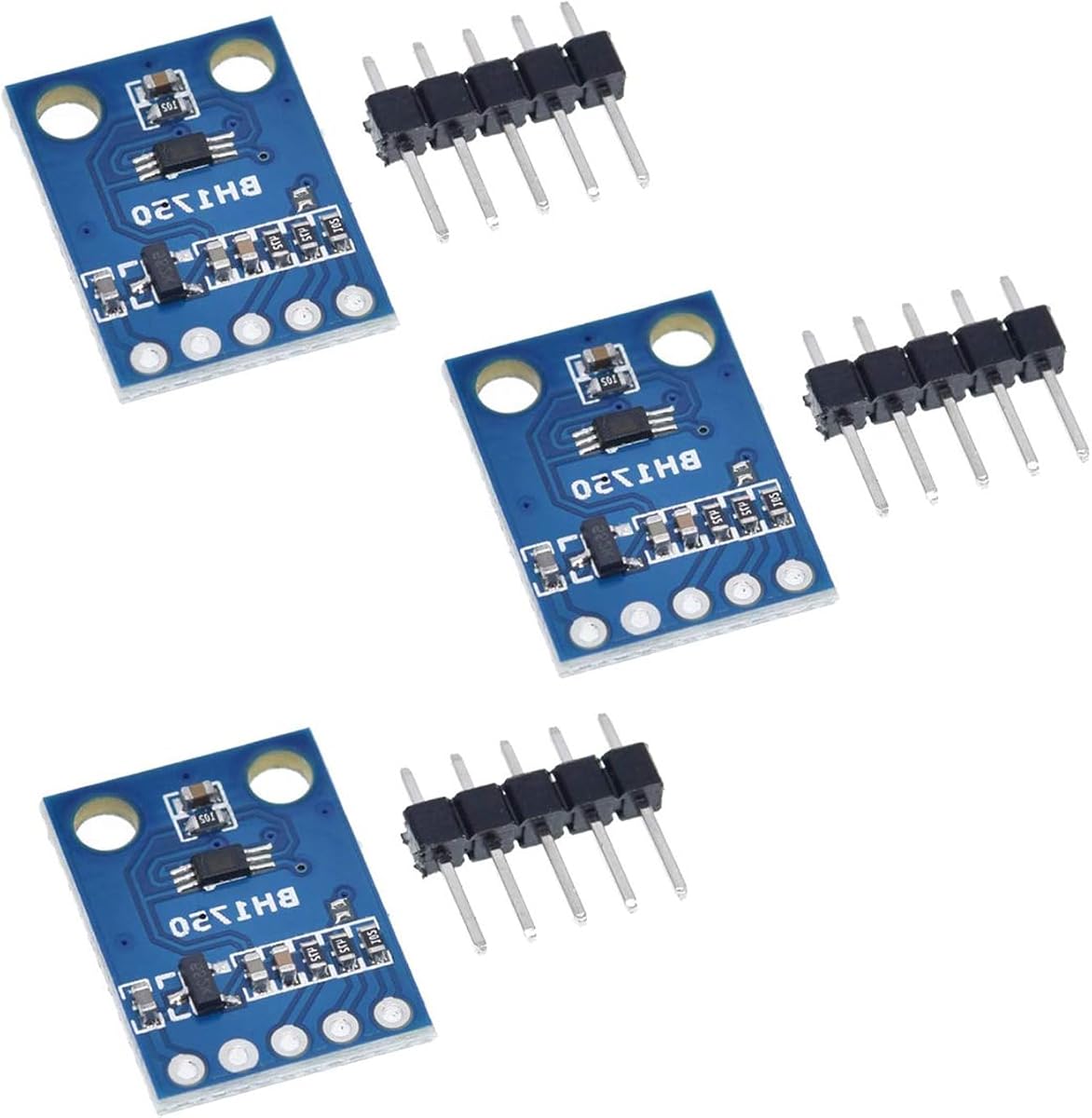
This 3-pack offers precision light intensity measurement using the GY-302 module. It boasts a high rating and is known for its compact design which makes it ideal for tight spaces in your projects. The module integrates seamlessly with various devices to enhance illumination monitoring capabilities effectively.
We may earn a commission when you buy through this link, at no additional cost to you.
The key strength lies in the high-quality BH1750FVI chip from ROHM which ensures accurate readings. Its compact size of 13.9mm by 18.5mm allows for easy integration into many designs. The versatile power supply range of 3 to 5V provides wide compatibility with common microcontrollers and systems.
While the digital output requires specific libraries which might be a slight hurdle for beginners the accuracy compensates for this. The module is reliable and consistent. These trade-offs are acceptable given the precision and robustness provided by the professional grade chip used in the design.
If you need precise ambient light data for automation or monitoring this pack is an excellent choice. It is suited for makers and professionals who value accuracy and compactness. We recommend this for any project requiring reliable light intensity measurement across different voltage environments.
The use of the original BH1750FVI chip ensures that your readings are precise and stable over time.
Supporting both 3.3V and 5V systems makes this module flexible for use with ESP32 Arduino and other boards.
We may earn a commission when you buy through this link, at no additional cost to you.
This pack includes six units of 5MM LDR light sensors combined with the LM393 voltage comparator. It has a solid rating and is praised for providing both digital switch DO and optional analog AO outputs. The module facilitates ambient light threshold detection and automatic control effectively.
We may earn a commission when you buy through this link, at no additional cost to you.
Its main strength is the versatility in output options. The comparator output provides a clean signal and good waveform with more than 15mA driving capability. You can easily adjust the detection brightness using a potentiometer. The supply voltage range of 3 to 5V ensures it works with most standard setups.
The analog output may require some calibration for precise reading which can be a minor challenge. The build is functional but basic. These trade-offs are acceptable for hobbyists who need multiple units without breaking the bank while still getting reliable switching performance.
For those looking for cost effective light detection that offers both analog and digital options this is a great pick. It suits DIY projects requiring multiple sensors like street lights or room automation. We recommend this for budget conscious builders needing reliable switching modules.
Having both digital and analog outputs allows you to use the same sensor for simple triggers or detailed measurements.
The onboard potentiometer lets you fine tune the light level required to trigger the digital output easily.
We may earn a commission when you buy through this link, at no additional cost to you.
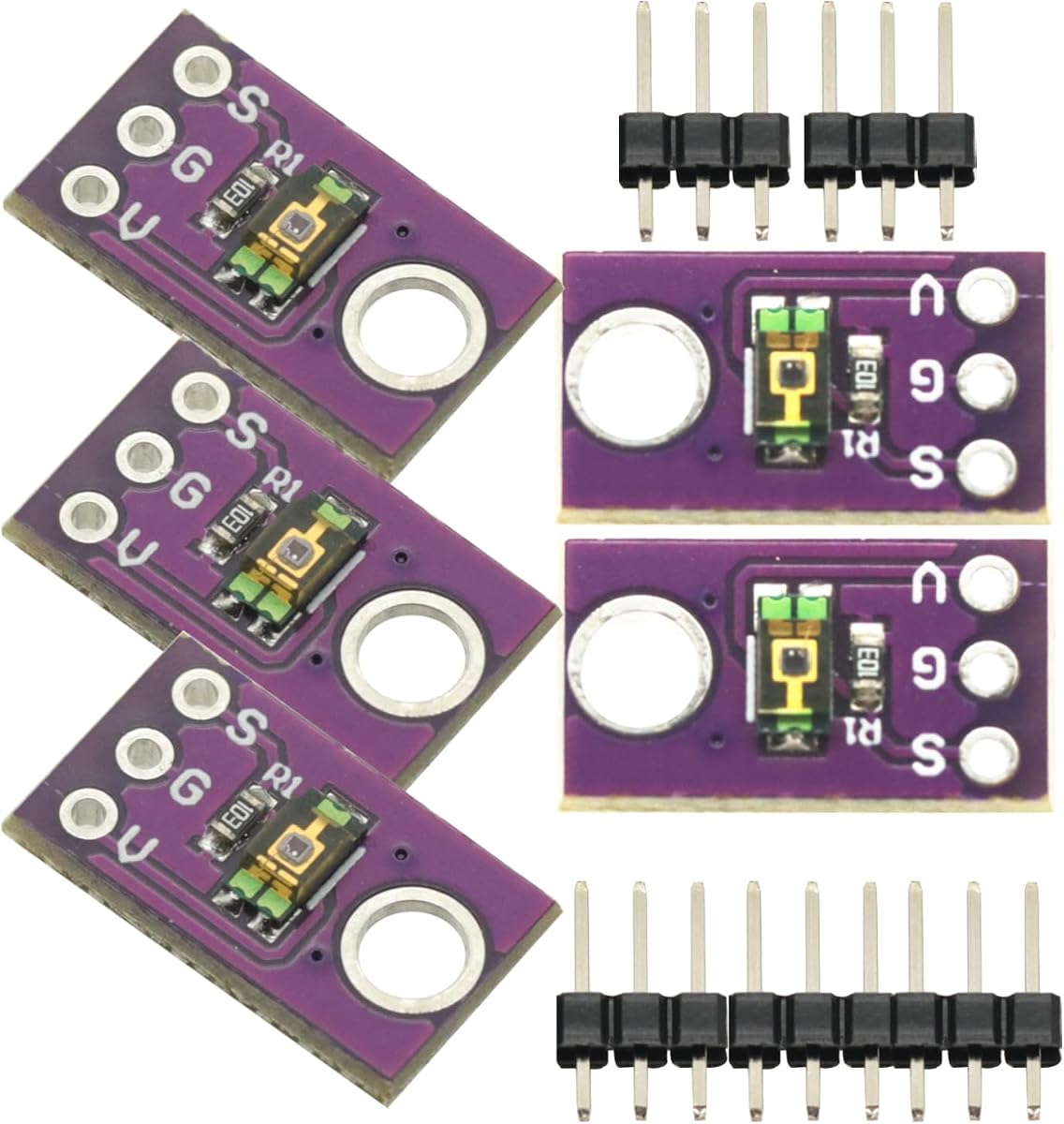
This professional module stands out for its application in display backlight dimming and industrial lighting control. It holds a perfect rating among users who have deployed it in production environments. The pack includes five units which is generous for such specialized hardware components.
We may earn a commission when you buy through this link, at no additional cost to you.
The TEMT6000 is designed specifically for ambient light sensing in mobile devices and industrial setups. It ensures consistent brightness adjustments based on environmental light levels. This makes it highly reliable for user interface optimization and energy saving systems that need precise light tracking capabilities.
The primary limitation is that it is targeted towards specific high precision applications rather than general hobby use. Finding documentation may require looking up specialized libraries. However the performance and reliability justify the choice for serious projects needing professional grade light control features.
If you are building a device requiring exact ambient light calibration this sensor is unmatched. It is perfect for advanced makers or engineers working on display systems. We highly recommend this for anyone needing top tier light sensor performance for professional products.
The sensor is optimized for the spectral response of human eyes making it perfect for display brightness adjustments.
Built to withstand continuous operation in controlled environments this module ensures long term stability for your systems.
We may earn a commission when you buy through this link, at no additional cost to you.
The HiLetgo variant of the GY-302 module offers the same core technology with a reliable build. It is rated highly by users who appreciate the original BH1750FVI chip used in its design. The three piece pack provides a good value for those needing multiple sensors for a system.
We may earn a commission when you buy through this link, at no additional cost to you.
This module focuses on accurate light intensity illumination measurement. Its dimensions are compact at 13.9mm by 18.5mm which fits easily into tight spaces. The power supply requirement is standard at 3 to 5V making it plug and play with most microcontroller boards and projects.
Since it relies on digital output you will need to use a specific library to read the values. This might be slightly less intuitive than analog sensors for beginners. However the reliability and consistency of the readings make this a minor inconvenience for most experienced users.
For those seeking a proven digital light sensor this module is a smart choice. It works well for automated systems where precise lux readings are necessary. We recommend it for hobbyists and developers needing a trusted component for light monitoring projects.
Using the original chip from a reputable manufacturer ensures that the sensor performs consistently over its lifetime.
The small footprint allows you to place the sensor in tight enclosures without compromising on functionality or read accuracy.
We may earn a commission when you buy through this link, at no additional cost to you.
This photodiode sensor module offers directional light detection which distinguishes it from standard LDRs. It is rated well for its ability to sense the light source directly in front of the sensor. The pack includes ten units providing excellent value for larger builds needing multiple detectors.
We may earn a commission when you buy through this link, at no additional cost to you.
The directional feature allows for better light seeking effects compared to omnidirectional sensors. You can adjust sensitivity using the blue digital potentiometer on the board. It supports both digital and analog outputs and operates on a voltage range of 3.3V to 5V for wide compatibility.
Because it is directional you must position it correctly to get accurate readings. This requires more careful installation than standard sensors. However the benefit of targeted detection makes this trade-off worthwhile for applications requiring specific light source monitoring capabilities.
If you need to track light sources like a sun tracker or laser this module is ideal. It is suitable for robotics and specific detection tasks. We recommend this for projects where directionality is a key requirement for the sensor system.
The sensor only perceives light sources in a fixed direction which helps reduce interference from ambient light sources.
Fixing bolt holes are provided on the board allowing you to securely mount the module in various orientations.
We may earn a commission when you buy through this link, at no additional cost to you.
This offering provides thirty raw photoresistors which is perfect for those building their own custom circuits. It has a high rating from users who value having enough components for large scale or multiple projects. The GM5539 resistors are a standard choice for light dependent applications.
We may earn a commission when you buy through this link, at no additional cost to you.
The 5 mm resistors have a spectral peak of 540 nm which aligns well with visible light detection. They can operate across a wide temperature range from negative thirty to seventy degrees Celsius. The maximum voltage and wattage ratings ensure they can handle various circuit conditions safely.
Since these are raw components you will need to design your own voltage divider or comparator circuits. This requires more electronics knowledge than using ready modules. However for advanced users needing a bulk supply for prototyping this level of control is a significant benefit.
For makers who prefer building circuits from scratch this bulk pack is invaluable. It provides enough material for experimentation without needing frequent restocks. We recommend this for education labs or advanced DIYers needing raw photoresistors.
Having thirty units allows you to distribute sensors across many projects or replace components during testing phases.
The wide temperature tolerance ensures these resistors work reliably in both cold and warm environments.
We may earn a commission when you buy through this link, at no additional cost to you.
This module is designed to trigger relays or microcontrollers based on light intensity thresholds. It has a strong rating among users who use it for automation tasks. The pack contains ten units which is suitable for multi-point monitoring systems or classroom projects.
We may earn a commission when you buy through this link, at no additional cost to you.
The module outputs high or low levels depending on the environment light intensity relative to the set threshold. This makes it perfect for triggering actions like turning on lights when it gets dark. The digital output connects directly to a microcontroller or relay module for easy control.
You do not get raw analog values which might limit detailed analysis but this is ideal for simple on off automation. The setup is straightforward. This trade-off is acceptable for users who need simple reliable triggers rather than precise lux measurements for their specific projects.
If you need to build light activated switches or automated alerts this module is perfect. It simplifies the process of connecting light changes to physical actions. We recommend this for beginners and educators needing simple sensor triggers.
The digital output is strong enough to drive a relay module directly making automation setup quick and easy.
You can set the specific light level that triggers the digital output to match your environment's needs.
We may earn a commission when you buy through this link, at no additional cost to you.
This digital light sensor module is compatible with a wide range of boards including ESP32 and Raspberry Pi. It maintains a solid rating due to its user-friendly design. The four piece pack offers a good balance for those needing a few sensors for a small project.
We may earn a commission when you buy through this link, at no additional cost to you.
It provides two output pins allowing for both digital LOW HIGH and analog reads. The triggered threshold is adjustable via a built-in potentiometer. This flexibility allows you to use the sensor for both simple on off detection and more detailed ambient light measurements.
While the analog output is not as precise as dedicated digital sensors it is sufficient for many common applications. The tutorials provided help users get started quickly. This trade-off is acceptable for hobbyists who want versatility without needing complex libraries for their setups.
For general purpose light detection that supports multiple board types this module is a solid choice. It is great for home automation or educational use. We recommend this for those needing a versatile sensor compatible with various popular microcontrollers.
Compatibility with Arduino ESP32 ESP8266 and Raspberry Pi makes this module very versatile for most projects.
Guides are provided to help you set up the sensor and write code quickly without needing external resources.
We may earn a commission when you buy through this link, at no additional cost to you.
This pack offers fifty GL5516 light dependent resistors which is a large quantity for the price. It holds a very high rating among users who value quantity and value. The components are standard photocells suitable for light automation and solar tracking projects.
We may earn a commission when you buy through this link, at no additional cost to you.
The resistance values range from 5 to 10KOhm in bright conditions to 0.2MOhm in the dark. This range is typical for GL5516 sensors and works well with standard voltage dividers. They are compatible with Arduino ESP32 ESP8266 and Raspberry Pi without issues.
Since these are raw resistors you must build the external circuit to read them. This is a hurdle for absolute beginners but offers maximum flexibility for experienced users. The high quantity allows for extensive prototyping or classroom use without extra cost.
For projects requiring many light sensors like a light array or large garden this pack is ideal. It is perfect for schools and hobbyists needing bulk components. We recommend this for anyone needing a large supply of standard photoresistors.
With fifty units you can build large scale prototypes or replace components across multiple projects.
The GL5516 is a widely used standard so replacement and compatibility are rarely an issue.
We may earn a commission when you buy through this link, at no additional cost to you.
The uxcell module uses the LM393 chip for stable performance in light intensity detection. It has a solid rating and is known for its stable comparator chip. The three pack is suitable for small projects needing multiple sensors or replacements over time.
We may earn a commission when you buy through this link, at no additional cost to you.
It supports both digital and analog outputs allowing for flexible use cases. The working voltage range of 3.3V to 5V ensures compatibility with most modern microcontrollers. The module is designed to provide reliable signal output for various applications.
The limited quantity might not be enough for large scale projects. However the quality and stability are good for the price. This trade-off is acceptable for hobbyists who need a small number of high quality modules rather than bulk components for their systems.
For smart car or automation projects needing reliable sensor modules this is a good option. It offers a balance of cost and functionality. We recommend this for users needing a few reliable light detection modules for their specific setups.
The use of the LM393 comparator ensures that the signal remains stable even with minor power fluctuations.
Having both digital and analog options lets you use the module for both triggers and precise readings.
We may earn a commission when you buy through this link, at no additional cost to you.
Choosing the right sensor depends on your project requirements and technical skills. This guide helps you evaluate key factors to ensure you select a module that fits your application.
Light sensors come in several types including photoresistors (LDRs), photodiodes, and digital ICs like the BH1750. LDRs are simple and affordable but have slower response times. Photodiodes offer faster response and directional sensitivity. Digital ICs provide precise lux readings and easier integration.
Choose a digital IC for precise measurements and an LDR for simple threshold detection. Match the technology to your needs to avoid unnecessary complexity or limitations.
Modules typically provide analog, digital, or both output types. Analog outputs give a range of values useful for calibration. Digital outputs provide a simple high/low signal for triggers. Some modules offer both options for maximum flexibility.
Consider your microcontroller's capabilities. If you need precise data look for modules with analog or digital output options. For simple on/off control digital outputs are sufficient.
Most modern sensors operate on 3.3V to 5V. Ensure the module you choose matches the voltage of your microcontroller. Some modules require external regulators or level shifters if there is a mismatch.
Verify the operating voltage range before purchasing. Most sensors listed support standard logic levels but always check the specs to ensure compatibility with your board.
Compact sensors are essential for small projects. Look for modules with bolt holes or pins that fit your enclosure. The dimensions can affect how easily the sensor fits into tight spaces.
Check the board dimensions and mounting options. If space is limited prioritize compact modules to ensure your design remains practical and functional.
Different sensors have different ranges for detecting light intensity. Some are optimized for indoor lighting while others are better for outdoor brightness. Sensitivity adjustments may be available on some modules.
Ensure the sensor covers the expected range of your environment. Adjustable sensors offer more flexibility but fixed range ones are simpler to set up.
Digital sensors often require specific libraries to read data. Analog sensors are easier to read using built-in ADC functions. Check if libraries are available for your development environment before buying.
Select sensors with active community support. Good documentation makes it easier to get your project running quickly without debugging issues.
Some listings offer multiple units which is cost-effective for larger projects. Others offer single modules which might be better for small builds. Consider how many you need before purchasing.
Buying packs can save money but ensure you have the space to store them. Choose the quantity that aligns with your project goals.
Modules with better components tend to last longer and perform more consistently. Look for modules that use known chips or have high user ratings. Build quality affects long term reliability.
Prioritize modules from reputable brands. High quality components reduce the risk of failure and ensure accurate readings over time.
Start by connecting the power pins VCC and GND to your microcontroller. Ensure the voltage matches the module's requirements. Connect the output pin to an analog or digital input pin on your board depending on the module type.
Use the appropriate library if you are working with a digital sensor. For analog modules read the value using the built-in analog read function. Calibrate the sensor by testing in different light conditions to determine the threshold values.
Keep the sensor clean and free from dust which can interfere with readings. Mount the module securely to prevent movement that might change detection angles. Store unused sensors in a dry place to protect them from humidity and oxidation.
An LDR (Light Dependent Resistor) changes resistance based on light and requires a simple circuit to read. A digital light sensor uses an integrated chip to provide precise data often in lux units. Digital sensors are more accurate but require specific libraries to use.
Yes most modules listed support 3.3V to 5V which covers ESP32 and Raspberry Pi logic levels. Always check the voltage requirements before connecting. Most libraries are compatible with these boards making integration straightforward.
Place the sensor in a known light condition and read the value. Use that value to set thresholds in your code. For analog sensors you may need to adjust the potentiometer on the module to tune the sensitivity.
Unstable readings can be caused by electrical noise or loose connections. Try adding a capacitor between the analog pin and ground. Ensure all wires are securely connected and check for interference from nearby components.
Most sensors draw very little power and can run directly from your microcontroller's 5V or 3.3V pin. If you have many sensors a dedicated power supply might be better. Check the current consumption before connecting many units together.
Digital sensors like the BH1750 or TEMT6000 are best for sunlight intensity because they provide precise readings. LDRs can work but may saturate in very bright light. For outdoor use look for sensors with a wide dynamic range.
We have explored ten excellent light sensors ranging from simple LDRs to precise digital modules. Each pick offers unique strengths whether you need cost-effective components or professional grade accuracy for your next build.
Prioritize the sensor type and output options that match your project needs. For precise readings choose digital modules and for simple triggers LDRs with comparators are ideal. Always consider power requirements and physical size during your selection.
Remember that availability and stock levels can change over time. Check current pricing and product details before finalizing your order to ensure you get the exact module you need for your project.