
AudioControl LC1i
4.7Editor score
Speaker to RCA converter
Ground isolation switch
Compact slim chassis
This guide compares top line driver car audio options to help you boost signal quality, reduce noise, and integrate aftermarket amplifiers with factory systems
When upgrading your vehicle sound system, a line driver car audio option is essential for clean signal transmission. These devices convert weak factory outputs to robust line-level signals suitable for powerful amplifiers.
We evaluated ten leading models based on voltage output, distortion levels, and compatibility with modern factory radios. Our analysis focuses on performance, build quality, and ease of installation for various setups.
Each pick highlights specific strengths like bass restoration or multi-channel support. Please note that product availability and pricing may vary over time. Always verify current specifications before purchasing.
4.7Editor score
4.8Editor score

4.5Editor score
The following table provides a side-by-side comparison of the ten selected line driver car audio options to help you identify the best fit for your specific upgrade needs.



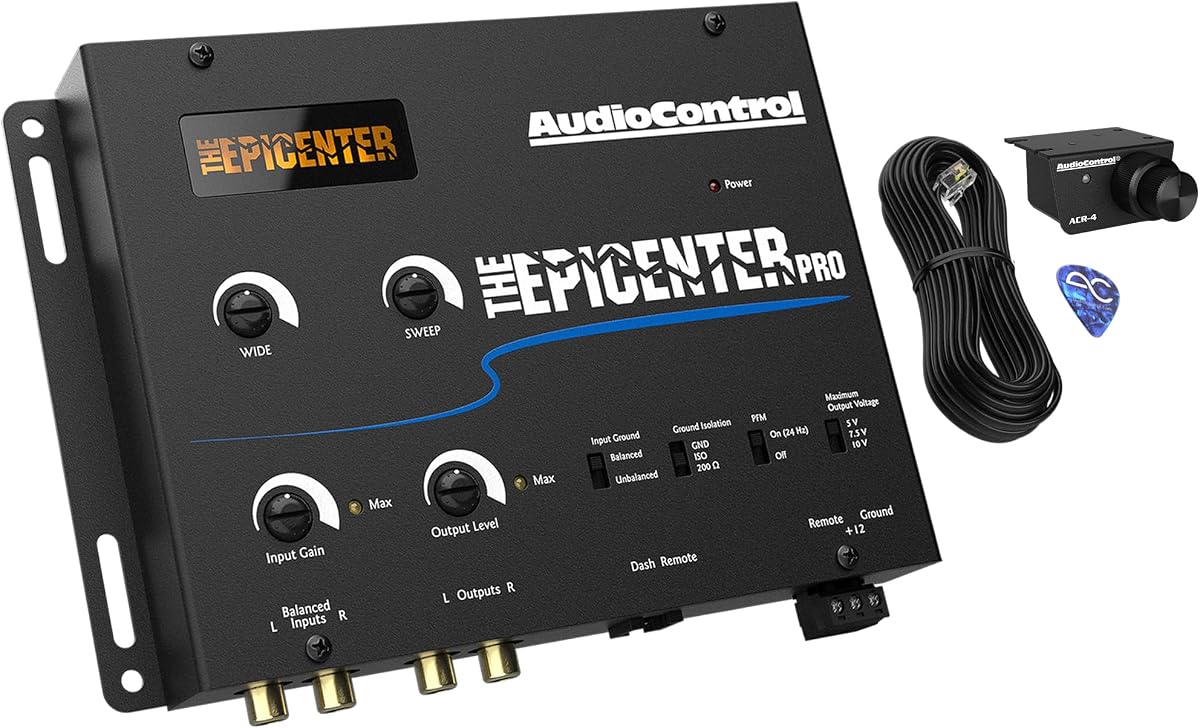
This premium processor is our top pick for enthusiasts wanting deep bass without compromising clarity. It scores highly for its unique restoration technology that synthesizes low frequencies from existing tracks.
We may earn a commission when you buy through this link, at no additional cost to you.
The onboard line driver ensures your amplifiers receive a robust voltage signal. With a signal-to-noise ratio over 105dB and low distortion, your system operates at peak efficiency with minimal noise.
While effective, the bass restoration requires specific adjustments to match your vehicle acoustics. The included remote helps manage levels easily, but initial setup takes patience to avoid over-processing the sound.
Choose this if you want a complete solution for signal boosting and bass enhancement. It is ideal for upgrading modern factory systems where bass loss is common at higher volumes.
Detects harmonics to synthesize powerful low-frequency foundation for chest-thumping impact on tracks lacking authority.
Delivers an ultra-clean signal maximizing amplifier performance potential while maintaining accurate reproduction across the spectrum.
We may earn a commission when you buy through this link, at no additional cost to you.
The LC1i is a fantastic entry-level device for adding amplifiers to factory systems. It efficiently handles high power inputs while delivering quality preamp signals for downstream gear.
We may earn a commission when you buy through this link, at no additional cost to you.
Its built-in line driver provides a clean boost to weak factory signals. This ensures your amplifier has enough voltage to reach full potential without distortion even at low volume settings.
It offers basic controls but lacks advanced processing like bass restoration. For simple systems where you just need clean connections, it is more than sufficient without extra cost.
This is the best choice for users prioritizing value and simplicity. It works perfectly for single or dual subwoofer setups where extra processing features are not required.
Converts up to 400W per channel speaker signals into high quality pre-amp outputs for aftermarket components.
Selectable ground isolation switch removes buzz and whine caused by alternator or electrical interference.
We may earn a commission when you buy through this link, at no additional cost to you.
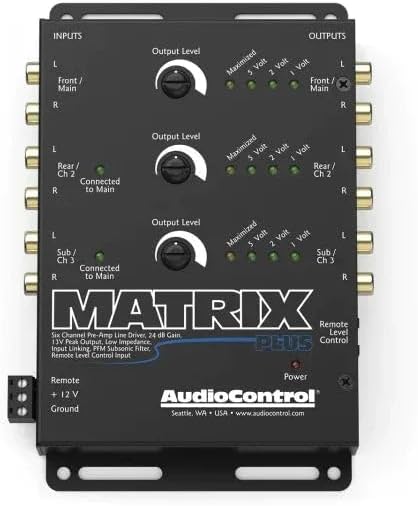
This unit offers professional grade control with six channels for full system integration. It sets a high bar for signal quality and reliability in demanding audio environments.
We may earn a commission when you buy through this link, at no additional cost to you.
With voltage indicators, you can visually confirm optimal signal strength. The conformal coating protects internal circuits against moisture and vibration for long-term durability in harsh car environments.
The sheer number of channels may be overkill for simple installs. However, if you have multiple amplifiers or a complex processor setup, this device offers unmatched flexibility and precision.
Invest in this model if you need maximum voltage output and channel flexibility. It is perfect for high-end builds requiring precise control over multiple zones and devices.
Provides three sets of balanced differential inputs and three sets of low impedance outputs for complex system integration.
Onboard LED indicators alert you to optimal and maximized output voltages for each channel instantly.
We may earn a commission when you buy through this link, at no additional cost to you.
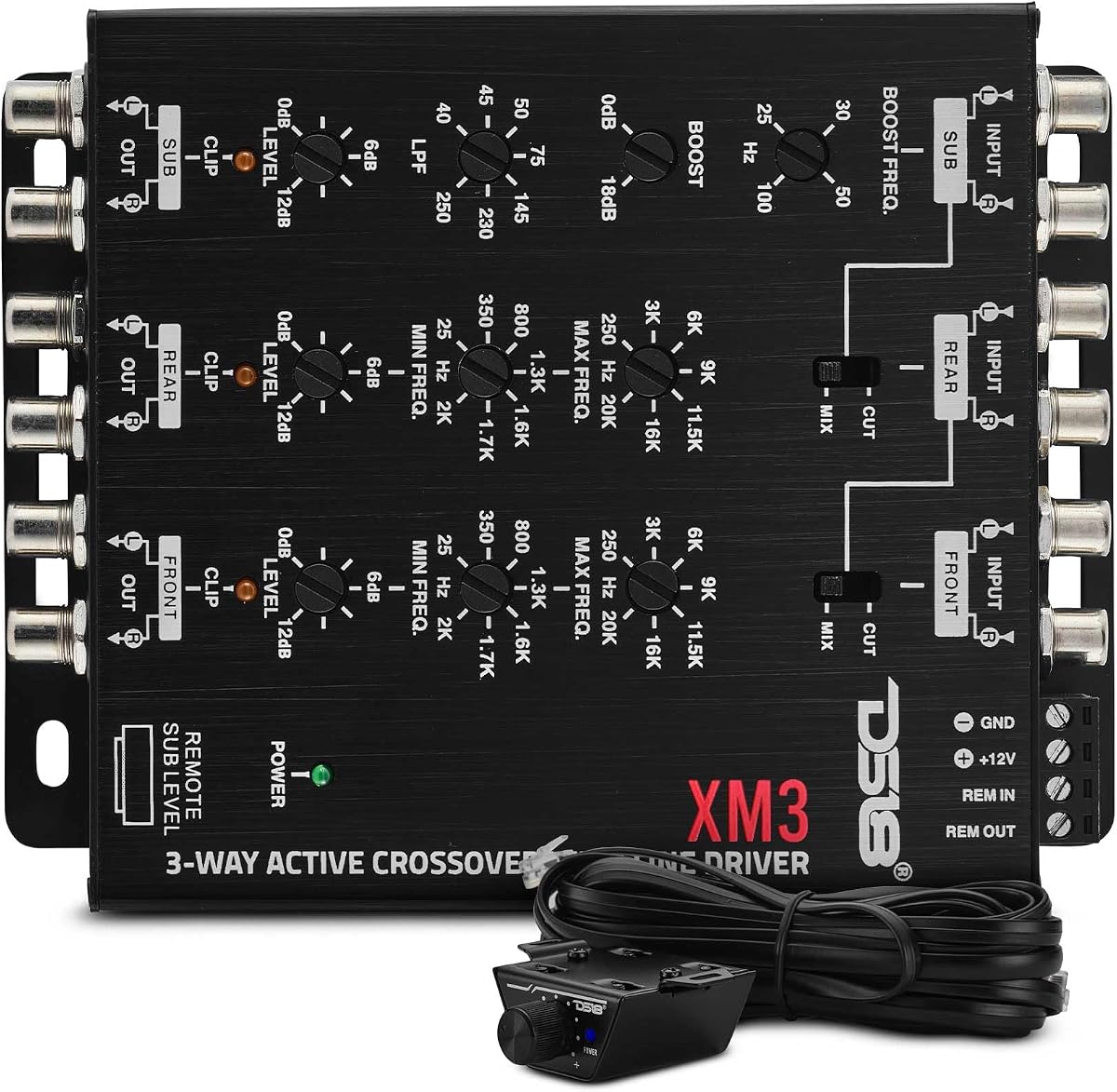
This active crossover combines signal splitting with voltage boosting in one unit. It is designed for users needing independent tuning for front, rear, and subwoofer channels.
We may earn a commission when you buy through this link, at no additional cost to you.
The high voltage output helps drive amplifiers cleanly. With adjustable filters and bass boost, you can fine-tune your system response to match specific speaker characteristics.
Setting up the crossover points requires technical knowledge. It also has fewer features than dedicated processors. For straightforward signal splitting with gain, it remains a popular affordable option.
Select this if you need a crossover and line driver in one box. It suits DIY users comfortable with tuning filters for balanced front and rear audio.
Delivers unmatched clarity and frequency accuracy with independent front rear and subwoofer tuning options.
Included remote lets you fine-tune bass instantly without distortion for live adjustment in any setup.
We may earn a commission when you buy through this link, at no additional cost to you.
This device adds equalization capabilities alongside line driving. It allows you to adjust specific frequencies easily using the onboard sliders for better sound balance.
We may earn a commission when you buy through this link, at no additional cost to you.
The high voltage output ensures clean signals for amplifiers. Its compact design fits easily into tight dashboard spaces while providing multiple inputs for versatile system connections.
The equalizer lacks the precision of standalone processors. If your primary goal is tone shaping on a budget, this is a practical solution for minor audio tweaks.
Choose this if you need basic tone control with signal boosting. It is great for users wanting quick adjustments to vocal or bass frequencies.
Features 7 adjustable frequencies for ultimate audio performance plus or minus 12 dB on each band.
Built-in converter makes it perfect for adding amplifiers to factory radios without extra adapters.
We may earn a commission when you buy through this link, at no additional cost to you.
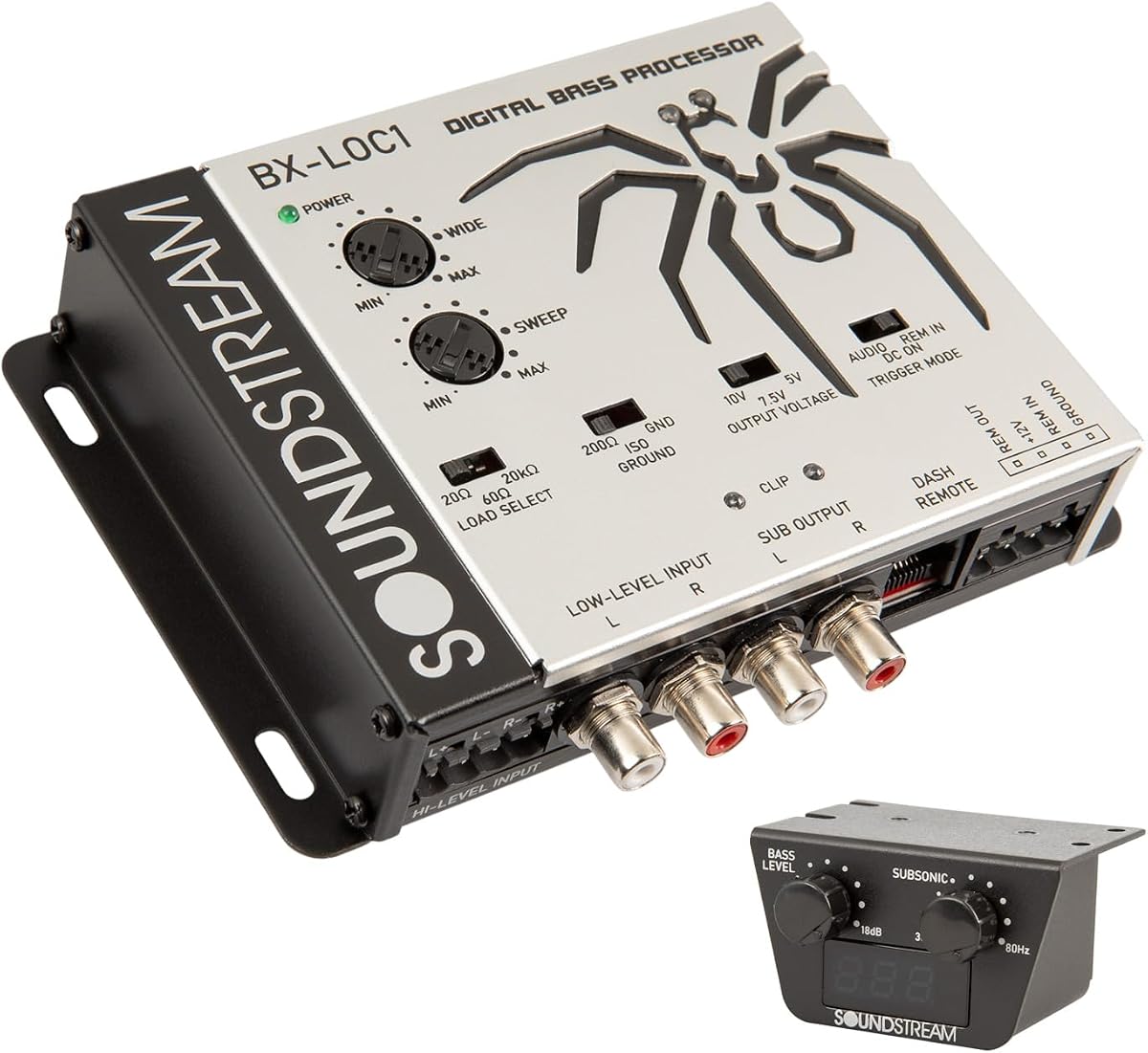
This processor focuses on restoring lost bass frequency without complex electronics. It combines line conversion with digital processing to enhance compressed factory audio.
We may earn a commission when you buy through this link, at no additional cost to you.
With noise shielding and impedance matching, it offers a professional quality listening experience. The compact size ensures it fits neatly in tight spaces without clutter.
It may lack the depth of dedicated bass restoration units. However, it provides a balanced upgrade path for factory systems that need clean signals and slight impact.
Pick this for seamless factory upgrades requiring minimal wiring changes. It is ideal for those seeking a tidy solution that improves sound quality efficiently.
Digital processor restores low-end impact to compressed or factory audio bringing bass back to the system.
Onboard LED clipping indicator ensures peak performance without distortion during operation.
We may earn a commission when you buy through this link, at no additional cost to you.
This converter is designed to keep factory features while adding amplifiers. It corrects the bass roll-off common in factory radios as volume increases.
We may earn a commission when you buy through this link, at no additional cost to you.
By restoring bass balance at higher volumes, it ensures consistent sound quality. The compact chassis allows quick and easy installation without taking up extra space.
It does not offer the voltage boost of dedicated line drivers. It is best for systems where signal integrity is more important than maximum gain potential.
Use this if retaining factory controls and simple integration is key. It suits those wanting a straightforward way to add a subwoofer to modern cars.
Corrects and restores bass roll-off when volume is increased on the factory radio.
Retains important features including factory volume and steering wheel controls for seamless daily use.
We may earn a commission when you buy through this link, at no additional cost to you.
This device combines the best features of converters and EQs. It includes an adjustable parametric EQ for precise low frequency corrections.
We may earn a commission when you buy through this link, at no additional cost to you.
The auto turn-on feature simplifies setup significantly. Its OEM load detect ensures factory amplifiers continue to function correctly without warning lights.
It is less common than standard units but offers distinct tuning flexibility. If you need specific equalization without a full DSP, this is a strong contender.
Choose this for hybrid performance needing EQ and conversion. It is best for OEM systems requiring specific frequency adjustments.
Features adjustable parametric EQ with narrow or wide range selection for correcting low frequency deficiency.
RJ45 port allows easy upgrading to a remote level control sold separately when needed.
We may earn a commission when you buy through this link, at no additional cost to you.
This processor offers full restoration features in a tiny package. It is the smallest solution for adding bass and signal boost to modern cars.
We may earn a commission when you buy through this link, at no additional cost to you.
With high voltage output and subsonic filtering, it protects speakers and enhances sound. The included remote makes controlling levels simple from the driver seat.
The small size may make wiring connections tricky. But for tight installations where space is critical, it is a unique tool for enthusiasts.
Pick this if space is your main constraint. It suits premium builds requiring discreet hardware without sacrificing bass restoration capabilities.
Discreet compact chassis eliminates wasted vehicle space while maintaining full processing power.
Achieves high signal-to-noise ratio and low total harmonic distortion for pure audio performance.
We may earn a commission when you buy through this link, at no additional cost to you.
This variant offers a straightforward approach to signal management. It focuses on maximum gain and clear feedback for complex multi-amplifier systems.
We may earn a commission when you buy through this link, at no additional cost to you.
Top-mounted controls make adjustments easy without removing the unit. The visual indicators confirm voltage levels, ensuring your amplifiers receive the correct input.
User ratings suggest potential setup complexity. However, for advanced users requiring six channels and 24dB gain, it remains a functional option.
Use this for complex multi-channel audio projects. It is best for professionals needing simple voltage boosting across multiple zones.
Provides up to 24 dB of gain ensuring amplifiers receive strong voltage input.
Lights indicate output levels and a maximized indicator for optimal system tuning.
We may earn a commission when you buy through this link, at no additional cost to you.
Selecting the right unit depends on your system complexity and specific audio needs. Understanding key factors helps you avoid noise and maximize power.
Higher output voltage allows amplifiers to reach maximum clean power without clipping. Look for models capable of 9V or more for modern high-power setups.
Prioritize units with high voltage output to ensure your amplifiers operate efficiently.
Match the number of outputs to your amplifier inputs. Two channels work for subwoofers, while six channels suit multi-zone systems with multiple amps.
Choose a channel count that matches your planned amplifier configuration.
Factory radios often lose low-end frequencies at high volumes. Models with bass restoration synthesize missing low frequencies for impact.
Select a model with bass restoration if you want full sound from factory sources.
Ensure the device accepts both speaker-level and RCA inputs. This flexibility simplifies connections to both factory and aftermarket head units.
Verify input types to match your current head unit outputs.
Electrical interference can cause buzzing sounds. Units with ground isolation switches help eliminate noise from alternators or grounding issues.
Always choose a unit with ground isolation to reduce hum.
Installation space is often limited in modern dashboards. Slim designs allow for discreet mounting under seats or in tight areas.
Measure your available space to ensure the device fits comfortably.
Adjusting subwoofer levels remotely adds convenience. Some models include or support optional remotes for on-the-fly adjustments.
Look for remote capabilities if you want front-seat control.
Car environments are harsh with heat and vibration. Conformal coating and durable connectors protect internal circuits for longevity.
Prioritize models with protective coatings for long-term reliability.
Start by connecting the input wires to your source unit. Ensure connections are secure to prevent signal loss or noise issues.
Adjust the gain controls gradually to avoid clipping. Use the visual indicators to match signal strength with your amplifier input requirements.
Secure the unit in a protected location. Avoid placing it near moving parts or direct sunlight to maintain its lifespan.
Yes, factory amplifiers often output signals that may not match aftermarket amplifiers. A line driver standardizes the signal voltage and quality for better performance.
A converter changes speaker level to RCA level. A line driver adds voltage gain to ensure the signal is strong enough to drive powerful amplifiers.
Hum is often caused by a ground loop. Use the ground isolation switch on your device or ensure the ground wire connects to a clean metal point.
No, line drivers typically work with analog signals. If your source is digital, you must use a DAC to convert it to analog first.
Not necessarily. Many modern line drivers include built-in equalization or bass restoration features that remove the need for a separate unit.
Mount it under a seat or in a trunk area where it is protected from moisture and heat but still accessible for wiring connections.
We reviewed ten top models ranging from budget converters to premium processors. The EPICENTER PRO stands out for restoration while the LC1i offers value for basic needs.
Prioritize voltage output and channel count based on your amplifier setup. Ensure the device fits your physical space and supports your factory system.
Always check current availability and verify specifications before buying. The right choice depends on your specific audio goals and installation constraints.