
Aqara Motion and Light Sensor P2
3.5Editor score
Native Matter over Thread
Independent light sensor
Long battery life
This guide compares the top ten Matter compatible motion sensors for 2026, evaluating detection accuracy, battery life, and ecosystem integration to help you
Finding the right sensor for your smart home can be challenging with so many options available today. You need reliable detection, seamless integration, and long battery life to ensure your automations work smoothly without constant maintenance or interruptions.
We have analyzed ten leading models that support the Matter standard to ensure broad compatibility across different platforms. Our comparison focuses on real-world performance, installation ease, and the specific features that matter most to homeowners seeking modern automation solutions.
Each pick in this list highlights unique strengths and potential trade-offs to help you make an informed decision. While the prices listed reflect current market trends, they are subject to change, so verify the latest details before finalizing your purchase.
3.5Editor score

3.8Editor score

3.5Editor score
The following table provides a side-by-side overview of each model to highlight their core technical specifications and unique selling points for your consideration.




The meross Presence Sensor MS600 stands out as a top choice for those seeking advanced detection capabilities within the Matter ecosystem. It combines radar and PIR technology to ensure you are detected even when sitting still.
We may earn a commission when you buy through this link, at no additional cost to you.
Its ability to integrate seamlessly with HomeKit, Alexa, and Google Home makes it incredibly versatile for diverse smart home setups. The inclusion of a light sensor allows for smarter lighting decisions based on ambient brightness.
While it requires a continuous power source, this eliminates battery anxiety and ensures consistent performance over time. Users should note that Matter compatibility does depend on having a compatible hub for full functionality.
This sensor is ideal for homeowners who want reliable automation without worrying about battery changes or missed triggers. It is a robust solution for main living areas or offices where presence detection is critical.
The combination of millimeter wave radar and PIR ensures that the sensor can detect humans even when they are stationary, solving a common issue with traditional motion detectors.
Support for Matter, HomeKit, and major voice assistants means you can connect this device to almost any smart home system without needing proprietary bridges.
We may earn a commission when you buy through this link, at no additional cost to you.
The Aqara Motion and Light Sensor P2 offers an excellent balance of performance and affordability for those looking to upgrade to Matter technology. It is designed to work seamlessly over Thread for reliable connectivity.
We may earn a commission when you buy through this link, at no additional cost to you.
One of its key strengths is the independent light sensor, which allows for nuanced automation scenarios like adjusting lighting based on room brightness levels. This adds significant value compared to basic motion-only units.
While you need a thread border router to use it fully, the setup is straightforward and the battery life is impressive for a wireless device. This makes it a great entry point into smart home automation.
This sensor is perfect for budget-conscious users who still want high-quality detection and smart light management. It fits well in hallways, bedrooms, or entryways where energy efficiency is a priority.
Built on the Thread protocol, this sensor delivers fast and reliable performance with low power consumption, ensuring your network remains responsive even with multiple devices.
Powered by two CR2450 batteries, it provides up to two years of power, reducing the maintenance effort required to keep your smart home running smoothly.
We may earn a commission when you buy through this link, at no additional cost to you.
The Eve Motion 3-Pack is a premium offering for those who value privacy and seamless ecosystem integration. It provides a complete set of sensors for covering multiple areas of your home with minimal hassle.
We may earn a commission when you buy through this link, at no additional cost to you.
Eve is renowned for its commitment to privacy, offering local communication without any cloud dependency. This ensures your data stays private and your automations work even if the internet goes down.
With IPX3 water resistance, these sensors can be used outdoors, adding versatility to their utility. The Thread network technology ensures they remain connected and responsive over long periods.
Ideal for homeowners who want a reliable, private, and comprehensive solution for their property, this pack is a smart investment. It is especially well-suited for users deeply invested in the Apple ecosystem.
Eve does not rely on cloud servers for processing sensor data, meaning your activity logs and triggers remain on your local network for maximum security.
The water resistance rating allows you to place sensors in semi-outdoor areas like covered patios or garages, expanding the reach of your smart home automation.
We may earn a commission when you buy through this link, at no additional cost to you.
The meross Presence Sensor MS605 brings advanced AI to motion detection, ensuring lights stay on even when you are sitting still. Its IP67 rating makes it suitable for outdoor use without protection.
We may earn a commission when you buy through this link, at no additional cost to you.
With a battery life of up to three years, it offers a convenient wireless experience for most users. The app allows for zoning, which can separate detection areas for more precise automation.
While user feedback has been mixed, the potential for local control and reduced false triggers is significant. It serves as a flexible option for those needing battery-operated presence sensors.
This device is recommended for users who want to avoid wiring but need robust detection for areas like driveways or garden sheds. It balances functionality with ease of installation.
The sensor learns patterns over time to distinguish between humans and pets, reducing unnecessary false alarms while keeping your lights on when you are present.
By dividing the detection range into zones, you can create complex automations that respond differently to movement in different parts of the same room.
We may earn a commission when you buy through this link, at no additional cost to you.
The TP-Link Tapo Motion Sensor is a highly rated device that delivers consistent performance for users already within the Tapo ecosystem. It uses Sub-1G wireless for wider coverage and better battery efficiency.
We may earn a commission when you buy through this link, at no additional cost to you.
Its compact design and magnetic base make installation effortless without any drilling or adhesives. You can adjust sensitivity to prevent unwanted triggers while ensuring safety and automation reliability.
While it does not use Matter directly, it integrates well with Tapo hubs that bridge to other platforms. This makes it a solid choice for households that have already adopted Tapo devices.
This sensor is best for users who want a hassle-free, long-life detection unit with strong community approval. It works well for security alerts or automated lighting in living areas.
Using Sub-1G technology instead of Wi-Fi allows for greater range and penetration through walls, ensuring reliable detection even from a distance.
With up to two years of battery life on a single cell, you can set this sensor up and forget about it for a long time.
We may earn a commission when you buy through this link, at no additional cost to you.
The Aqara FP300 stands out as a comprehensive environmental sensor that includes mmWave radar for precise presence detection. It also measures temperature and humidity, adding value to your smart home data.
We may earn a commission when you buy through this link, at no additional cost to you.
With adaptive AI, it reduces false triggers by learning your space and movement patterns. The battery life is robust, and it supports both Zigbee and Matter for broad ecosystem support.
Its ability to function on two protocols makes it a future-proof option for upgrading your home network. The design is minimalist, fitting well in modern interiors without drawing attention.
This sensor is ideal for those who want more than just motion detection in a single device. It is particularly useful for maintaining comfort and climate control automation.
By tracking temperature and humidity, the FP300 allows you to automate HVAC systems or dehumidifiers based on real-time air quality conditions.
The multi-axis adjustable mount lets you position the sensor optimally on walls or ceilings without needing any wiring or permanent fixtures.
We may earn a commission when you buy through this link, at no additional cost to you.
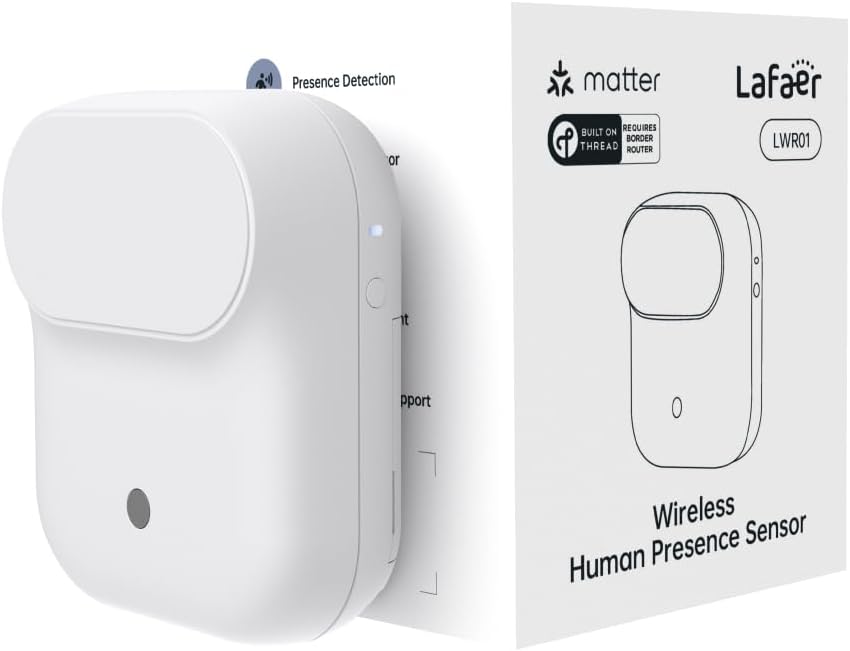
The LWR01 is designed for moisture-prone environments, making it perfect for bathrooms or kitchens where other sensors might fail. It uses mmWave radar to detect presence even when you are still.
We may earn a commission when you buy through this link, at no additional cost to you.
It supports Matter over Thread and includes a light sensor to help manage lighting based on natural sunlight. You can also power it via a cable for continuous use if needed.
While the battery life is slightly shorter than others, the water resistance and versatility make it a practical choice for specific rooms. It is an efficient solution for targeted automation.
Choose this sensor if you need a reliable detector for areas with high humidity and want smart lighting adjustments. It bridges the gap between durability and smart home intelligence.
With an IPX3 rating, this device is safe from splashes and sprays, allowing it to function properly in bathrooms and utility rooms.
If you prefer not to replace batteries, you can connect it to a power source via Type-C to ensure it stays active around the clock.
We may earn a commission when you buy through this link, at no additional cost to you.
The Aqara P1 is a classic motion sensor known for its exceptional five-year battery life. It works exclusively with Aqara Zigbee hubs, offering a dedicated and reliable ecosystem for automation.
We may earn a commission when you buy through this link, at no additional cost to you.
Its wide viewing angle and adjustable sensitivity make it easy to configure for your specific room layout. The alert system feature allows for direct integration with security alarms.
While it lacks Matter support, it remains a popular choice for users invested in the Aqara ecosystem. The long battery life reduces maintenance tasks significantly for homeowners.
This sensor is recommended for security-focused setups or long-term automation needs where battery changes are inconvenient. It is a sturdy and straightforward option for motion detection.
Designed to last up to five years on a single battery, this sensor minimizes the need for regular maintenance and ensures continuous protection for your home.
You can set detection timeouts and sensitivity levels directly in the app, allowing you to fine-tune how the sensor responds to movement in your space.
We may earn a commission when you buy through this link, at no additional cost to you.
SwitchBot brings a flexible approach to motion detection with zone positioning. This allows you to define specific areas where motion should trigger actions, adding a layer of customization.
We may earn a commission when you buy through this link, at no additional cost to you.
AI anti-interference helps filter out false positives from fans or air conditioners. The magnetic base ensures you can mount it securely without tools or adhesives on most surfaces.
It works well with Alexa and HomeKit when paired with the appropriate hub. This makes it suitable for users who want dynamic detection zones in living rooms or offices.
This sensor is ideal for those who need precise control over where and how motion is detected. It offers a modern take on presence tracking with useful app features.
By setting specific zones, you can ensure that movement in certain areas triggers lights while others remain ignored, preventing unwanted automation cycles.
The built-in AI learns to distinguish between human movement and environmental noise, ensuring reliable performance even in rooms with moving objects.
We may earn a commission when you buy through this link, at no additional cost to you.
The SONOFF SNZB-03P offers rapid detection with a minimal latency of five seconds, ensuring lights turn on immediately when you enter a room. It is a budget-friendly option for Zigbee users.
We may earn a commission when you buy through this link, at no additional cost to you.
Even if your Wi-Fi network crashes, the local scene support ensures your automations continue to work. This reliability makes it suitable for critical tasks like security alerts.
With a battery life of up to three years, it provides a low-maintenance solution for motion detection. It integrates well with other SONOFF devices for a cohesive smart home experience.
This sensor is perfect for users looking for fast and reliable detection at an affordable price. It is a practical choice for adding basic motion functionality to your home.
With a detection time as low as five seconds, you never have to wait for lights to turn on, ensuring comfort and safety in any space.
Local smart scenes mean your automations do not depend on an internet connection, so your lights still respond to motion even if your router goes down.
We may earn a commission when you buy through this link, at no additional cost to you.
Selecting the right motion sensor requires evaluating several factors that impact performance and ease of use. We have outlined the most critical aspects to consider before making your purchase.
Motion sensors generally use either PIR or mmWave radar technology. PIR sensors are traditional and cost-effective but may fail to detect stationary humans. mmWave radar offers higher precision by detecting subtle movements and presence, making it ideal for rooms where people sit for long periods.
Look for sensors that combine both PIR and radar for the best balance of cost and accuracy.
Connectivity is key for smart home devices. Wi-Fi sensors are easy to set up but can strain your network. Thread-based sensors offer a mesh network that is more reliable and energy-efficient. Ensure your home has a compatible thread border router if you plan to use Matter devices.
Choosing a Thread or Matter-compatible device ensures future-proofing and better cross-platform support.
Sensors come in battery-powered and corded versions. Battery models are easy to install but require periodic replacement. Corded models ensure constant power but need an outlet nearby. Consider the location of the sensor when deciding which power type suits your needs best.
Battery sensors offer more flexibility for placement while wired sensors reduce maintenance.
The coverage area of a sensor varies by model. Check the detection range and field of view to ensure it covers your intended space. A wider angle and longer range are useful for open areas or hallways.
Verify the technical specs to ensure the sensor fits the size and layout of your room.
Your motion sensor should integrate with your existing smart home ecosystem. Matter offers broad support, but some devices still require specific hubs. Ensure it works with your voice assistants and platforms like Alexa or HomeKit.
Confirm the supported platforms to avoid connectivity issues after purchase.
For wireless sensors, battery life is a major convenience factor. Some models last up to five years on a single set of batteries. Consider how often you want to change batteries before choosing a device.
Longer battery life reduces maintenance frequency and ensures consistent performance over time.
If you plan to install the sensor outdoors or in a bathroom, look for an IP rating. Water resistance allows the device to function in humid or wet environments without damage.
Choose a sensor with an appropriate IP rating for the environment where it will be used.
Some sensors include a light sensor that can trigger actions based on ambient light levels. This is useful for turning off lights during the day or adjusting brightness automatically.
Check if the model includes light sensing features if you want energy-saving automation.
Install the sensor in a location that covers the primary area you want to monitor. Avoid placing it near heat sources or direct sunlight to prevent false triggers and ensure accurate readings.
Connect the sensor to your smart home hub or network following the manufacturer's instructions. This usually involves putting the device into pairing mode and selecting it in your app.
Regularly check battery levels and update the firmware to maintain optimal performance. Clean the sensor lens with a soft cloth to remove dust that might interfere with detection.
Matter sensors offer universal compatibility across different smart home ecosystems. This means you can use one device with HomeKit, Alexa, or Google Home without needing proprietary hubs. It simplifies your network and ensures future-proof functionality.
Most Matter sensors require a thread border router or a compatible hub to connect to the network. Some may work directly with a Wi-Fi router if they support Matter over Wi-Fi. Always check the product details for specific hub requirements.
Wireless sensors typically use adhesive strips or magnetic mounts. Find a central location at eye level for best coverage and stick the sensor in place. Then download the app and pair the device with your smart home account.
mmWave radar uses radio waves to detect movement and presence with high precision. Unlike traditional motion sensors, it can detect subtle movements like breathing. This ensures lights stay on even when you are sitting still.
Some sensors have water resistance ratings like IP67 or IPX3. These models are safe for outdoor or bathroom use. Check the specs carefully before placing a device in a wet environment.
Battery life depends on the model and usage frequency. Some sensors last up to five years on a single battery. If you get low battery notifications, replace the cells promptly to avoid losing coverage.
Check the battery and ensure the device is connected to the network. Verify the sensitivity settings and placement to avoid dead zones. Reset the device if needed and re-pair it with your hub.
Reputable brands like Eve focus on local processing to protect your data. Always choose sensors that do not rely on cloud servers for basic functions. This ensures your privacy remains secure while using smart automation.
We have reviewed ten top-rated motion sensors to help you find the perfect fit for your home. Each option offers unique strengths, from AI-driven presence detection to exceptional battery life.
Prioritize features that matter most to you such as power type and connection protocol. Ensure the sensor you choose integrates seamlessly with your existing ecosystem for the best experience.
Prices and availability can change frequently, so verify the latest details before buying. By selecting the right device, you can build a reliable and efficient smart home automation system.