
AMD Ryzen AI Halo
5.0Editor score
128GB LPDDR5x Memory
50 TOPS NPU
Linux Developer Platform
Explore the top Cpus for Machine Learning ranked by performance and efficiency. This guide compares processors for local AI development, inference, and model
Choosing the right Cpus for Machine Learning is crucial for efficient AI development. High-performance processors enable faster training, smoother inference, and better local model experimentation without relying on distant cloud resources.
We compared leading desktop processors and AI supercomputers based on core counts, cache sizes, and specialized AI acceleration features. Our analysis focuses on how each unit handles demanding machine learning workloads locally.
Each pick highlights key strengths and trade-offs for different user needs. Prices and availability change frequently, so check current listings before purchasing. This guide helps you find the best Cpus for Machine Learning today.
5.0Editor score

5.0Editor score

4.8Editor score
This side-by-side comparison shows how each processor handles machine learning tasks. We highlight core counts, memory support, and architecture features to help you decide which Cpus for Machine Learning fits your workflow best.



The NVIDIA DGX Spark 2 Pack delivers unprecedented AI performance on your desk. With a 5.0 rating, it stands out for enterprise-grade capabilities in a compact form. This unit excels at running large models locally without cloud dependency.
We may earn a commission when you buy through this link, at no additional cost to you.
Its Grace Blackwell architecture provides up to 1 petaFLOP of AI performance. The 128GB unified memory per unit supports massive models up to 200 billion parameters. This enables rapid fine-tuning and inference that was once only possible in data centers.
While the price is steep, the ROI comes from saved cloud costs and faster iteration cycles. You gain full control over your AI stack and data security. For serious developers, this investment pays off quickly through increased productivity and innovation speed.
Buy this if you need top-tier local AI capabilities for research or business. It transforms desktop work into supercomputer-level tasks. For those prioritizing performance and privacy in machine learning workflows, this is the ultimate choice available today.
This system brings data center power to personal workspaces, enabling secure and efficient local AI development without external dependencies.
With 128GB unified memory per unit, you can load and manipulate massive models directly, reducing latency and improving workflow efficiency.
We may earn a commission when you buy through this link, at no additional cost to you.
The AMD Ryzen 9 9900X offers excellent value for machine learning tasks. Rated 4.8 stars, it combines 12 cores and 24 threads for robust multitasking. This processor handles preprocessing and standard inference workloads efficiently.
We may earn a commission when you buy through this link, at no additional cost to you.
Built on Zen 5 architecture, it supports DDR5-5600 memory and PCIe 5.0. The 76 MB cache improves data access speed during training loops. While it lacks specialized NPU hardware, raw CPU power remains effective for many ML workflows.
It is not as fast as dedicated AI boxes but costs significantly less. For developers on a budget, this provides a solid foundation. You can scale with GPU additions later while keeping CPU costs reasonable.
Choose this if you need strong general performance without overspending. It works well for learning ML concepts and moderate projects. For those seeking affordability and expandability, this remains a top contender in the market.
With twelve cores and twenty-four threads, this processor balances performance and price perfectly for hobbyist and professional developers.
Socket AM5 ensures long-term upgrade paths, allowing you to update components without replacing the entire system architecture.
We may earn a commission when you buy through this link, at no additional cost to you.
AMD Ryzen AI Halo is designed specifically for local AI development. It earns a 5.0 rating for its purpose-built features. The 128GB unified memory and 50 TOPS NPU handle heavy workloads efficiently.
We may earn a commission when you buy through this link, at no additional cost to you.
Running Linux with ROCm support simplifies setup for developers. Preloaded models and workflows save time. The AMD XDNA 2 NPU offloads inference tasks from the CPU, speeding up testing and deployment cycles.
The Linux limitation may deter some Windows users but suits most ML environments. Its compact size saves desk space while delivering high performance. For serious local development, this unit offers unique advantages.
Buy this if you prefer open-source workflows and need NPU acceleration. It bridges the gap between desktop convenience and server power. For developers wanting a ready-to-use Linux AI platform, this is the ideal choice.
Preloaded tools and models allow developers to start working immediately without complex configuration steps or manual installations.
A shared memory pool across CPU, GPU, and NPU supports larger models than traditional architectures typically allow.
We may earn a commission when you buy through this link, at no additional cost to you.
NVIDIA DGX Spark brings enterprise-scale AI to a single desktop unit. Rated 4.4 stars, it focuses on local model fine-tuning and analytics. Its compact design fits easily in offices without sacrificing performance.
We may earn a commission when you buy through this link, at no additional cost to you.
The Grace Blackwell architecture delivers up to 1 petaFLOP of AI performance. Unified memory allows handling large models up to 200 billion parameters. You can experiment and prototype faster without waiting for cloud resources.
While expensive, it reduces cloud costs and improves data security. The seamless NVIDIA AI integration means less setup time. For businesses valuing security and speed, this investment makes sense.
Choose this if you need reliable local AI infrastructure for teams. It supports rapid innovation with robust security. For those prioritizing secure local development, this unit provides unmatched efficiency.
Keep sensitive data on-premises while developing AI models, reducing risks associated with cloud transfers and external access.
Deliver enterprise-level computing power locally, cutting down on cloud latency and improving overall workflow performance.
We may earn a commission when you buy through this link, at no additional cost to you.
Intel Core Ultra 9 285K offers balanced performance for various tasks. Rated 4.6 stars, it combines performance and efficiency cores effectively. The 24 cores handle parallel processing well for data prep and training.
We may earn a commission when you buy through this link, at no additional cost to you.
With up to 5.7 GHz speeds, single-thread tasks run smoothly. Hybrid architecture distributes workloads efficiently. Integrated graphics provide basic visualization without extra hardware. Compatibility with 800-series chipsets ensures modern feature access.
It lacks specialized AI accelerators but remains strong for general use. Efficiency means cooler operation and lower power costs. For mixed workloads involving coding and ML, this processor excels.
Buy this if you need versatile performance across tasks. It suits developers who need power and efficiency together. For those seeking balanced performance, this remains a solid choice.
Hybrid architecture prioritizes tasks across P and E cores, ensuring efficient resource use during complex development sessions.
Support for PCIe 5.0 ensures compatibility with next-generation GPUs and storage solutions for expanded capabilities.
We may earn a commission when you buy through this link, at no additional cost to you.
AMD Ryzen 9 9950X3D provides 16 cores for heavy multitasking. Rated 4.7 stars, it handles complex preprocessing and training loops well. The Zen 5 architecture ensures high efficiency during extended loads.
We may earn a commission when you buy through this link, at no additional cost to you.
With boost clocks up to 5.7 GHz, it maintains speed under load. This processor supports high-speed memory and PCIe 5.0. Its cache design helps reduce bottlenecks during data-intensive operations.
While not built specifically for AI, raw power makes it versatile. It excels at tasks needing high core counts. For developers balancing gaming and ML, this offers flexibility.
Choose this if you need high core density and speed. It works well for large datasets and complex workflows. For those seeking raw processing power, this is a strong option.
Sixteen cores allow parallel processing of data pipelines, significantly reducing wait times during training and validation phases.
Optimized cache hierarchy ensures rapid data access, improving throughput during repetitive computation tasks.
We may earn a commission when you buy through this link, at no additional cost to you.
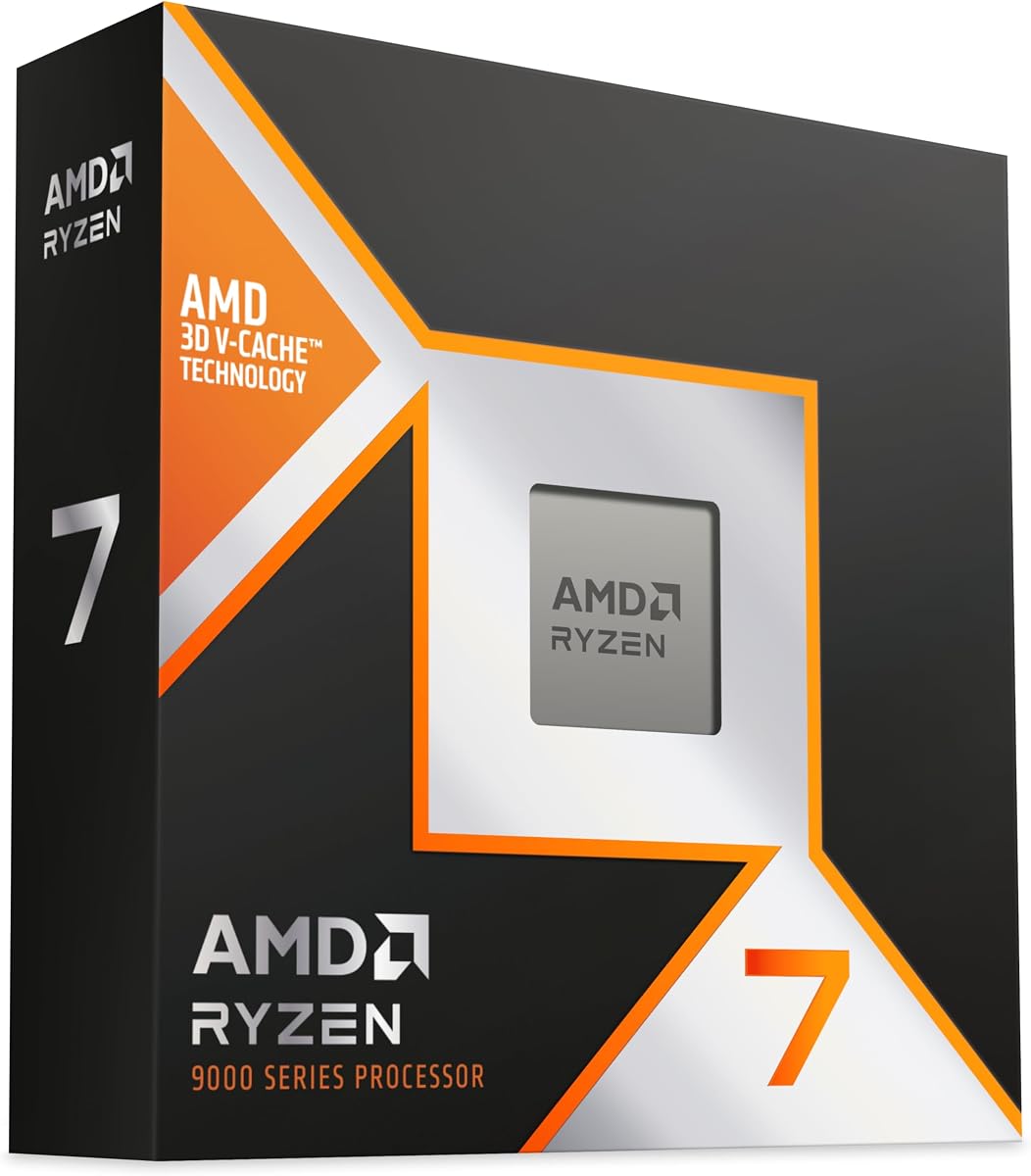
AMD RYZEN 7 9800X3D combines gaming power with AI readiness. Rated 4.8 stars, it features Zen 5 and 96MB L3 cache. The IPC uplift improves task execution speeds significantly.
We may earn a commission when you buy through this link, at no additional cost to you.
Boost clocks up to 5.2 GHz ensure responsive performance. Efficient design keeps thermal output manageable. For light ML and heavy multitasking, it provides balance. This unit is ideal for developers who also game.
Its cache helps reduce latency during computation. While fewer cores limit massive parallelism, single-thread speed shines. For hobbyists, this offers great value.
Buy this if you want performance for mixed tasks. It suits those who need speed and efficiency. For developers with gaming interests, this remains highly suitable.
96MB L3 cache improves data access speed, reducing latency during intensive computation tasks and frequent model training.
Better thermal performance than previous gens allows higher sustained clock speeds without overheating concerns.
We may earn a commission when you buy through this link, at no additional cost to you.
AMD Ryzen 7 7800X3D offers dependable execution for ML tasks. Rated 4.8 stars, it handles multitasking with 8 cores. The 96MB L3 cache improves hit rates during frequent data access.
We may earn a commission when you buy through this link, at no additional cost to you.
5nm process ensures reliability and efficiency. Clock speeds provide fast instruction execution. While not specialized for AI, it remains versatile. This unit works well for entry-level development and testing.
It avoids overheating thanks to efficient design. For small teams or individuals, it balances cost and speed. Performance is sufficient for basic workflows.
Choose this if you seek reliability without high costs. It suits those needing consistent performance. For developers wanting efficiency, this remains a great option.
Consistent clock speeds ensure predictable performance during long training jobs, reducing the risk of slowdowns.
5nm technology reduces power consumption while maintaining high throughput, making it economical for 24/7 usage.
We may earn a commission when you buy through this link, at no additional cost to you.
Intel Core i9-14900K delivers raw processing power. Rated 4.2 stars, it features 24 cores and 6.0 GHz boost. This speed benefits single-threaded tasks and general development.
We may earn a commission when you buy through this link, at no additional cost to you.
DDR5 support cuts load times for large datasets. Integrated graphics reduce initial hardware needs. While high power use requires cooling, performance is strong. It handles many development workflows well.
Its multi-thread capacity supports parallel processing. For users needing versatile power, it fits well. Consider cooling needs before purchase.
Buy this if you need top-tier general speed. It suits those wanting broad capability. For developers needing high throughput, this remains relevant.
Up to 6.0 GHz ensures rapid response times, which is crucial for iterative development and rapid testing cycles.
Support for DDR4 and DDR5 allows flexibility in system building while keeping performance high for demanding tasks.
We may earn a commission when you buy through this link, at no additional cost to you.
AMD Ryzen 7 9850X3D is a strong entry-level option. Rated 4.8 stars, it brings Zen 5 to AM5. High efficiency ensures smooth daily operations.
We may earn a commission when you buy through this link, at no additional cost to you.
Its 8 cores support basic multitasking and development. The architecture optimizes instruction per clock. For learning ML or light tasks, it works well.
Minimal specs mean fewer extras but reliable performance. Great for those prioritizing value and modern sockets.
Choose this if you need solid basics. It suits beginners or secondary builds. For developers wanting reliability, this fits well.
Zen 5 delivers improved performance per watt, ensuring smooth operations without excessive heat generation.
Socket AM5 ensures future upgrade options, allowing system longevity as you add more components over time.
We may earn a commission when you buy through this link, at no additional cost to you.
Selecting Cpus for Machine Learning requires matching specs to workflow needs. This guide covers key factors to prioritize before purchase.
More cores and threads allow parallel processing of data preprocessing and training tasks. For heavy workloads, aim for at least 12 cores to avoid bottlenecks.
Prioritize higher core counts if you run concurrent tasks or train multiple models simultaneously.
Large L3 cache improves data access speed during computations. It reduces latency when fetching frequently used data, accelerating training loops.
Look for processors with 64MB or more L3 cache for better performance in data-intensive tasks.
Some processors include NPUs or specialized AI units for inference. These offload work from CPU cores and save power.
Prioritize units with dedicated NPU support if you focus on local inference and low-latency models.
Support for DDR5 memory ensures faster data transfer rates between CPU and RAM. This is critical for large datasets and batch processing.
Choose CPUs with DDR5-5600 or higher support to maximize system throughput and reduce wait times.
AM5 and LGA1851 sockets offer long-term upgrade paths. This means you can upgrade GPU or CPU later without changing the motherboard.
Prioritize platforms with multi-year support to protect your investment as technology evolves.
Efficient processors run cooler and use less power during long training sessions. This reduces cooling costs and improves system stability.
Look for TDP ratings and benchmark efficiency to avoid excessive power usage during idle or load.
Compatibility with AI frameworks like ROCm or CUDA matters for development ease. Some hardware offers preloaded tools for faster setup.
Prioritize processors or systems with full stack support for your chosen OS and ML tools.
Prices vary significantly between general CPUs and dedicated AI desktops. Set a budget based on your needs to avoid overspending on unused features.
Balance performance with affordability by focusing on the factors that impact your specific workflows the most.
Ensure proper cooling and airflow to maintain stable performance. Overheating can cause throttling and slower training times.
Update drivers and firmware regularly to access performance optimizations and new features. This keeps your system secure and efficient.
Monitor power usage and temperatures with system tools. Adjust fan curves and workloads to balance speed and stability for long tasks.
A good CPU for ML has high core count, large cache, and fast memory support. Specialized AI units also help with inference speed. These features reduce training time and improve workflow efficiency.
Not necessarily. General CPUs handle many tasks well with proper GPU support. Dedicated AI units offer convenience for local inference but cost more. Assess your workload needs before deciding.
Memory speed and capacity directly impact data loading and batch sizes. DDR5 with high bandwidth helps avoid bottlenecks. Ensure you have enough RAM to hold large datasets in memory.
Yes, if you choose a platform with long-term support like AM5. This lets you swap CPUs without changing motherboards. Check chipset compatibility for future upgrades.
Efficient CPUs reduce electricity costs and cooling needs. Look at TDP and efficiency ratings. For 24/7 operations, lower power usage helps maintain system stability.
Most support standard frameworks like PyTorch or TensorFlow. Some offer ROCm or AI tools. Check driver support and compatibility with your OS before purchase.
Benchmark your current workflow speed and compare with CPU scores. If training takes too long, consider higher core counts or cache. Testing helps verify needs.
Most support standard PCIe GPUs but check generation compatibility. PCIe 5.0 ensures future-proofing. Verify your motherboard supports the GPU interface you need.
Our top picks highlight the NVIDIA DGX Spark, Ryzen AI Halo, and Ryzen 9 9900X for their balance of power and value. Each addresses different needs in the ML ecosystem.
Prioritize core counts, memory speed, and software support for best results. Ensure your system matches your workflow to avoid bottlenecks.
Always check current prices and availability before buying. Technology evolves quickly and deals vary. With the right Cpus for Machine Learning, you can achieve efficient local AI development.