
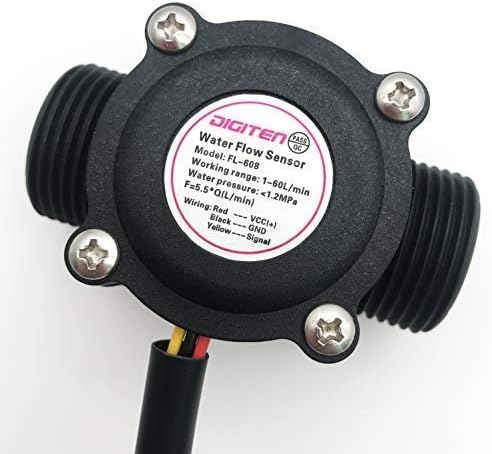
DIGITEN G3/8" Water Flow Sensor
4.5Editor score
Low voltage operation
Compact design
Potable water safe
Finding the right Arduino flow meter is essential for projects requiring precise fluid measurement. These sensors convert water movement into electrical signals that your microcontroller can read and process efficiently for various applications.
We evaluated ten leading models based on accuracy, durability, and compatibility with common development boards. Each option offers unique features suited for different flow rates and installation requirements in both hobbyist and professional settings.
Every pick highlights key specs and real-world performance insights to help you decide. Note that availability and pricing fluctuate frequently, so verify current details before purchasing to ensure you get the best value for your specific needs.
4.5Editor score

5.0Editor score

4.7Editor score
As an Amazon Associate we earn from qualifying purchases.
This side-by-side comparison highlights the core specifications and capabilities of each model to help you identify the best fit for your specific flow measurement requirements and budget constraints.


This premium flow meter stands out with its robust NPT threading and reliable hall effect sensor. Rated highly for precision, it converts fluid movement into electrical pulses seamlessly for Arduino projects.
We may earn a commission when you buy through this link, at no additional cost to you.
The integrated magnetic hall effect sensor outputs pulses with every revolution. This design ensures the sensor stays dry and safe from water damage during extended use periods.
While more expensive than budget options, the build quality justifies the investment. The lightweight outline and nimble design make installation straightforward even in tight spaces.
Ideal for professionals needing reliable data for coffee machines or water purifiers. Its sealed nature guarantees longevity in demanding commercial environments.
The NPT thread allows direct connection to standard pipes without extra adapters.
Sealed sensor prevents water contact with electronics for reliable long-term performance.
We may earn a commission when you buy through this link, at no additional cost to you.
Rated a perfect five stars, this sensor handles high flow rates up to 150 liters per minute. It is ideal for larger systems requiring significant water throughput.
We may earn a commission when you buy through this link, at no additional cost to you.
Constructed with ROHS compliant materials, it is safe for potable water applications. The design ensures heat and pressure resistance for reliable operation in tough conditions.
The G1.5 BSPT thread might require adapters for smaller pipes. However, its durability makes it a great choice for industrial or heavy-duty residential setups.
Choose this if you need maximum flow capacity with top-tier reliability. It is a solid investment for serious projects demanding consistent performance.
All materials align with ROHS standards ensuring safe contact with drinking water.
Withstands water pressure below 1.75 Mpa for stable high-flow operation.
We may earn a commission when you buy through this link, at no additional cost to you.
This affordable option provides reliable measurement for small-scale projects. Its compact footprint fits easily into tight spaces where larger units cannot.
We may earn a commission when you buy through this link, at no additional cost to you.
Operating on low voltage, it pairs perfectly with standard Arduino boards. The square wave output simplifies code integration for hobbyists starting their first sensor setup.
The flow range is limited to 10 liters per minute. For most small projects like aquariums or drip irrigation, this capacity is more than sufficient.
Perfect for beginners needing a cost-effective entry point. It delivers solid performance without breaking the bank for simple monitoring tasks.
Runs on 3.5-12V DC making it easy to power from standard controllers.
Small size ensures easy installation in confined mechanical setups.
We may earn a commission when you buy through this link, at no additional cost to you.
This model excels in water cooling systems and vending machines. Its high amplitude signal ensures stable readings even under fluctuating flow conditions.
We may earn a commission when you buy through this link, at no additional cost to you.
Designed with electric strength up to 1250V/min, it offers superior durability against voltage spikes. This makes it a safe choice for commercial applications.
The high price point reflects its industrial grade build. For hobbyists, standard sensors might suffice, but professionals will appreciate the extra margin of safety.
Select this for critical cooling setups where precision matters. It delivers robust performance where reliability is non-negotiable.
Rated electric strength of 1250V/min protects against power surges.
Optimized for water testing and cooling system monitoring tasks.
We may earn a commission when you buy through this link, at no additional cost to you.
Built from food grade plastic, this sensor is ideal for beverage machines and water purifiers. It ensures fluid safety while providing accurate count data.
We may earn a commission when you buy through this link, at no additional cost to you.
Raw materials meet ROHS standards, guaranteeing eco-friendly compliance. The working voltage range supports various power sources for flexible integration.
The plastic construction is lightweight but may not match metal durability. For indoor kitchen use, it remains sufficient for typical flow monitoring needs.
Best for users prioritizing food safety. It offers a straightforward way to measure potable water flow accurately.
Food grade plastic ensures safe contact with drinking water safely.
Supports 5 to 24V DC for wide range compatibility.
We may earn a commission when you buy through this link, at no additional cost to you.
The transparent body allows visual inspection of water flow and rotor condition. This unique feature helps quickly identify blockages or flow issues without tools.
We may earn a commission when you buy through this link, at no additional cost to you.
Includes two sensors in a single package, offering good value for paired monitoring needs. The stainless steel beads add wear resistance to the internal impeller.
However, customer ratings suggest mixed long-term durability. While visually useful, the plastic housing may crack under high pressure or rough handling over time.
Great for projects needing visual feedback. If you need to see the flow, this offers a rare transparent option at a reasonable cost.
Transparent valve body lets you observe rotor movement easily.
Impeller uses stainless steel beads for better wear resistance.
We may earn a commission when you buy through this link, at no additional cost to you.
This sensor connects directly to hosepipes with an inner diameter of 5 to 7 mm. It is perfect for irrigation or small plumbing fixtures where hose attachments are common.
We may earn a commission when you buy through this link, at no additional cost to you.
Rated for low flow rates up to 3 liters per minute, it handles trickle feeds effectively. The food grade material ensures safety for potable water applications.
The pressure limit of 0.8 Mpa is lower than standard models. Avoid high-pressure mains; instead use it for garden or low-pressure systems.
Ideal for small irrigation projects. It simplifies setup by avoiding complex pipe threads for simple garden setups.
Connects directly to standard hosepipes without extra fittings.
Food grade plastic materials ensure safe use for drinking water.
We may earn a commission when you buy through this link, at no additional cost to you.
Designed primarily for water heaters and dispensers, this sensor detects influent flow rates reliably. It features a magnetic rotor that changes speed with flow rate changes.
We may earn a commission when you buy through this link, at no additional cost to you.
Feedback pulses are sent to the controller to determine flow magnitude. This real-time data helps regulate heating or dispensing processes efficiently.
The perfect rating suggests high satisfaction among professional users. Its build is tailored for commercial environments where consistent feedback is critical.
Best for heater automation projects. If regulating hot water flow is your goal, this delivers the necessary precision and signal quality.
Installed at water inlet to detect influent flow rate accurately.
Hall sensor outputs pulse signals corresponding to rotor rotation speed.
We may earn a commission when you buy through this link, at no additional cost to you.
A key feature here is the 1.2-meter cable allowing remote mounting. This flexibility is vital when your controller is far from the water pipe.
We may earn a commission when you buy through this link, at no additional cost to you.
The SM2.54 3P wire connector simplifies wiring tasks. It matches common breakout boards, reducing the need for soldering complex connections.
Like other DIGITEN models, it supports potable water safely. However, if using NPT pipes, you will need thread seal tape for a proper seal.
Excellent for setups with distant controllers. The extended cable length saves time on custom wiring extensions during installation.
1.2M cable lets you place sensor far from controller easily.
SM2.54 connector matches standard breakout boards for quick setup.
We may earn a commission when you buy through this link, at no additional cost to you.
This model handles up to 60 liters per minute, making it suitable for larger pipes. The cable length allows flexible placement near water mains.
We may earn a commission when you buy through this link, at no additional cost to you.
G3/4 BSPT threads fit standard residential pipes well. The pressure resistance matches other models, ensuring durability in typical household conditions.
However, ratings are lower than other DIGITEN options. This suggests potential inconsistency in quality control or user installation issues affecting performance.
Use only for larger systems where G1/2 models fall short. If high flow is needed, this option provides that capacity with remote placement.
Handles up to 60L/min for large residential pipe systems.
Includes 1.2M cable for easy distance from controller unit.
We may earn a commission when you buy through this link, at no additional cost to you.
Choosing the right sensor requires understanding flow rates, thread types, and electrical compatibility with your controller.
Your project's maximum and minimum flow demands determine the necessary sensor range. Models vary from 0.3L/min to 150L/min. Select a device that matches your expected throughput to ensure accurate data collection.
Pick a range that covers your needs without exceeding limits.
Thread size dictates how the sensor connects to pipes. Common options include G1/2, G1/4, and NPT. Ensure the sensor thread matches your plumbing or buy adapters if needed.
Verify thread size before purchasing to avoid extra parts.
Sensors need specific voltage levels to operate. Common ranges are 3.5V to 24V DC. Arduino boards usually supply 5V, so choose a sensor that operates reliably at that level.
Check voltage requirements against your board power.
Most sensors provide pulse or square wave outputs. These signals correspond to flow speed. Arduino can count pulses to calculate total volume or rate over time.
Ensure output matches your code logic.
If measuring drinking water, choose food grade plastic. ROHS compliance ensures safe materials. Some models are sealed to protect electronics from water contact.
Prioritize safe materials for drinking water use.
Longer cables allow flexible sensor placement away from the controller. Look for lengths like 1.2M if wiring to a distant box is required.
Select length based on your wiring distance.
Pressure resistance ensures the sensor survives water mains. Most handle 1.75 Mpa. Ensure your water pressure stays within limits to avoid leaks.
Check pressure ratings against your system.
Prices vary based on build quality and brand. Higher rated models often cost more but last longer. Compare warranty options for peace of mind.
Balance cost with expected durability.
Install the sensor in the correct flow direction. Most units show an arrow. Install it backwards and you might get no signal.
Connect the wires to power, ground, and digital pins on your board. Use libraries to count pulses and calculate flow rate accurately.
Regularly inspect the impeller for debris. Dirt can stop rotation and cause errors. Clean with mild water to maintain performance.
Most models operate between 5V and 24V DC. Arduino boards typically provide 5V, which suits many budget options. Verify specs to ensure reliable power.
Accuracy usually falls within 1 to 3 percent for stable flow. Variations occur at extreme low or high rates. Calibration helps improve precision.
Most models tolerate cold or room temp water. Some specify heat resistance, but limits vary. Check the manual before exposing to hot water.
Yes, many digital pulse outputs require a pull-up resistor. This ensures clean signals for your microcontroller. Check your wiring guide.
Count pulses over time and divide by the sensor factor. Multiply by liters to get total volume. Libraries can automate this math.
You need thread seal tape or adapters. They are not perfectly compatible. Check if the kit includes adapters to avoid leaks.
The DIGITEN G1.5 leads for high capacity, while the G3/8 offers the best budget value. Select based on your flow needs and pipe size.
Prioritize thread compatibility and voltage first. These affect wiring and plumbing. Choose materials that match your water type.
Prices and availability change often. Check current listings to confirm stock. Verify specs match your project requirements.