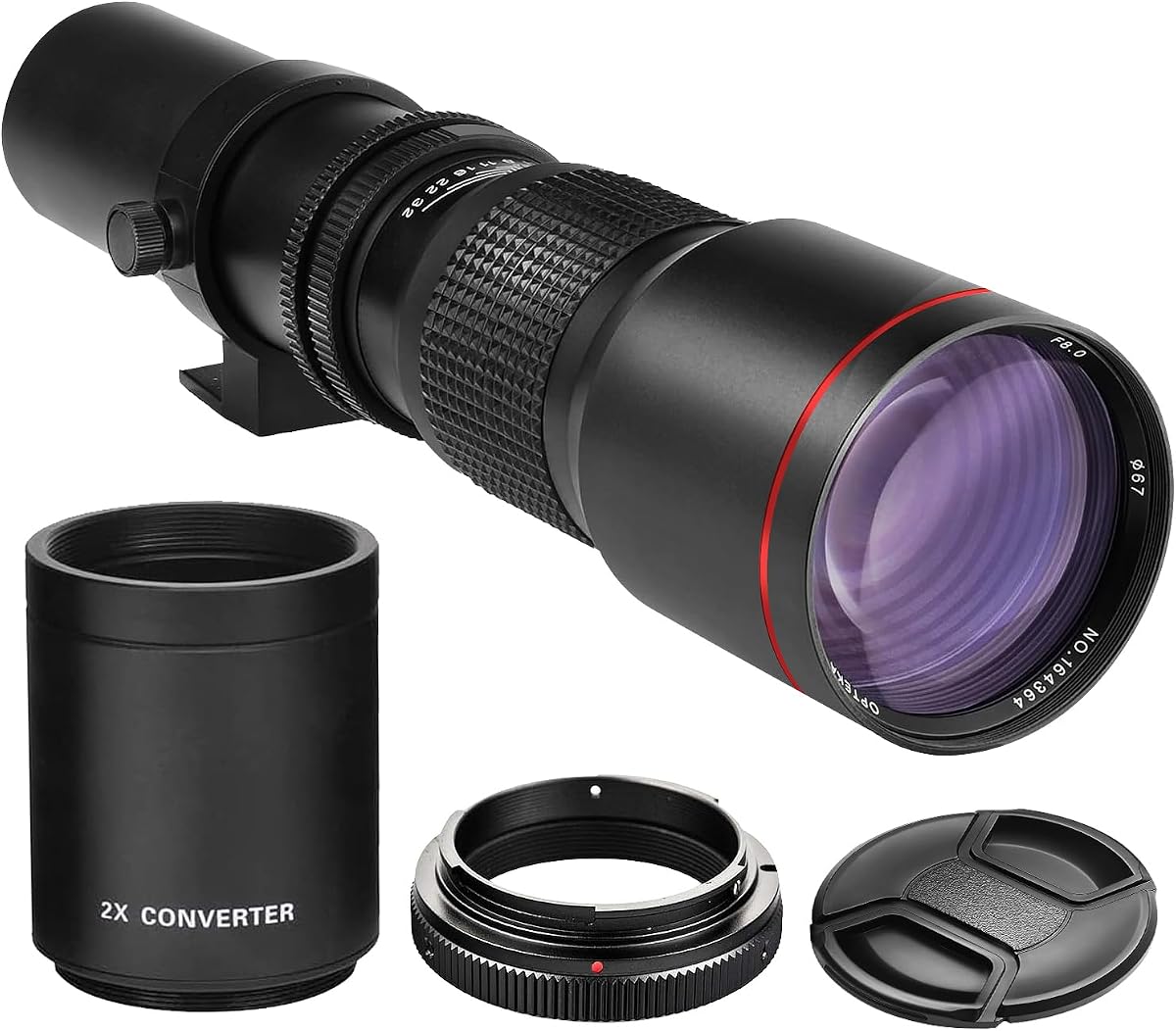
High-Power 500mm/1000mm f/8 Manual Telephoto Lens
4.0Editor score
1000mm equivalent reach
Manual focus control
Affordable price point
This guide compares the top camera lens for long distance wildlife photography to help you choose the best telephoto option for capturing sharp animal images.
Capturing wildlife from a safe distance requires the right optical tools. A quality camera lens for long distance wildlife lets you frame elusive animals clearly without disturbing them. This guide helps you find the perfect match for your camera system and budget needs.
We evaluated ten top-rated telephoto lenses based on reach, image quality, and handling. Each product offers unique strengths for birding, safari shots, or nature documentation. Our analysis focuses on real-world performance traits that matter most to outdoor photographers.
Every pick includes key specs, pros, cons, and detailed usage insights. Prices fluctuate often so verify current deals before buying. Use this resource to invest wisely in gear that delivers crisp results across varied wildlife scenarios.
4.0Editor score
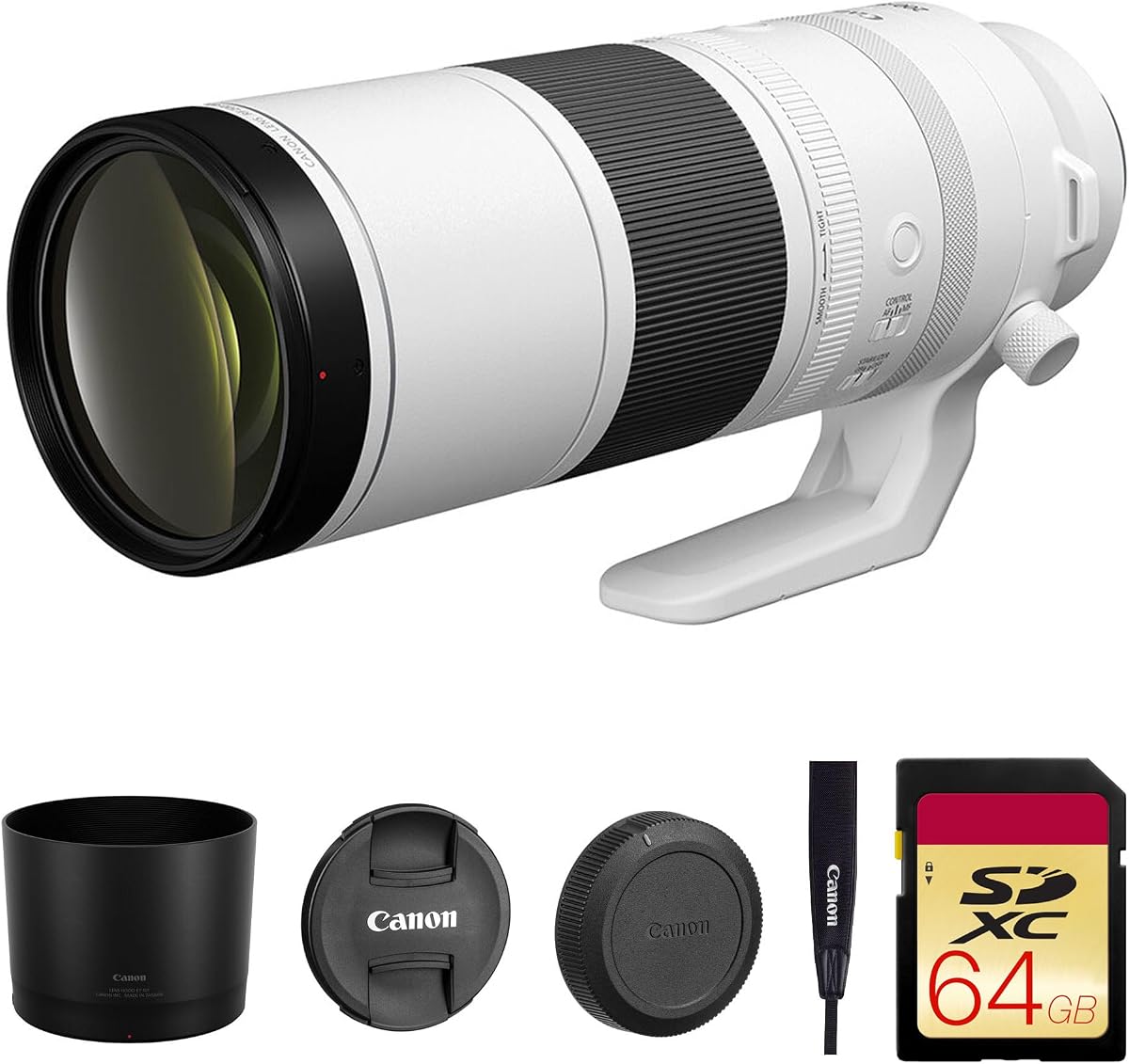
4.7Editor score

4.0Editor score
This table presents a side-by-side overview of all ten reviewed lenses. Compare focal ranges, mount types, stabilization features, and value propositions to identify the ideal tool for your wildlife photography goals.



The Canon RF 200-800mm lens leads our list with its incredible versatility. It combines an extended zoom range with reliable stabilization, making it ideal for diverse wildlife scenarios. With a 4.7 rating, users praise its optical performance and handling.
We may earn a commission when you buy through this link, at no additional cost to you.
Key strengths include the 200 to 800mm zoom range. This allows framing everything from distant birds to larger mammals without swapping gear. The built-in image stabilization ensures sharp handheld shots even at full extension. The USM autofocus tracks moving subjects swiftly and quietly.
Trade-offs exist primarily around the variable aperture which narrows at longer focal lengths. This can limit low-light performance compared to prime telephoto lenses. However, modern sensors handle higher ISOs well mitigating most issues. The weight remains manageable for travel use.
Wildlife photographers seeking a single powerful telephoto option should consider this lens. It suits Canon mirrorless users prioritizing reach and quality. The bundle adds value with a memory card for immediate testing. For serious nature work, this is a top-tier investment.
The 800mm end lets you capture animals that stay far away, reducing disturbance and safety risks during observation sessions.
Built-in IS lets you shoot without a tripod in many conditions, giving flexibility when setting up gear is impractical.
We may earn a commission when you buy through this link, at no additional cost to you.
This lens matches the previous model but is often sold as a standalone unit. It holds a 4.6 rating for its powerful zoom range and compact form. Users appreciate the ability to shoot comfortably without heavy support gear. It excels in wildlife and sports contexts.
We may earn a commission when you buy through this link, at no additional cost to you.
Its defining trait is the 800mm telephoto end within a zoom. This provides maximum reach for distant wildlife without requiring multiple lenses. The design is lighter than many super-telephoto primes. Optical optimization maintains sharpness across the entire focal span reliably.
As with many super-telephoto zooms, aperture shrinks at the long end. This can impact depth of field control and low-light shooting. However, the speed of autofocus and stabilization compensates well. It remains a strong choice for daylight fieldwork.
If you own a Canon R series camera, this lens offers unmatched flexibility. It is great for travelers needing long reach without bulk. The option to add extenders boosts versatility further. For handheld nature photography, this ranks very highly.
The range from 200 to 800mm adapts to changing distances, letting you track moving animals without changing lenses mid-scene.
Using 1.4x or 2x extenders extends focal reach further for extreme distance shots while maintaining compatibility and performance.
We may earn a commission when you buy through this link, at no additional cost to you.
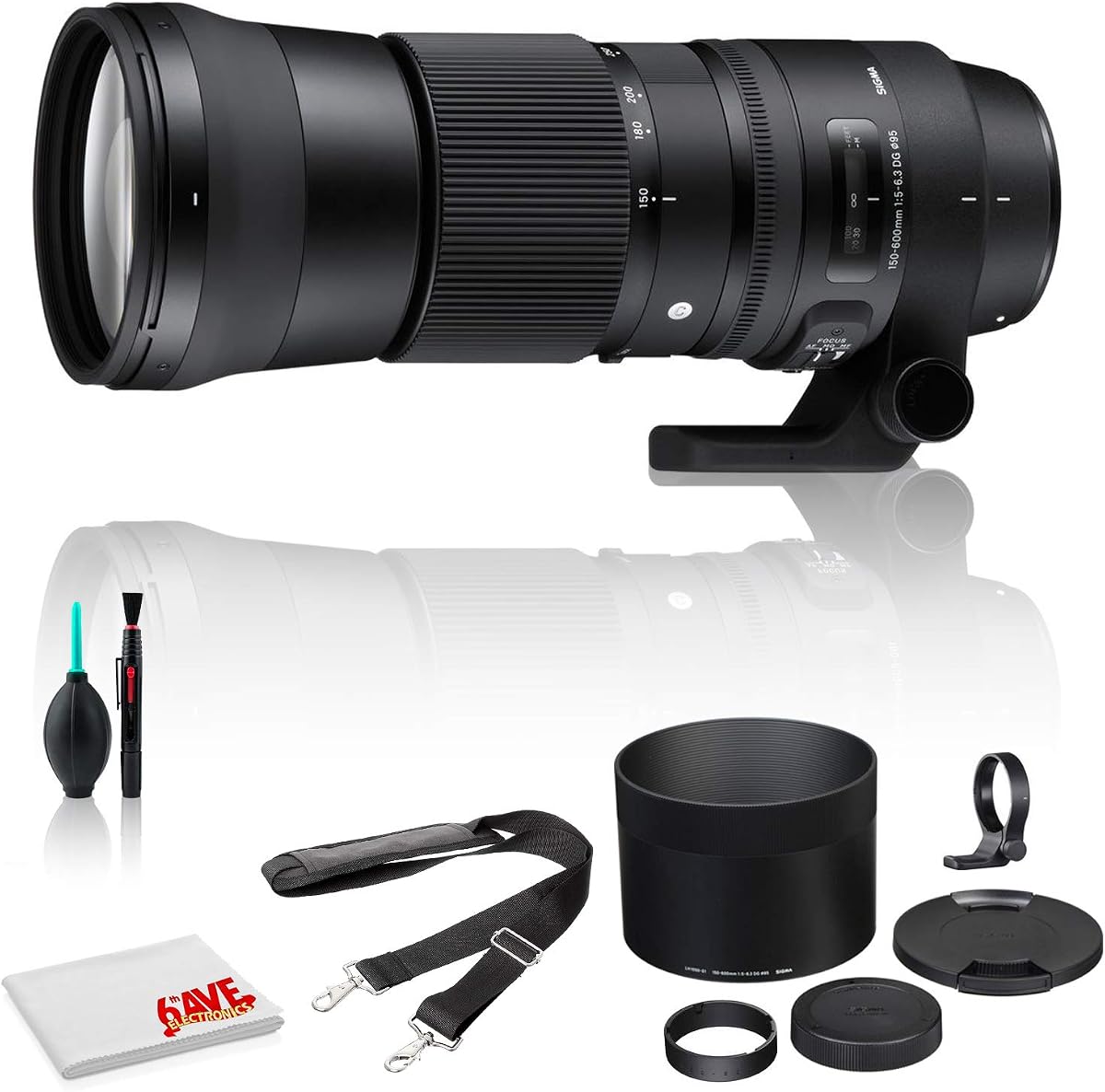
Sigma's Contemporary lens offers excellent value for DSLR owners. It carries a 4.5 rating for balancing price and performance. The 150 to 600mm range covers most wildlife needs. Many users favor its optical clarity and stable handling outdoors.
We may earn a commission when you buy through this link, at no additional cost to you.
Strengths lie in its extensive zoom range and stabilization. The OS system keeps images sharp at slower shutter speeds. Its AF is reliable using the HSM motor for consistent focus. The bundle includes cleaning tools which adds practical value.
Weight is a consideration as it is heavier than RF counterparts. Tripod use is often needed at 600mm for sharp results. AF can be slightly noisier than newer models. Despite this, it delivers professional-level images for the price.
Photographers with Canon DSLRs seeking long reach will find this compelling. It suits those who prioritize focal range over weight. The cleaning kit shows attention to user needs. For budget-conscious wildlife shooters, this lens stands out.
The 150 to 600mm span handles birds, mammals, and landscapes, offering flexibility without swapping lenses in the field.
OS reduces shake significantly allowing sharper handheld images especially when shooting from vehicles or uneven terrain.
We may earn a commission when you buy through this link, at no additional cost to you.
This manual lens offers extreme reach at an entry-level price. With a 4.0 rating, it attracts beginners and budget hunters. The 500mm to 1000mm range is impressive for the cost. Users note its sturdy build and decent clarity in good light.
We may earn a commission when you buy through this link, at no additional cost to you.
Its main advantage is affordability and focal reach. You get 1000mm power without a premium cost. The multi-coated glass improves contrast and reduces flare. EF mount compatibility makes it easy to use on many DSLRs.
Focus is manual only which demands patience and skill. Fast action subjects can be hard to capture precisely. The fixed f/8 aperture limits low-light usability. Still, for static or predictable wildlife, it performs well enough.
For casual shooters needing maximum range on a budget, this is a viable tool. It teaches focus skills and offers surprising reach. Use a tripod for best results. If price dictates choice, this delivers value despite limitations.
The 1000mm equivalent reach brings distant subjects close without breaking the bank, ideal for experimentation or learning.
Manual focus allows intentional composition adjustments and deeper engagement with the subject during capture sessions.
We may earn a commission when you buy through this link, at no additional cost to you.
This L-series lens remains a favorite for DSLR wildlife pros. It holds a 4.0 rating for consistent image quality. The 100 to 400mm range balances flexibility and reach. Many users value its rugged construction and optical precision in tough conditions.
We may earn a commission when you buy through this link, at no additional cost to you.
Key strengths include advanced optics and fast AF. Fluorite and UD elements minimize aberrations for sharp results. The ring-type USM delivers quick and quiet focusing. It supports extenders for even greater focal reach when needed.
It lacks modern RF mount features and adds weight. The aperture is smaller at 400mm compared to primes. Price is higher but justified for professionals needing reliability. Weather resistance helps in harsh environments.
If you use Canon EF DSLRs, this lens offers top-tier results. It suits those who prioritize image quality and durability. The bundle adds useful filters. For high-end wildlife work, this remains a trusted choice.
Premium glass like fluorite reduces chromatic aberration ensuring crisp images with high color accuracy and contrast.
A removable rotating tripod collar ensures balanced support when using heavy gear on a tripod for steady shots.
We may earn a commission when you buy through this link, at no additional cost to you.
This lens pushes zoom limits with up to 1600mm reach. It holds a 4.0 rating for its unique capability at low cost. Users report sharp images when stabilized properly. The HD glass helps clarity despite manual operation.
We may earn a commission when you buy through this link, at no additional cost to you.
Its standout feature is the massive zoom extension. With a 2x teleconverter it hits 1600mm. This is ideal for very distant subjects. The focus ring allows fine adjustments. Build feels solid for outdoor adventures.
Manual focus demands practice especially for moving animals. Weight can be substantial during long hikes. Aperture limits light entry. For static wildlife, it works well. Tripod use is recommended for stability.
Shooting seeking extreme reach on a budget will find this intriguing. It teaches patience and framing. Good for stationary nature subjects. Despite challenges, it delivers unique perspective not easy to get otherwise.
The 1600mm capability brings distant subjects into view that are otherwise unreachable, perfect for shy wildlife.
Variable zoom lets you adapt quickly without changing lenses, allowing composition adjustments in real-time.
We may earn a commission when you buy through this link, at no additional cost to you.
This RF lens stands out for its compact size. With a 4.6 rating, it is praised for handling and clarity. The 100 to 400mm range fits many field uses. Users like the quiet autofocus and sharp output in varied conditions.
We may earn a commission when you buy through this link, at no additional cost to you.
Key strengths include minimal weight and great IS. The Nano USM ensures fast silent focusing. It pairs well with IBIS bodies for up to 6 stops of correction. Sharpness stays consistent across the focal range.
Aperture narrows at 400mm limiting low-light use. It lacks the extreme reach of longer lenses. For travel and walkabout work it excels. The small size reduces fatigue during long outings.
For Canon R users wanting a portable telephoto, this is ideal. It suits birding and wildlife walks. The focus smoothness aids video too. If weight is a priority, this lens delivers excellent balance.
The compact form factor makes carrying it all day easy, reducing fatigue during long wildlife expeditions.
Nano USM delivers quiet and smooth focusing, beneficial for wildlife that react to noise and movement.
We may earn a commission when you buy through this link, at no additional cost to you.
This lens is a classic entry-level telephoto for DSLRs. It carries a 4.7 rating for value and simplicity. The 75 to 300mm range suits basic zoom needs. Many users find it lightweight and easy to handle.
We may earn a commission when you buy through this link, at no additional cost to you.
Strengths include price and portability. It weighs only 16.8 ounces. The zoom ring operates smoothly. Close focus helps with small wildlife. Despite age, optics deliver decent results in daylight.
Lack of stabilization requires fast shutter speeds. AF is slower and noisier than modern lenses. It struggles in low light. Still, for learning or casual use, it works adequately.
Beginners seeking a first zoom lens may prefer this. It offers basic telephoto experience at low cost. Keep it steady or use high shutter speeds. For light budget work, it remains an option.
Weighing under 17 ounces, it is easy to carry, ideal for beginners or casual shooters on a budget.
The smooth zoom ring helps adjust framing quickly, making it user-friendly for those new to telephoto work.
We may earn a commission when you buy through this link, at no additional cost to you.
This Nikon bundle suits wildlife fans of that brand. It holds a 4.2 rating for sharp results. The 200 to 500mm range suits most outdoor needs. Users appreciate the VR system and solid build quality in the field.
We may earn a commission when you buy through this link, at no additional cost to you.
Strengths include reach and VR stabilization. The Silent Wave Motor provides quick accurate focusing. Three low dispersion elements reduce fringing. Accessories like filters and cleaning kits add value immediately.
It is heavy which makes handheld work harder at 500mm. Tripod use is often recommended. Price reflects professional features but might exceed budget for some. Still performance justifies the cost.
Nikon DSLR users needing super-telephoto performance will like this lens. It delivers crisp images and reliable AF. The bundle aids immediate use. For nature shooters, this is a strong option.
VR stabilizes images during handheld shooting, allowing slower shutter speeds and sharper photos in challenging conditions.
Extra-low dispersion elements minimize color fringing ensuring high clarity and accurate color reproduction in images.
We may earn a commission when you buy through this link, at no additional cost to you.
Renewed products offer great value for entry-level needs. This lens holds a 4.7 rating. It provides the same capabilities as new. Users find it reliable after testing. The condition is verified for performance quality.
We may earn a commission when you buy through this link, at no additional cost to you.
Advantages include lower cost and included warranty. The zoom range remains useful for basics. DC motor focuses acceptably. Weight stays low for comfortable carrying. It is a smart buy if budget is tight.
Physical condition may vary slightly from new items. Handling and image quality match original specs. Still, check return policies before buying. It suits budget conscious buyers looking for savings.
Those seeking affordable telephoto can consider this renewed option. It delivers reliable function without full retail price. Good for casual shooting. Ensure the seller has strong ratings for peace of mind.
Renewed options provide same functionality at a lower price, ideal for those needing cost-effective camera solutions.
Pre-owned units undergo testing to ensure proper function before sale, giving confidence in performance reliability.
We may earn a commission when you buy through this link, at no additional cost to you.
Selecting the right telephoto lens depends on your camera system, budget, and shooting conditions. Understanding key specs helps you find a lens that fits your wildlife needs.
Focal length determines how close subjects appear. For distant wildlife, 400mm or longer is recommended. Lenses ranging from 200 to 800mm offer great flexibility for varying distances.
Aim for at least 400mm equivalent reach to capture animals without getting too close. Longer focal lengths help maintain safety and minimize animal disturbance.
Ensure the lens fits your camera body. Canon DSLRs use EF, while mirrorless use RF. Nikon DSLRs use F. Check compatibility before buying to avoid adapter issues.
Matching lens mount to camera ensures full autofocus and stabilization performance. Adapters can work but may limit speed.
Fast autofocus is vital for moving animals. Look for USM or SWM motors which offer quick and quiet focus. Silent motors prevent scaring wildlife during shoots.
Prioritize lenses with responsive AF systems to track moving birds or mammals accurately without delays or noise.
Stabilization reduces camera shake allowing sharper images at slower shutter speeds. Many lenses include optical IS while cameras may have in-body stabilization for added benefit.
Choose lenses with built-in IS or pair with IBIS bodies to ensure clarity especially when shooting handheld in low light.
Durable construction helps in outdoor conditions. Weather sealing adds protection. Weight matters for hiking or long sessions. Lighter lenses reduce fatigue while heavier ones often offer premium optics.
Balance build durability with weight considerations. If hiking, prioritize lighter options even if specs are modest.
Wider apertures allow more light. Telephoto zooms often narrow at long ends. Fixed f/8 helps in better light. Consider your typical shooting conditions when evaluating aperture.
Larger apertures help in shaded or twilight settings but zooms often limit this. Check aperture across zoom range.
Some lenses come with filters or cleaning kits. These add value. Filters help with lens protection and glare. Cleaning tools keep optics clear for sharp shots.
Bundles can save money on essential gear. Ensure included items are practical and durable for field use.
Cost varies widely. Higher prices often mean better optics and features. Balance budget with performance needs. Renewed options can offer savings without big sacrifice.
Invest in what matches your skill and needs. Entry-level gear can suffice for beginners while pros may need top tier.
Mount the lens securely on your camera body. Lock it firmly to prevent loosening. Adjust settings to match shooting conditions. Ensure stabilization is on unless on a tripod.
Keep the front and rear elements clean with a microfiber cloth. Use lens caps when not in use to protect glass. Store the lens in a dry case to avoid moisture damage or scratches.
Practice focusing techniques before field trips. Learn how to track moving subjects smoothly. Review photos often to check sharpness. Adjust focus settings for wildlife speed.
A focal length of 400mm or more is generally recommended for wildlife photography. This allows you to capture distant subjects without disturbing them. Zoom lenses from 200 to 800mm offer great versatility for various distances.
It depends on the lens weight and stabilization. Lighter lenses with good image stabilization can be handheld. Heavier options at long focal lengths benefit from a tripod to reduce shake and maintain sharpness.
EF mounts are for Canon DSLRs while RF mounts are for Canon mirrorless cameras. RF lenses are optimized for mirrorless bodies providing faster communication and better performance. Adapters allow EF lenses on RF bodies.
Many super-telephoto lenses support extenders like the 1.4x or 2x. This increases focal reach further. Check specific compatibility as not all lenses work well with every extender.
Fast autofocus ensures you capture moving animals before they leave the frame. Slower AF can miss shots. Silent motors prevent scaring wildlife. High-speed tracking helps maintain focus on moving subjects.
Keep lenses dry and clean. Use lens caps to protect glass. Store in cases to prevent scratches. Avoid sudden temperature changes. Regular cleaning maintains optical clarity and longevity.
This guide highlights ten versatile lenses for wildlife photography. The Canon RF 200-800mm leads with reach and quality. Budget options offer impressive value for casual shooters.
Prioritize mount compatibility and stabilization features. Consider your budget and physical needs when selecting. A lighter lens may be more usable in the field.
Always check current prices before buying as deals change. This guide helps you make an informed choice for capturing distant wildlife with clarity.