
Canon EF 50mm f/1.8 STM Lens
4.8Editor score
f/1.8 maximum aperture
Silent STM motor
Affordable price point
This expert guide compares the top camera lenses for product photography to help you choose the right glass for sharp details and professional results.
Choosing the right camera lens for product photography is essential for capturing sharp details and true colors that sell items online effectively.
We compared ten top-rated lenses based on optical quality, aperture size, and compatibility to help you find the best tool for your specific camera needs.
Each pick shows key specs and pros to guide your decision while noting that prices and availability change frequently so check current listings before buying.
4.8Editor score

4.8Editor score
4.7Editor score
This side-by-side comparison table highlights the key specifications and capabilities of each lens to help you quickly identify the best match for your setup.


The Canon RF24-70mm F2.8 L IS USM Lens is a professional grade zoom that earns its top ranking with exceptional optical clarity and versatility for product shots.
We may earn a commission when you buy through this link, at no additional cost to you.
Its bright f/2.8 aperture ensures consistent light intake across the zoom range while the optical stabilization allows sharp handheld images even in lower light studio settings.
While the price is high for some budgets the image quality justifies the cost and the RF mount ensures perfect integration with modern Canon mirrorless cameras.
This lens is ideal for serious product photographers who need a single versatile lens for close ups and wider shots without changing glass frequently during a shoot.
The 24-70mm range covers wide context shots to tight product details making it a one lens solution for most photography workflows.
With up to five stops of correction you can shoot at slower shutter speeds without blur which is crucial for maintaining depth of field.
We may earn a commission when you buy through this link, at no additional cost to you.
The Canon EF 50mm f/1.8 STM Lens is widely known as the plastic nifty fifty and it delivers incredible value for beginners looking to shoot product photography on a budget.
We may earn a commission when you buy through this link, at no additional cost to you.
Its f/1.8 aperture creates beautiful background blur while maintaining sharp focus on the product which is perfect for highlighting details without distracting elements.
Although it lacks the weather sealing of higher end lenses the STM motor ensures smooth and silent focusing that works well for both stills and video content.
This lens is the perfect starting point for those transitioning from kit lenses who want professional results without investing in expensive glass immediately.
Despite its low cost the lens delivers crisp images across the frame with minimal distortion which is essential for accurate product representation.
The stepping motor provides near silent continuous autofocus that is ideal for capturing product videos without unwanted mechanical noise.
We may earn a commission when you buy through this link, at no additional cost to you.
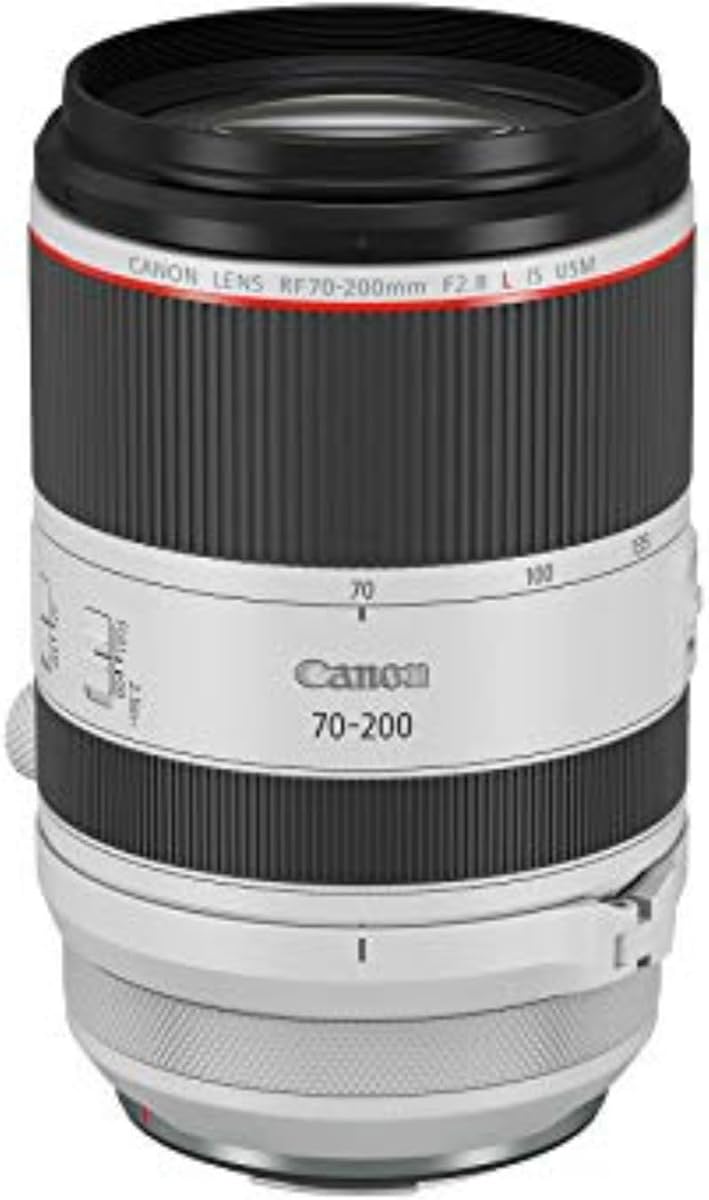
The Canon RF70-200mm F2.8 L IS USM Lens brings professional telephoto capabilities to the RF system with a design that prioritizes portability without sacrificing image quality.
We may earn a commission when you buy through this link, at no additional cost to you.
It is particularly effective for shooting products from a distance or isolating details with a narrow depth of field which enhances the visual appeal of the subject.
The dual Nano USM motors ensure rapid and silent autofocus performance while the optical stabilization compensates for camera shake during handheld shots.
For photographers who need a high-end telephoto for catalog work this lens offers the reliability and optical excellence expected from the L-series line.
The 70-200mm range allows you to compress perspective and isolate subjects which is often desired in fashion and object product photography.
Unlike many telephoto zooms this lens is built to be lighter and more compact making it easier to carry for location shoots.
We may earn a commission when you buy through this link, at no additional cost to you.
The Canon EF 75-300mm f/4-5.6 III Telephoto Zoom Lens provides a long reach at an accessible price point which is useful for specific product photography tasks.
We may earn a commission when you buy through this link, at no additional cost to you.
While the variable aperture limits light intake at the telephoto end the zoom range allows you to frame distant subjects or fill the frame with small items easily.
The DC motor provides functional autofocus though it is not as fast as newer USM systems making it better suited for static product setups than action shots.
This lens is a practical choice for those needing extra focal length on a tight budget or looking for a light option for travel photography.
The ability to zoom up to 300mm helps in isolating small details without getting physically too close to the product which can cast shadows.
As a renewed product it offers significant savings while still delivering acceptable image quality for casual or entry level commercial work.
We may earn a commission when you buy through this link, at no additional cost to you.
The EF 85mm f1.8 Portrait Lens – MF offers a fully manual focus design that allows photographers to exercise complete control over focus and exposure settings.
We may earn a commission when you buy through this link, at no additional cost to you.
Its 85mm focal length and f/1.8 aperture produce beautiful bokeh and sharp subject separation which is highly desirable for stylized product imagery.
While the lack of autofocus requires more time and patience during shooting it also forces you to slow down and think about each composition carefully.
This lens is best suited for photographers who enjoy the manual process and want to achieve a unique artistic look without relying on electronic focusing.
The smooth focus ring allows for precise adjustments which is critical when shooting macro details or shallow depth of field product shots.
By controlling focus manually you can create unique visual effects that draw the eye exactly where you want it in the frame.
We may earn a commission when you buy through this link, at no additional cost to you.
The Canon RF50mm F1.8 STM Lens is the mirrorless equivalent of the classic nifty fifty designed specifically for the RF system with compact lightweight build.
We may earn a commission when you buy through this link, at no additional cost to you.
It delivers excellent optical performance with a large aperture that allows for creative background blur and better low light shooting capabilities in studios.
The inclusion of a control ring provides direct access to settings like ISO and aperture which streamlines the workflow when shooting product setups.
This lens is an essential tool for EOS R users seeking an affordable prime lens that maintains high quality and portability for daily photography tasks.
Its small size makes it easy to carry and store which is beneficial for photographers who travel or work in limited studio spaces.
The customizable control ring speeds up shooting by allowing quick adjustments without diving into menus during a photoshoot session.
We may earn a commission when you buy through this link, at no additional cost to you.
The Sigma Fixed Focal length 135mm F1.8 DG HSM ART is renowned for its superior optical quality and is often considered a benchmark for portrait and product photography.
We may earn a commission when you buy through this link, at no additional cost to you.
Its large f/1.8 aperture at 135mm allows for incredible subject isolation and compression which can make products stand out dramatically against blurred backgrounds.
The lens is handcrafted and individually evaluated ensuring high build quality and consistency though the weight may be a consideration for handheld shooting.
For photographers who demand the highest optical performance and are willing to invest in a heavy premium lens this is a top tier choice for studio work.
Sigma ART lenses are known for resolving extreme detail which ensures that even the finest textures on products are captured accurately.
The dust and splash proof mount adds durability allowing you to shoot confidently in varied environments without worrying about minor weather conditions.
We may earn a commission when you buy through this link, at no additional cost to you.
The Xenvo Pro Lens Kit for iPhone and Android provides an affordable way to upgrade smartphone photography with dedicated macro and wide angle lenses for product shots.
We may earn a commission when you buy through this link, at no additional cost to you.
The included GlowClip LED light helps illuminate subjects evenly which is a significant advantage when shooting products with limited studio lighting or on location.
While it cannot match the resolution of dedicated cameras it offers a convenient solution for social media content creators and small business owners.
This kit is ideal for those who need to take product photos quickly without carrying heavy equipment and who primarily distribute images digitally.
The clip-on design allows you to use the camera you already have in your pocket making professional level product photography accessible to everyone.
The rechargeable LED light provides a consistent warm tone that helps avoid harsh shadows which is crucial for professional looking product images.
We may earn a commission when you buy through this link, at no additional cost to you.
The Canon EOS Rebel T7 DSLR Camera Double Zoom Lens Kit offers a comprehensive entry point into DSLR photography with two lenses covering a wide focal range.
We may earn a commission when you buy through this link, at no additional cost to you.
The 18-55mm lens handles general product needs while the 75-300mm telephoto allows for detailed shots from a distance which is useful for small items.
Built-in Wi-Fi and NFC technology simplify the transfer of images to your computer or phone making it easier to share product photos quickly.
This kit is perfect for beginners who want a full camera system with multiple lenses without the high cost of buying body and glass separately.
Having both a wide angle and a telephoto lens in the box means you can experiment with different perspectives immediately without additional purchases.
The ability to connect to smartphones via Wi-Fi ensures that you can send product images to clients or upload to social media instantly.
We may earn a commission when you buy through this link, at no additional cost to you.
The Canon EF 200mm f/2.8L II USM Telephoto Fixed Lens is a classic telephoto option that delivers exceptional image quality for detailed product photography needs.
We may earn a commission when you buy through this link, at no additional cost to you.
With its fixed 200mm focal length it forces you to compose carefully which often results in stronger images and more intentional framing of the subject.
The L-series build quality ensures durability and consistent optical performance over years of use making it a reliable choice for professional environments.
This lens is suited for photographers who want a dedicated telephoto lens for close-up details and are comfortable working with a fixed focal length.
Using a fixed lens encourages you to move your feet and think more critically about composition which can lead to more dynamic product images.
The high quality glass construction ensures minimal aberration and maximum sharpness which is vital when capturing intricate product textures and labels.
We may earn a commission when you buy through this link, at no additional cost to you.
Selecting the right lens depends on your camera system, budget, and the specific types of products you photograph most often.
Focal length determines the field of view and compression which affects how your product appears in the frame and whether you need to move closer or further away.
For product photography a standard range between 50mm and 85mm on full frame is often ideal for natural perspective without distortion.
A larger maximum aperture like f/2.8 or f/1.8 allows more light and creates a shallower depth of field which helps isolate the product from the background.
Consider your lighting environment when choosing an aperture since wider apertures offer more flexibility in lower light studio conditions.
Zoom lenses offer convenience and flexibility to change framing quickly while prime lenses often provide better optical quality and wider apertures at a lower cost.
Decide if you prioritize versatility or maximum image quality when deciding between a zoom range and a single fixed focal length option.
Ensure the lens mount matches your camera body exactly since using an adapter can affect performance and image quality especially for mirrorless systems.
Check if the lens supports your camera's autofocus features and electronic controls to ensure smooth operation during shoots.
Professional lenses often feature weather sealing and metal mounts which protect your gear from dust and moisture in various working environments.
While plastic lenses can be lighter and cheaper they may not offer the same durability for long term commercial use.
Fast and silent autofocus is important if you shoot video or need to capture changing product arrangements quickly without missing shots.
Look for motor types like STM or USM which are designed to be quiet and smooth during operation.
Optical stabilization helps prevent blur from camera shake which is especially useful when shooting handheld or with longer focal lengths.
If you primarily shoot on a tripod stabilization may be less critical but still beneficial for quick setups or video.
Price varies widely between consumer and professional lenses so determine what features are essential for your work versus what can be compromised.
Sometimes buying a used or renewed lens can provide better value while still delivering the quality you need for professional results.
Always clean the lens elements with a microfiber cloth before shooting to avoid dust spots that can ruin product images.
Store your lenses in a dry and dust free environment with caps on to protect the glass and mount from damage and wear.
Use a lens hood when possible to prevent flare and protect the front element from accidental bumps during your photography sessions.
A focal length between 50mm and 85mm on full frame cameras is generally considered ideal for product photography because it provides a natural perspective without distortion. For macro products a 100mm macro lens is often preferred for close-up details.
It depends on your needs; prime lenses usually offer sharper images and larger apertures which are great for studio work while zoom lenses provide flexibility if you shoot in changing environments. Many professionals use both depending on the specific shoot requirements.
Aperture controls depth of field and light intake; a wider aperture like f/2.8 helps isolate the product with a blurred background while a narrower aperture keeps more of the product in sharp focus.
Smartphone lenses like those in the Xenvo kit can work for social media and small scale product photos but they lack the resolution and flexibility of dedicated DSLR or mirrorless lenses for commercial use.
Optical stabilization reduces blur caused by camera shake which is helpful when shooting handheld or in lower light conditions without a tripod to ensure crisp product images.
Buying a renewed or used lens can save money but ensure it comes with a warranty and inspect the glass for scratches or dust before purchasing to guarantee optical quality.
The mount determines if the lens will physically attach and communicate electronically with your camera so matching the mount to your camera body is essential for full functionality.
The Canon RF24-70mm F2.8 L IS USM Lens leads as the top choice for its versatility and professional optical quality while the Canon EF 50mm f/1.8 STM offers the best value for budgets.
Prioritize focal length and aperture based on your typical product shots and camera system to ensure you get the sharpest and most consistent results for your business.
Remember to check current prices and availability as these items change often and choose a lens that matches your long term photography goals.