
SUNLU Filament Dryer Box 2026 Upgrade
4.3Editor score
Built-in fan for faster drying
Clear LCD display screen
Wide temperature range support
Compare the top 10 Filament Dryer for 3D Printing models to find the best moisture solution for PLA, ABS, and PETG spools.
Moisture in 3D printing filament can ruin your prints and cause frustrating issues like stringing or poor adhesion. A quality filament dryer helps keep your materials dry and ready for use.
We evaluated ten top-rated drying solutions based on capacity, heating speed, temperature control, and ease of use. Our team analyzed user feedback and technical specifications to compile this list.
Each pick includes detailed insights into performance and compatibility. Note that specific model availability and pricing may change over time on retailer platforms.
4.3Editor score

4.6Editor score

4.5Editor score
The following table offers a side-by-side look at the key capabilities and dimensions of each featured drying unit to help you compare options quickly.
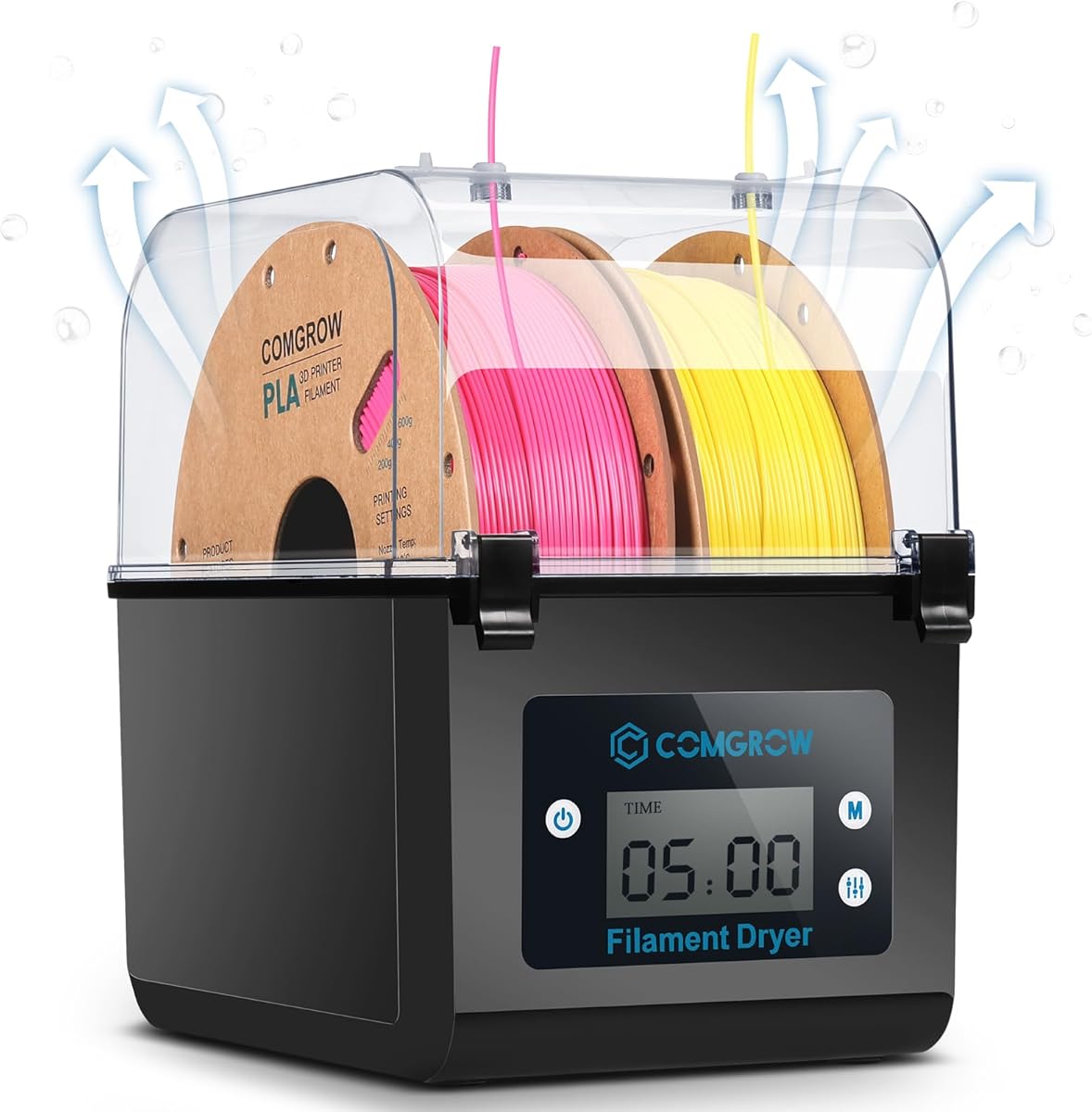



The Comgrow 3D Printer Filament Dryer Box is a reliable starting point for hobbyists looking to dry their filament before or during printing. With a rating of 4.4 out of 5 stars, users appreciate its straightforward operation and ability to keep moisture at bay.
We may earn a commission when you buy through this link, at no additional cost to you.
Its standout quality is the sealed design paired with a simple touch interface. The adjustable temperature range covers common materials like PLA and PETG effectively. The internal heating helps prevent clogs and stringing caused by damp filament.
While the maximum temperature of 50 degrees Celsius is lower than some advanced units, it is sufficient for most standard materials. The capacity of two spools is also smaller than larger commercial options, which may limit high volume users.
This dryer is ideal for beginners or those with limited workspace who need a basic solution. Its combination of usability and reasonable performance makes it a strong recommendation for entry level printing setups.
The LCD screen and touch buttons allow for quick settings without navigating complex menus.
Silicone cable sheaths and snap buttons help maintain a dry internal environment during use.
We may earn a commission when you buy through this link, at no additional cost to you.
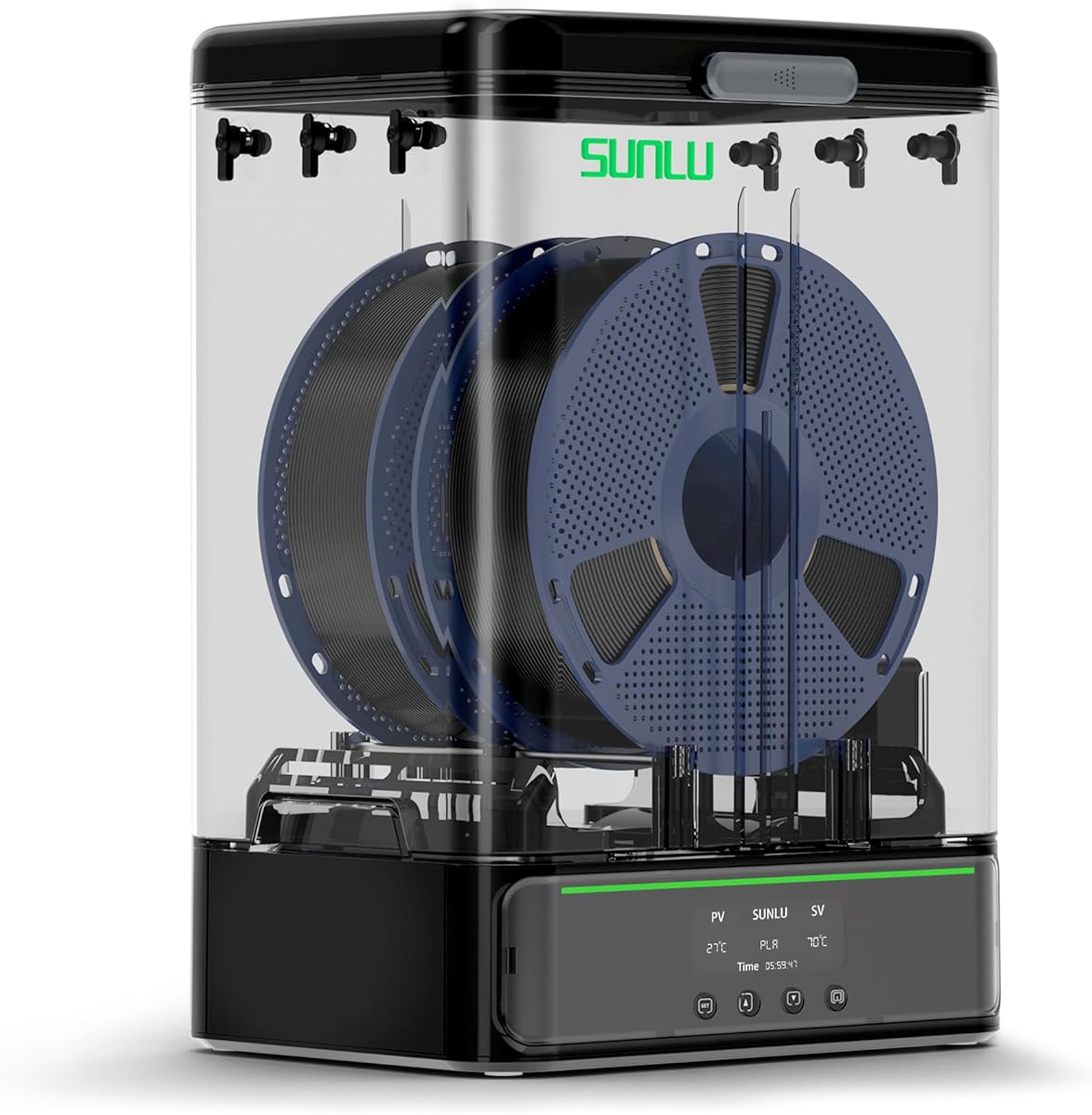
The SUNLU Filament Dryer Box 2026 Upgrade offers a cost-effective way to maintain dry filament. With a rating of 4.3 out of 5 stars, it is praised for adding a fan to speed up moisture removal compared to passive heating units.
We may earn a commission when you buy through this link, at no additional cost to you.
Its fan design helps circulate air, which can reduce drying times for wet spools. The temperature range extends up to 55 degrees Celsius, accommodating a variety of materials beyond just PLA. The LCD screen provides clear visibility of time and humidity.
Although the build is functional, some users might find it basic compared to more robust units. The fan can introduce a slight hum, though this is often acceptable given the budget-friendly price point and performance benefits.
This model is best for cost-conscious makers who want efficient drying without breaking the bank. Its balance of features and affordability makes it a top contender for general home use.
The upgraded fan helps expel excess moisture faster than standard heating boxes.
Buttons on the side allow for intuitive adjustments of time and temperature.
We may earn a commission when you buy through this link, at no additional cost to you.
The Creality Filament Dryer Box 4 Spools is designed for users who need to dry multiple spools at once. Rated 4.6 out of 5 stars, it features dual heating chambers that significantly reduce drying time compared to single chamber models.
We may earn a commission when you buy through this link, at no additional cost to you.
Its dual heating system allows for high temperatures up to 85 degrees Celsius, making it suitable for advanced materials like ABS and PC. The spacious interior fits four standard spools, which is ideal for long printing sessions or multi-material workflows.
While the size is larger than single spool units, the efficiency gains often justify the space. The touch UI offers precise control over drying scenes, ensuring optimal results for various filament types without manual guesswork.
This unit is recommended for advanced hobbyists or small shops handling high volume jobs. Its robust features and capacity make it a reliable workhorse for consistent high quality printing.
Two independent heaters allow for faster moisture removal from multiple spools simultaneously.
Capable of reaching 85 degrees, it handles engineering materials that need higher heat.
We may earn a commission when you buy through this link, at no additional cost to you.
The SUNLU S4 3D Printer Filament Dryer is a powerhouse designed for serious users needing maximum flexibility. With a rating of 4.5 out of 5 stars, it stands out for its ability to handle large spools and multiple outputs simultaneously.
We may earn a commission when you buy through this link, at no additional cost to you.
Its 350W PTC heater ensures rapid and consistent heating across the entire chamber. The eight exit holes allow for feeding multiple printers from one unit, while the large interior accommodates 3kg spools often found in industrial settings.
The unit is physically large and heavy, requiring significant space on a workbench. However, for users managing multiple machines or large spools, this capacity is essential. The fan system ensures even heat distribution to prevent hot spots.
This dryer is best suited for professional environments or serious makers with large fleets of printers. Its premium build and versatile connectivity options offer unmatched utility for high throughput scenarios.
Eight filament outlets make it possible to feed several printers from a single drying station.
The internal dimensions are optimized to hold larger 3kg rolls comfortably.
We may earn a commission when you buy through this link, at no additional cost to you.
The 2026 New Creality Space PI Filament Dryer Plus brings a modern interface to filament drying. Rated 4.4 out of 5 stars, it features a large 3.7-inch touch screen that makes selecting presets simple and intuitive.
We may earn a commission when you buy through this link, at no additional cost to you.
It supports twelve filament presets, saving users from having to remember specific temperature settings for different materials. The 360-degree hot air circulation ensures uniform drying, which helps prevent inconsistent print quality.
While the capacity is modest compared to multi spool units, it works well for typical users. The humidity monitor adds an extra layer of control, ensuring the internal environment stays optimal for sensitive materials.
This dryer is ideal for those who prefer a digital, app-like experience on their hardware. The ease of use and smart features make it a compelling choice for modern printing setups.
One button settings for common materials like PLA and ABS simplify the drying process.
The screen offers clear visibility and easy toggling between Celsius and Fahrenheit.
We may earn a commission when you buy through this link, at no additional cost to you.
The Polymaker Filament Dryer & Storage Box combines drying with long term storage solutions. With a rating of 4.3 out of 5 stars, it is favored for its ability to maintain dry conditions even after the drying cycle is complete.
We may earn a commission when you buy through this link, at no additional cost to you.
It includes a hygrometer and desiccant support, which helps track and manage humidity levels inside the box. This dual approach ensures filament stays dry not just during drying but also during pauses between prints.
Some users may find the heating element less powerful than dedicated high temperature units. However, the focus on maintaining a stable environment makes it a reliable choice for hygroscopic materials like Nylon.
This model is best for users who value organized storage and need to prevent moisture re-absorption. Its all-in-one design reduces clutter and keeps filament ready for immediate use.
Built-in sensors help you track humidity accurately without external tools.
Transition from drying to storage without exposing filament to ambient air.
We may earn a commission when you buy through this link, at no additional cost to you.
The Creality 2026 New Upgrade Filament Dryer Box Pro offers a compact solution for reliable drying. Rated 4.3 out of 5 stars, it features internal thermal insulation that helps maintain consistent temperatures and reduces energy usage.
We may earn a commission when you buy through this link, at no additional cost to you.
Its knob control is straightforward, allowing quick adjustments to time and temperature. The built-in fan ensures air circulation, which prevents hot spots and ensures even drying across the spool.
While the maximum temperature is 65 degrees, it covers most common materials. The design is intended to be ready out of the box, minimizing setup time for users eager to start printing.
This dryer suits small workspaces where space is a premium. It provides a balance of performance and simplicity for hobbyists who need a dependable drying station.
A physical knob allows for quick changes without navigating menus or buttons.
Internal cotton helps maintain heat and protects external surfaces from getting too hot.
We may earn a commission when you buy through this link, at no additional cost to you.
The SUNLU S4 3D Printer Filament Dryer is built for heavy use with a focus on volume. With a rating of 4.6 out of 5 stars, it is noted for its powerful heating and multiple fans that keep temperatures consistent.
We may earn a commission when you buy through this link, at no additional cost to you.
Its capacity to hold four standard spools or one large 3kg spool makes it a top choice for production environments. The eight exit holes provide flexibility for routing filament to different machines.
The size and weight are significant, so placement requires planning. However, for users who need to dry large batches quickly, the efficiency and throughput justify the investment.
This dryer is ideal for professional settings where minimizing downtime is crucial. Its robust design and high capacity make it a reliable tool for sustained printing operations.
Three circulation fans ensure that heat is distributed evenly throughout the chamber.
Multiple holes allow for varied angles and easier filament routing during printing.
We may earn a commission when you buy through this link, at no additional cost to you.
The SUNLU 3KG Filament Dryer SP2 & Storage Box offers a seamless transition from drying to storage. Rated 4.4 out of 5 stars, it features a detachable base that can act as a sealed storage container after the drying cycle.
We may earn a commission when you buy through this link, at no additional cost to you.
Its heater reaches 70 degrees within 15 minutes, making it quick to prepare filament for immediate use. The sliding latch on the lid ensures a tight seal, protecting the spool from ambient humidity.
While the design is efficient, the box is bulky and requires adequate desk space. The integrated hygrometer helps users monitor conditions, ensuring the storage environment remains safe for sensitive materials.
This dryer is well suited for users who want an all-in-one solution without complex assembly. The combination of rapid heating and secure storage makes it a practical choice for daily use.
The heating element warms the chamber in just minutes to start drying quickly.
Lift the lid to use the base as a separate sealed storage box for spools.
We may earn a commission when you buy through this link, at no additional cost to you.
The SUNLU Filament Dryer S2 is a straightforward device designed for basic drying needs. With a rating of 4.3 out of 5 stars, it uses a spindle to ensure the filament rotates for even drying.
We may earn a commission when you buy through this link, at no additional cost to you.
Its simple interface and translucent lid make it easy to operate without technical complexity. The heater reaches 70 degrees, which is suitable for most standard materials used in hobbyist printing.
While it lacks advanced features like touch screens or presets, it remains effective for basic tasks. The capacity is standard, fitting typical 1kg spools without issue.
This dryer is best for users who want a no fuss tool. Its simplicity and affordability make it a solid choice for those who just need to keep their filament dry.
The built-in spindle turns the spool to ensure all sides get equal exposure.
Users can set time and temperature directly without complex menus or steps.
We may earn a commission when you buy through this link, at no additional cost to you.
Selecting the right filament dryer depends on your materials, volume, and workspace. Below are key factors to consider before making a decision.
The capacity of a filament dryer determines how many spools you can dry at once. Some models hold a single spool while others can hold multiple spools or large 3kg rolls. Consider how many active spools you typically use to determine the right size.
Choose a model that matches your typical workflow volume to avoid bottlenecks during multi spool printing sessions.
Different materials require different drying temperatures. PLA needs lower heat while engineering materials like ABS or Nylon may require higher heat to remove moisture effectively. Check the maximum temperature range of the dryer to ensure compatibility.
Ensure the unit can reach the highest temperature needed for your most demanding material to avoid incomplete drying.
Heating technology varies between units. Some use PTC heaters for rapid and safe heating while others use traditional pads. Fan assisted circulation can also speed up the drying process by moving hot air around the spool.
Opt for a unit with active air circulation and efficient heating to reduce drying time significantly.
Some dryers double as storage boxes with sealed lids to prevent moisture re-absorption. This feature is useful if you need to store filament between printing sessions without extra bags.
Look for models with tight seals and humidity monitoring if you want a combined solution for drying and storage.
User interfaces range from physical knobs to touch screens. A simple interface might be enough for basic use while a touch screen allows for preset profiles and detailed adjustments.
Choose an interface that you find intuitive so that setting up drying cycles becomes a quick and easy process.
The outlet design affects how easily filament can be fed into your printer. Units with multiple exit holes allow for better routing and compatibility with various printer positions.
Check if the outlet includes flexible tubing or sheaths to prevent friction and clogging during feeding.
Build quality influences durability and insulation. Models with thermal insulation cotton can maintain heat better and reduce external heat hazards.
Invest in a unit with sturdy construction to ensure it lasts through frequent and heavy use.
Noise can be a factor if your printer is located in a shared living space. Fans used for circulation add noise which might be distracting during quiet hours.
Consider models that balance fan speed with noise reduction if you plan to run the dryer during the day or night.
Start by placing your filament spool inside the dryer chamber ensuring it sits on the roller or holder. If using a dual chamber unit distribute spools evenly to maintain balanced airflow and heating.
Set the temperature and timer according to your material requirements. Most materials require between 45 and 70 degrees Celsius for several hours. Let the unit complete the cycle before using the filament to ensure thorough drying.
Regularly check the seals and outlets to prevent dust buildup. If your unit supports desiccant replace the packs periodically to maintain optimal humidity levels during storage periods.
Drying time varies by material moisture content and dryer model. Generally, 6 to 12 hours is sufficient for most standard materials. Use the real-time humidity monitor if available to verify when the internal environment is dry enough.
Yes, most filament dryers are designed to allow feeding during the drying process. Ensure the outlet is sealed properly around the filament to maintain the internal environment while you print.
PLA is hygroscopic but less so than other materials. If your PLA feels brittle or shows bubbling, drying it for a few hours can improve print quality. It is not always mandatory but recommended for best results.
ABS typically requires higher temperatures to remove absorbed moisture effectively. Most manufacturers recommend drying ABS at around 70 to 75 degrees Celsius. Check your specific filament brand recommendations for precision.
Keep the exterior clean with a dry cloth and avoid using liquids inside the unit. Clean the rollers and outlets regularly to prevent filament debris from building up and causing jams.
Yes, by keeping filament dry during and between prints, a dryer helps prevent degradation. This extends the usable life of the material and ensures consistent performance over time.
Selecting the right filament dryer can significantly improve your print quality and reduce waste from moisture related issues. Our top picks cover a range of needs from entry level to high volume production.
Prioritize features like temperature range and capacity based on your specific materials and workflow. A well chosen dryer will pay off in smoother prints and fewer failed jobs.
Remember to check current availability and pricing on retailer platforms as models may vary. Investing in a quality drying solution is a smart step for any serious 3D printing hobbyist.