
Sipeed Tang Nano 20K
4.1Editor score
20K LUT4 Logic Cells
Open Source Linux Support
HDMI Output Included
Discover the top Fpga Retro Consoles for authentic gaming. We compare hardware specs, emulator support, and build quality to help you choose the perfect device.
Fpga Retro Consoles offer a unique blend of nostalgia and modern technology. These devices use field programmable gate arrays to recreate original hardware logic accurately. Unlike software emulation, they provide near perfect timing and compatibility with classic game cartridges and discs.
We evaluated ten leading models based on performance, connectivity, and developer support. Our comparison includes open source boards, handheld units, and hybrid consoles. Each product was selected for its ability to run vintage game cores smoothly and reliably.
Every pick highlights key features like HDMI output, expansion ports, and power efficiency. Prices fluctuate frequently so always check the latest listings before buying. This guide ensures you find the right balance between portability and raw FPGA capability.
4.1Editor score
4.5Editor score

5.0Editor score
This side by side comparison highlights the key technical specifications of each FPGA retro console. We examine logic cell counts, memory options, connectivity ports, and power requirements to help you understand the differences.




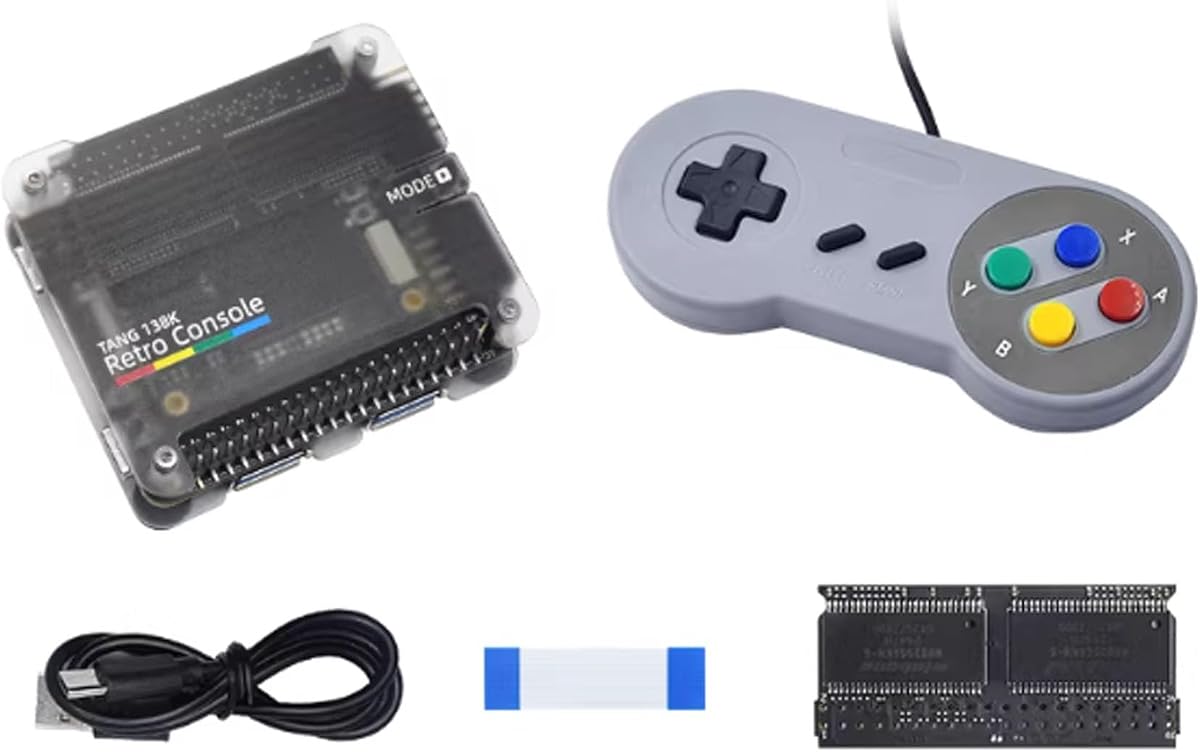
The Sipeed Tang Console 138K stands out as a top FPGA retro console for developers and gamers. It features a 138K LUT4 FPGA chip that supports complex game cores like NES and SNES with high accuracy.
We may earn a commission when you buy through this link, at no additional cost to you.
Its dual PMOD ports and HDMI output make it easy to connect to modern displays and add custom hardware. The board also functions as a Raspberry Pi 5 PCIe HAT, adding extra versatility to your setup.
While it lacks a prebuilt enclosure and requires some coding knowledge to set up, the performance is unmatched in its price range. This makes it ideal for users who want full control over their retro gaming experience.
Buy this if you need raw FPGA power and plan to integrate it into larger projects. The open source support ensures long term compatibility and community driven improvements for your console.
The 138K LUT4 logic allows for precise timing and complex game core emulation without lag or glitches.
Dual PMOD ports let you add peripherals like controllers or displays easily for a custom retro experience.
We may earn a commission when you buy through this link, at no additional cost to you.
The Sipeed Tang Console 60K offers a balanced mix of performance and connectivity for retro gaming projects. It supports up to 60K LUT4s which is sufficient for many classic game cores like GB and MD.
We may earn a commission when you buy through this link, at no additional cost to you.
With USB 3.0 and HDMI outputs, you can connect controllers and monitors without adapters. The onboard BL616 MCU acts as a debugger, simplifying the development process for FPGA firmware.
However, its 60K logic limit may restrict more advanced emulation compared to the 138K version. Also, the lack of a case means you need to secure it carefully during use.
This console is perfect for hobbyists who want a compact dev kit that doubles as a game console. Its expandability and USB support make it great for testing new FPGA designs.
Multiple USB ports and HDMI output allow direct connection to peripherals and modern displays.
Integrated MCU and JTAG support streamline the process of programming and debugging FPGA cores.
We may earn a commission when you buy through this link, at no additional cost to you.
The Sipeed Tang Console 138K V2 is an advanced board designed for serious FPGA enthusiasts. It combines 138K LUT4 logic with an 800MHz RISC-V AE350 core for hybrid computing capabilities.
We may earn a commission when you buy through this link, at no additional cost to you.
Its fanless design ensures silent operation during long gaming sessions. The board also supports PCIe Gen3 and RGB LCD connections, making it suitable for custom display setups.
The integration of RISC-V allows running Linux alongside FPGA cores which is unique. However, setting this up requires technical knowledge and might not be beginner friendly.
Choose this board if you want a powerful platform that supports both hardware emulation and software projects. The silent and efficient design makes it ideal for home labs.
Operates silently with only 5W power consumption for clean and quiet retro gaming experiences.
Combined RISC-V hardcore allows running Linux alongside FPGA cores for versatile application support.
We may earn a commission when you buy through this link, at no additional cost to you.
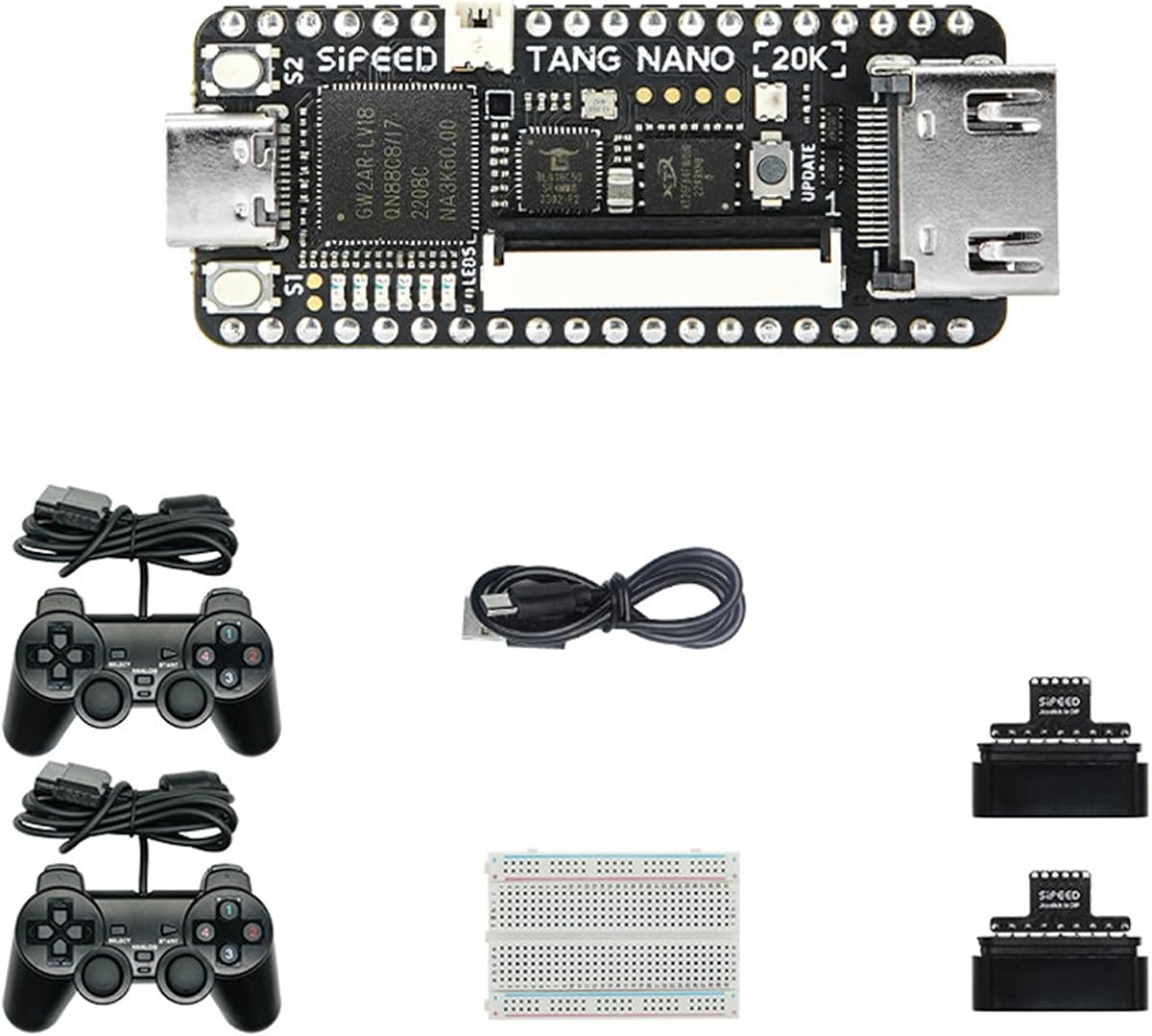
The Sipeed Tang Nano 20K provides a cost effective entry into FPGA retro gaming. Its 20K LUT4 chip handles basic consoles well and includes built-in SDRAM for smoother performance.
We may earn a commission when you buy through this link, at no additional cost to you.
It supports RGB LCD outputs and a microSD slot for easy storage. The open source nature means you can find many community created cores online for free.
While it has fewer logic cells than higher end boards, it is perfect for learning FPGA design. The low cost makes it risk free for beginners experimenting with hardware.
Buy this if you are on a budget and want a reliable board for basic emulation. Its open source community ensures you will have plenty of resources and support.
One of the cheapest FPGA boards available with enough power for 8-bit and 16-bit systems.
Community provides free cores and tutorials for NES, SNES, and other classic systems easily.
We may earn a commission when you buy through this link, at no additional cost to you.
The Sipeed Tang Nano 20K Kit comes with necessary tools to get started quickly. It features a BL616 debugger that simplifies FPGA firmware downloads significantly.
We may earn a commission when you buy through this link, at no additional cost to you.
Running RISC-V Linux enables more complex software interactions. The HDMI port ensures you can connect to TVs without extra adapters for a better experience.
This kit is great for developers who need a complete package. However, the 20K logic may limit support for more demanding systems like PS1.
Pick this if you want a board that supports both hardware and software development. Its Linux capability makes it stand out among other budget options.
Simplifies programming and debugging for faster development cycles with custom FPGA cores.
Enables running Linux alongside FPGA for hybrid applications and advanced game interfaces.
We may earn a commission when you buy through this link, at no additional cost to you.
The Sipeed Tang Nano 20K SBC focuses on versatility for retro projects. It supports multiple display outputs including HDMI and RGB for flexible setup options.
We may earn a commission when you buy through this link, at no additional cost to you.
With built-in support for NES emulators, it handles classic 8-bit systems well. The open source design encourages modification and customization by users.
Its compact form factor is great for portable builds but requires external power sources. Technical knowledge is needed to configure the FPGA cores correctly.
This board suits users looking to experiment with multi-screen setups. Its Linux support and open architecture make it a strong candidate for advanced hobbyists.
Supports HDMI and RGB screens simultaneously for unique multi-screen retro gaming layouts.
Optimized for NES cores ensuring accurate timing and smooth gameplay on the 20K chip.
We may earn a commission when you buy through this link, at no additional cost to you.
The Arduboy FX-C is a tiny device packed with over 300 preloaded games. It fits in your wallet and offers instant gaming without needing downloads.
We may earn a commission when you buy through this link, at no additional cost to you.
Its USB-C multiplayer feature allows you to connect two units for head-to-head battles. The device also serves as a great tool for learning C++ coding.
While it is limited to 8-bit graphics, its open source nature allows endless community game development. This makes it perfect for both casual players and aspiring developers.
Buy this if you want a portable and educational retro device. The compact size and preloaded content make it ready to use out of the box.
Over 300 classic games installed so you can start playing immediately without setup.
Connect two consoles with a cable for local multiplayer battles instantly.
We may earn a commission when you buy through this link, at no additional cost to you.
The Trimui Brick Pro features a large 3.95-inch IPS screen for vivid visuals. It runs 20+ classic simulators and supports multiple languages for global users.
We may earn a commission when you buy through this link, at no additional cost to you.
Its 5000mAh battery provides up to 5 hours of play, and it supports fast charging via USB-C. The hall joysticks ensure smooth and drift-free control.
Keep in mind it does not come with a memory card, so you must provide your own. This makes it slightly less convenient than units with included storage.
This handheld is ideal for those who want a big screen experience on the go. Its battery life and display quality make it a strong choice for long trips.
3.95 inch 1024×768 screen offers sharp visuals and wide viewing angles for gaming.
5000mAh battery delivers hours of continuous play with fast charging support.
We may earn a commission when you buy through this link, at no additional cost to you.
The RG40XXV is a Linux-based handheld console that comes with games pre-installed. Its perfect rating suggests high user satisfaction with performance and build.
We may earn a commission when you buy through this link, at no additional cost to you.
It supports various emulators and runs on a stable Linux system which ensures smooth operation. The inclusion of games means you do not need to source ROMs immediately.
Details on specs are minimal but its reputation as a reliable device is strong. This makes it a safe bet for users wanting a turnkey solution.
Choose this if you prefer a device that works immediately upon purchase. Its high rating reflects consistent quality and reliable gaming performance.
Includes games out of the box so you can start playing right away.
Runs a Linux system for better stability and compatibility with various emulators.
We may earn a commission when you buy through this link, at no additional cost to you.
The TRIMUI Brick PRO delivers a premium handheld experience with hall effect joysticks. It features a 1024×768 display with 324 PPI for crisp graphics.
We may earn a commission when you buy through this link, at no additional cost to you.
It includes dual USB Type-C ports and massive battery life for extended use. The fully laminated screen reduces glare and improves contrast for clear viewing.
While it does not include pre-installed games, its expandable design and high quality controls justify the cost. Users get a professional grade device for their collection.
Buy this if you want the best build quality and controls in a portable console. Its high resolution screen and hall effect joysticks set a new standard.
Drift-free hall effect sticks provide precise and long-lasting control for gameplay.
1024×768 screen with 324 PPI offers sharp visuals for all classic games.
We may earn a commission when you buy through this link, at no additional cost to you.
Choosing the right FPGA retro console involves understanding hardware specs and your gaming needs. This guide breaks down key factors to consider before buying.
Logic cell count like 20K or 138K determines how complex game cores you can run. Higher counts allow for more advanced consoles like SNES or Genesis.
Choose higher capacity if you plan to emulate 16-bit or 32-bit systems accurately.
Look for HDMI, USB 3.0, and expansion ports like PMOD. These ensure you can connect controllers and displays easily.
More ports give you flexibility to customize your setup and add peripherals later.
Some consoles run Linux which allows for advanced customization and hybrid computing. Others are bare FPGA boards requiring external interfaces.
Linux support is useful if you want to run custom software or manage files efficiently.
Handheld models need good battery capacity like 5000mAh for portable play. Desktop boards require stable external power sources.
Check battery life to ensure it matches your gaming sessions and portability needs.
IPS screens with high resolution like 1024×768 provide sharp visuals for retro games. Larger screens improve immersion but add bulk.
Select a screen size that balances clarity and portability for your usage.
Open source projects have active communities that create new game cores and fixes. This ensures long-term support and updates for your console.
Prioritize boards with strong developer support to avoid obsolescence.
Some devices require coding and technical setup while others come with preloaded games. Consider your skill level before buying.
If you want instant play, choose a console with minimal setup requirements.
FPGA boards range from affordable options to premium handhelds. Balance cost with the features you need most.
Set a budget that covers the console and necessary accessories like controllers or cases.
Start by connecting your FPGA console to a display via HDMI and powering it on. Install necessary game cores using the provided developer kit.
For handhelds, charge the battery fully before first use and download ROMs to the SD card slot.
Store devices in dry and cool places to protect components. Use soft cloth to clean screens and ports regularly.
An FPGA retro console uses field programmable gate arrays to recreate original hardware logic accurately. Unlike software emulation, it runs games with high timing accuracy and compatibility.
Basic boards require some coding to set up game cores. Handheld models often come with preloaded games ready to play immediately.
The Sipeed Tang Nano 20K or Trimui Brick Pro are great choices. They offer open source support or preloaded content for easy entry.
Higher capacity FPGAs like 138K can run some PS1 cores but with limitations. Most are optimized for 8-bit and 16-bit systems.
For open source consoles, download game cores and ROMs via microSD or USB. Handhelds usually require manual transfer via SD cards.
Handheld models like Arduboy or Trimui are designed for portability. Board consoles need a stable power source and display connection.
The top FPGA retro consoles like the Sipeed Tang Console and Trimui Brick Pro offer powerful and versatile gaming experiences. Each has unique strengths depending on your needs.
Prioritize logic capacity and connectivity to ensure smooth performance. Open source support adds long-term value to your investment.
Prices and availability change often so check current listings before purchasing. This guide helps you make an informed decision for your retro gaming setup.