
SABRENT 74 in 1 3.5 Inch Internal Flash Media Card Reader/Writer with USB Port (CR-USNT)
4.0Editor score
Supports 74 card types
Includes USB 2.0 port
Low cost entry option
Internal SATA card readers provide essential connectivity for desktop users who need reliable access to various memory card formats directly from their computer case.
We analyzed ten leading models based on interface speed, card slot variety, build quality, and ease of installation to create this definitive ranking for system builders.
Each selection highlights specific strengths and trade-offs to guide your purchase decision while noting that pricing and availability may fluctuate over time.
4.0Editor score
4.5Editor score

4.0Editor score
As an Amazon Associate we earn from qualifying purchases.
The following comparison table details the core specifications of each selected product to help you identify the model that best fits your specific desktop expansion needs.


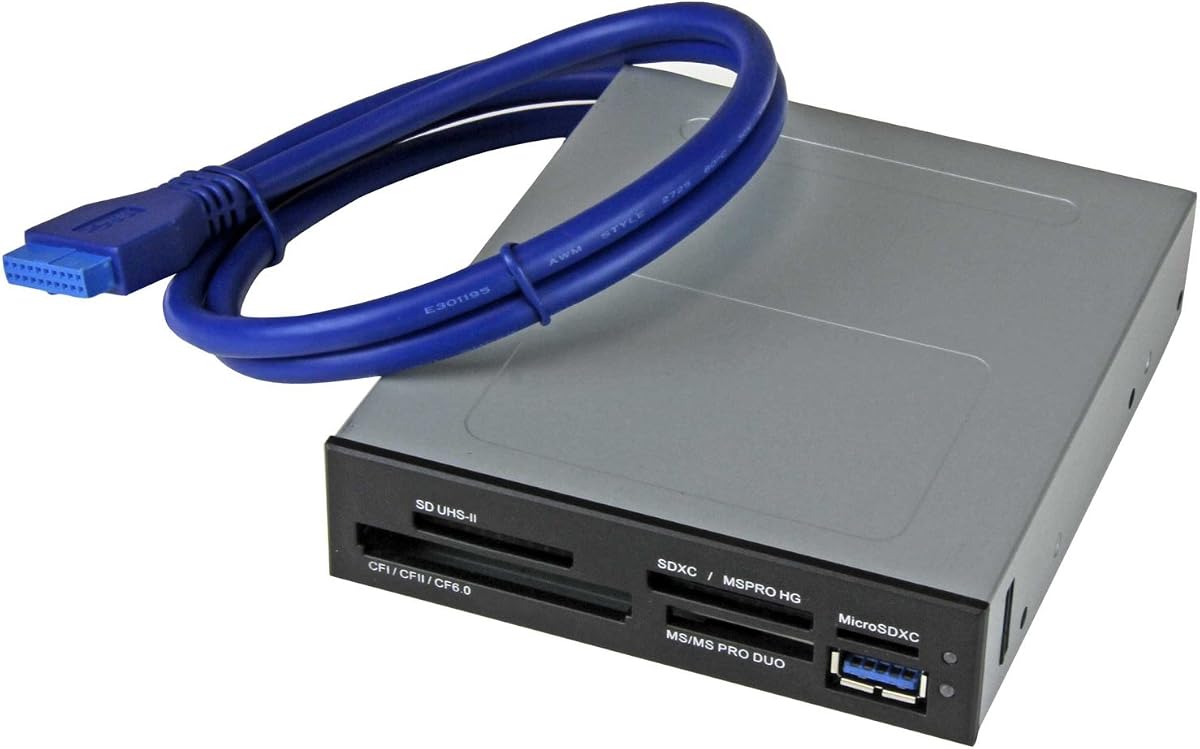
This StarTech internal card reader is designed for professional environments requiring reliable and fast memory card access directly through a desktop computer.
We may earn a commission when you buy through this link, at no additional cost to you.
It supports UHS-II cards and allows access to multiple card slots simultaneously which is crucial for users managing multiple projects at once.
The TAA compliance adds value for IT professionals who need to meet specific regulatory standards when purchasing computer peripherals and accessories.
Photographers and videographers should consider this model for its robust construction and ability to handle various media formats efficiently during workflow.
The TAA compliance ensures this device meets standards required for many government and enterprise procurement processes.
Simultaneous slot access lets you move files between different card types without needing to swap cards physically.
We may earn a commission when you buy through this link, at no additional cost to you.
The SABRENT CR-USNT offers an incredibly broad range of supported memory card types making it a versatile choice for general home users.
We may earn a commission when you buy through this link, at no additional cost to you.
While it utilizes older USB 2.0 technology its low cost and extensive format support make it an ideal entry point for casual storage needs.
The inclusion of an additional USB port adds convenience allowing you to plug in other small devices directly from the card reader unit.
This model is best suited for users who prioritize compatibility and cost over maximum data transfer speeds for large media files.
Supporting seventy-four different card types ensures you can access almost any legacy or modern memory card format you encounter.
The built-in USB port provides an additional connection point which can help reduce the need for external hubs.
We may earn a commission when you buy through this link, at no additional cost to you.
The Kingwin hub combines a card reader with multiple USB ports providing a comprehensive front panel solution for modern desktop setups.
We may earn a commission when you buy through this link, at no additional cost to you.
It features USB 3.0 and USB-C connectivity ensuring fast data rates for contemporary devices and memory cards that benefit from higher bandwidth.
The inclusion of an eSATA port adds further versatility allowing users to connect external storage drives directly to the front of their case.
This premium unit is perfect for tech enthusiasts who want to maximize the utility of their front drive bay beyond simple card reading.
The USB-C port ensures compatibility with newer devices that may no longer use traditional USB-A connectors.
Having multiple USB ports allows you to connect keyboard or mouse or peripherals directly from the front panel.
We may earn a commission when you buy through this link, at no additional cost to you.
This ACAGALA panel offers extensive connectivity including audio jacks which adds value for users who want multimedia access at the front.
We may earn a commission when you buy through this link, at no additional cost to you.
It supports USB 3.0 and eSATA interfaces ensuring that large file transfers are handled efficiently without bottlenecking system performance.
The panel fits standard 5.25 inch bays and includes a wide range of card slots to accommodate most common memory card formats.
Users seeking a dashboard style solution that handles data and audio simultaneously will find this unit provides significant functional value.
Integrated microphone and speaker ports allow convenient access for calls or listening without reaching behind the tower.
The combination of USB 3.0 and eSATA ensures versatile connectivity for both modern and legacy storage devices.
We may earn a commission when you buy through this link, at no additional cost to you.
The Rosewill RDCR-12001 provides a unique combination of memory card reading and hard drive docking for quick access to portable SSDs.
We may earn a commission when you buy through this link, at no additional cost to you.
Its hot swappable feature allows you to connect and disconnect 2.5 inch drives without opening the computer case or powering down the system.
While the USB connection is limited to version 2.0 the convenience of quick drive docking makes it useful for maintenance or temporary storage.
This tool is ideal for technicians who need to quickly access different drives without needing external enclosures or constant plugging and unplugging.
The enclosure allows you to hot swap drives easily which is great for backups or temporary data access.
Fits neatly into a drive bay while providing access to both cards and small form factor hard drives.
We may earn a commission when you buy through this link, at no additional cost to you.
The TCC-QL5E balances cost and performance by offering USB 3.0 speeds alongside standard card reading features for general desktop expansion.
We may earn a commission when you buy through this link, at no additional cost to you.
It supports five common card formats which covers the needs of most casual users who work with standard SD or microSD cards daily.
The presence of front audio jacks adds convenience for those who frequently use headphones or microphones connected directly to the PC.
This panel is a strong choice for users needing a straightforward upgrade to their front panel without spending on premium features.
USB 3.0 support ensures faster data transfers compared to older 2.0 standards found on many budget panels.
Access to audio ports on the front panel eliminates the need to reach behind the computer for connections.
We may earn a commission when you buy through this link, at no additional cost to you.
This internal reader features a mix of USB 3.0 and 3.1 ports providing flexibility for different generations of USB devices.
We may earn a commission when you buy through this link, at no additional cost to you.
It includes six card slots to handle multiple memory formats at once which is helpful for users managing various types of camera cards.
The LED indicator helps you monitor activity and power status which is useful when the case is closed or lights are dim.
This panel suits users who want a versatile front interface that can handle more than just a single card reader function.
The inclusion of a USB 3.1 port future proofs the panel for newer devices that require higher bandwidth speeds.
Having six slots allows simultaneous access to multiple cards reducing the need to constantly swap media during work.
We may earn a commission when you buy through this link, at no additional cost to you.
This media dashboard combines a USB hub with a card reader offering a consolidated solution for connecting multiple peripherals to your PC.
We may earn a commission when you buy through this link, at no additional cost to you.
It supports various card types including TF and SD which covers the needs of most content creators and photographers using standard storage.
The durable plastic construction and LED indicators provide basic feedback on power and drive activity for better user awareness.
PC builders looking for an all-in-one front panel to reduce clutter will find this unit offers good functional value for the price.
Combining a hub and card reader saves space and reduces the number of cables running to the front of the PC.
LED indicators for power and drive status help you confirm connections are active without looking at software tools.
We may earn a commission when you buy through this link, at no additional cost to you.
This PCIe card expands storage capabilities significantly by adding six SATA ports which is valuable for systems needing multiple hard drives.
We may earn a commission when you buy through this link, at no additional cost to you.
It utilizes the ASM1166 chip to ensure stability and compatibility across various storage devices without requiring complex driver installations.
Hot swap support allows you to connect and disconnect drives while the system is running which is ideal for NAS or backup setups.
While not a card reader this expansion card is a vital alternative for users who need massive internal storage flexibility instead.
Adding six SATA ports transforms a standard PC into a multi-drive workstation or NAS system easily.
The ASM1166 chip ensures high throughput and stability for connecting multiple high-capacity drives simultaneously.
We may earn a commission when you buy through this link, at no additional cost to you.
This hub fits a 3.5 inch bay making it perfect for cases that lack a 5.25 inch slot or have limited front panel space.
We may earn a commission when you buy through this link, at no additional cost to you.
It includes a USB-C port alongside USB-A options providing modern connectivity for newer devices and storage media.
The solid metal housing ensures durability and reliability compared to cheaper plastic alternatives found on many front panels.
Users with older cases seeking a simple upgrade to modern ports without major modifications will find this panel an excellent fit.
Designed for 3.5 inch bays this hub expands options for smaller cases that cannot fit standard 5.25 units.
Including USB-C ensures you can connect modern smartphones and drives directly to the front of your PC.
We may earn a commission when you buy through this link, at no additional cost to you.
Selecting the right internal card reader requires understanding interface speeds, bay sizes, and card compatibility to match your specific workflow needs.
The speed of the data transfer depends on the interface used with USB 3.0 and higher being significantly faster than 2.0 standards for large files.
Prioritize models with USB 3.0 or 3.1 ports if you frequently work with high-resolution photos or videos that require quick access.
Check your computer case to confirm whether it has a 3.5 inch or 5.25 inch drive bay available for the new device installation.
Most card readers are designed for 5.25 inch bays but some units specifically fit 3.5 inch spaces for compact setups.
Ensure the reader supports the specific card types you use such as SD, microSD, CF or XD to avoid needing adapters for every transfer.
Models supporting more formats like UHS-II offer future proofing as camera technology evolves towards faster and larger memory cards.
Many modern readers double as USB hubs allowing you to connect other peripherals like flash drives or mice to the front panel.
Consider models that include additional ports like USB-C to maximize the utility of your front panel connection space.
Metal housings generally offer better durability and heat dissipation compared to plastic versions which may crack under frequent use.
Look for units with sturdy mounting hardware and reliable internal connectors to ensure long-term stability inside the case.
Some front panels include audio jacks for speakers and microphones which can be convenient for media consumption during work.
Decide if having audio access at the front is necessary for your workflow before paying extra for this feature.
Installation requires connecting power and data headers to the motherboard so ensure your board has available slots for the chosen reader.
Choose products that come with necessary cables and clear instructions to simplify the installation process for DIY builders.
Verify that the card reader works with your specific operating system like Windows or macOS to ensure plug-and-play functionality without issues.
Most modern readers are OS independent but checking support pages prevents potential driver conflicts after installation.
Ensure your computer is powered off before connecting any internal cables to prevent electrical shorts or damage to components.
Install the reader into an empty drive bay and secure it with screws to prevent vibration or disconnection during system movement.
Clean the card slots periodically with compressed air to remove dust that could interfere with reading data from memory cards.
Most modern internal card readers are plug-and-play and use generic drivers included with Windows or macOS. However checking the manufacturers website can ensure optimal performance if you encounter issues.
No these sizes are physically different. You must purchase a reader specifically designed for 3.5 inch bays or use a conversion bracket if available for the specific model.
Check that both power and data cables are securely connected to the motherboard. Ensure the ports are enabled in BIOS and that the operating system has recognized the new hardware.
USB 3.1 generally offers higher data transfer rates than USB 3.0 which helps when moving large files quickly. Ensure your motherboard supports these speeds to see the benefit.
Yes you can use them but the speed will be limited to the USB 3.0 capabilities rather than the full speed of the UHS-II card itself.
Yes most systems allow safe removal of cards without shutting down. Always use the Eject option in your operating system before removing the card to prevent data corruption.
The StarTech 35FCREADBU3 leads our list with professional reliability and support for high-speed UHS-II cards making it the top choice for demanding users.
For those on a budget the SABRENT CR-USNT offers unmatched versatility with support for seventy-four different card types at a very accessible price point.
Always verify your case bay size and motherboard headers before purchasing to ensure a smooth installation and optimal performance from your new reader.