
H743 Flight Controller with 60A 32 bit ESC
Dual IMU Sensors
High Current ESC
Multiple Firmware Support
Explore our comprehensive guide comparing top flight controllers for hybrid VTOL and VTOL drones to find the perfect autopilot system for your unique aerial
Selecting the right flight controller for hybrid VTOL and VTOL drones requires balancing fixed wing aerodynamics with multirotor stability. This guide reviews ten top models offering reliable performance for complex flight transitions and autonomous missions.
We evaluated each product based on processor power, firmware compatibility, sensor redundancy, and ease of integration. Our comparison covers open source options like Ardupilot and PX4 alongside specialized boards designed for vertical takeoff aircraft configurations.
Each pick highlights specific strengths for different build types ranging from hobbyist kits to professional research platforms. Please note that pricing and availability may vary so always check current listings before purchasing your next flight controller component.

4.8Editor score
This side by side comparison highlights the key specifications and capabilities of each flight controller to help you make an informed decision for your VTOL project.



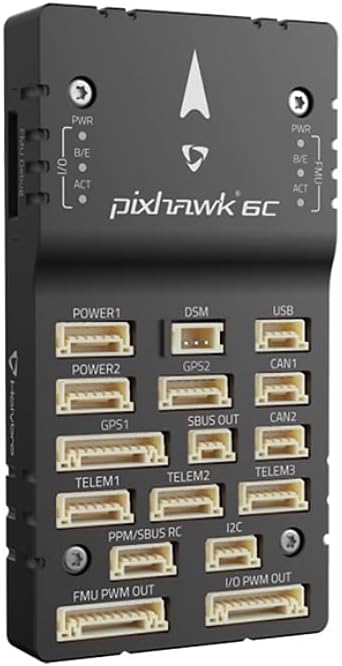
This flight controller offers a proven platform for complex autonomous missions with strong open source support. It receives high ratings for stability and versatility across different airframe types including VTOL configurations.
We may earn a commission when you buy through this link, at no additional cost to you.
The advanced configuration allows hobbyists and researchers to expand functionality through secondary development. Its rich function modules enable integration of diverse sensors and actuators for tailored flight control solutions.
While the processor is not the newest available, it remains highly capable for most standard autopilot tasks. Newbie friendly guides assist users in basic assembly ensuring a smoother start to DIY projects.
Ideal for pilots seeking a reliable foundation for custom automation or academic research. We recommend this for users who prioritize ecosystem stability over cutting edge raw processing power.
The independent open source architecture allows full access to code for custom modifications and feature additions tailored to specific VTOL transition logic.
Support for various microcomputers and sensors enables precise environmental monitoring which is critical for safe autonomous operations in changing weather conditions.
We may earn a commission when you buy through this link, at no additional cost to you.
This stack delivers high performance computing suitable for demanding flight dynamics including complex transition maneuvers. The dual IMU setup adds redundancy beneficial for maintaining stability during critical VTOL phases.
We may earn a commission when you buy through this link, at no additional cost to you.
With support for major firmware like PX4 and Ardupilot it can handle fixed wing multirotor hybrid logic effectively. The 60A ESC ensures motors receive consistent power without throttling during aggressive maneuvers.
The compact form factor makes integration into tighter airframes easier compared to bulkier standalone controllers. However users should verify pinouts carefully for custom wiring configurations.
Best for builders wanting top tier specs without the cost of premium professional grade hardware. It balances power and size well for advanced hobbyist or research VTOL projects.
The 32 bit 60A ESC provides precise motor control with burst current capabilities that prevent stalling under heavy load during takeoff transitions.
Compatible with PX4 and Ardupilot this stack allows users to leverage mature VTOL flight profiles for reliable vertical to horizontal flight transitions.
We may earn a commission when you buy through this link, at no additional cost to you.
Designed for mission critical applications this controller offers exceptional sensor reliability through redundant IMUs and active temperature control. The vibration isolation system ensures clean data for precise autonomous navigation.
We may earn a commission when you buy through this link, at no additional cost to you.
The high speed processor handles complex algorithms required for smooth VTOL transitions and advanced waypoint navigation. It comes pre installed with PX4 Autopilot ready for immediate deployment.
While the cost is higher it justifies the investment for commercial or research use cases where failure is not an option. The compact low profile design aids in aerodynamic integration.
Ideal for professionals requiring top tier stability and processing power. We recommend this for serious developers prioritizing sensor accuracy and system redundancy in harsh environments.
Dual redundant IMUs from Bosch and InvenSense provide backup data streams ensuring safe flight even if one sensor encounters noise or failure.
Integrated heating resistors maintain optimal sensor temperature which protects accuracy in cold weather conditions common during early morning VTOL operations.
We may earn a commission when you buy through this link, at no additional cost to you.
This controller supports up to 12S power supplies making it suitable for high voltage custom builds requiring significant thrust. The STM32F405 main controller provides solid performance for autonomous driving systems.
We may earn a commission when you buy through this link, at no additional cost to you.
It features comprehensive receiver support including CRSF and SBUS for flexible telemetry and control options. The barometer and magnetometer help maintain accurate altitude and heading data during flight.
The board size is compact which helps in reducing drag on fixed wing sections of VTOL designs. Users should account for the weight of cables when calculating total payload.
Best for specialized high voltage builds needing specific receiver protocols. It is a strong choice for developers working on roaming vehicles or large scale autonomous drones.
Support for 2 to 12S power supply allows integration with high voltage battery packs that enable longer endurance and higher thrust ratios.
Compatible with CRSF SBUS and PPM the board offers flexibility for connecting different receiver types without needing additional signal converters.
We may earn a commission when you buy through this link, at no additional cost to you.
This controller bridges traditional flight control with modern mobile interfaces allowing easy parameter adjustments via smartphone. It is tailored for fixed wing drones with VTOL capabilities to streamline setup.
We may earn a commission when you buy through this link, at no additional cost to you.
Ardupilot support ensures access to a vast array of autonomous features and flight profiles. The user friendly setup makes it accessible for beginners without sacrificing extensive customization options.
The compact design minimizes weight impact which is crucial for smaller airframes where payload capacity is limited. Users should ensure their app remains updated for best compatibility.
Recommended for hobbyists wanting simplified configuration without sacrificing power. It fits well for versatile builds requiring quick on the fly parameter changes during flight prep.
Users can monitor and adjust flight parameters directly via a smartphone app reducing the need for a laptop during field adjustments.
Specifically designed for fixed wing VTOL it includes pre tuned parameters to handle the transition from vertical lift to horizontal flight efficiently.
We may earn a commission when you buy through this link, at no additional cost to you.
This unit is explicitly designed to fit RC airplanes while also supporting drone configurations. The F405 processor offers a balance of performance and power efficiency suitable for long flights.
We may earn a commission when you buy through this link, at no additional cost to you.
Its flexibility allows pilots to use one controller across different projects simplifying inventory and configuration management. It provides a reliable foundation for hobbyist aeromodeling projects.
Given the limited detailed specs users should review community forums for specific integration advice with complex VTOL systems. It serves well for standard dual mode builds.
Best for those primarily flying RC planes who occasionally integrate drone functionality. It is a solid choice for lightweight builds where specific tuning is prioritized.
The controller supports both fixed wing and multirotor logic allowing users to switch between airplane and drone modes easily.
The F405 core provides sufficient speed for stabilization and GPS assisted flight without excessive power consumption during long missions.
We may earn a commission when you buy through this link, at no additional cost to you.
This classic board supports Vtail and VTOL configurations with dedicated self balancing modes. It is highly rated for ensuring stability during aerial photography and showcase flight skills.
We may earn a commission when you buy through this link, at no additional cost to you.
The interface is straightforward making it a good entry point for enthusiasts exploring flight control systems without complex menus. It adds excitement through acrobatic flight capabilities.
While advanced sensors are limited it provides reliable control for hobbyists focusing on stability rather than autonomy. The design ensures flexibility across different flight occasions.
Ideal for enthusiasts seeking customizable features and a proven platform for Vtail builds. It offers exceptional flying experience for those prioritizing manual control and simple setup.
Specifically tuned for Vtail aircraft it ensures precise servo mixing and stability during vertical takeoffs and landing phases.
The board encourages users to explore flight control systems through challenging maneuvers and customizable settings for advanced pilots.
We may earn a commission when you buy through this link, at no additional cost to you.
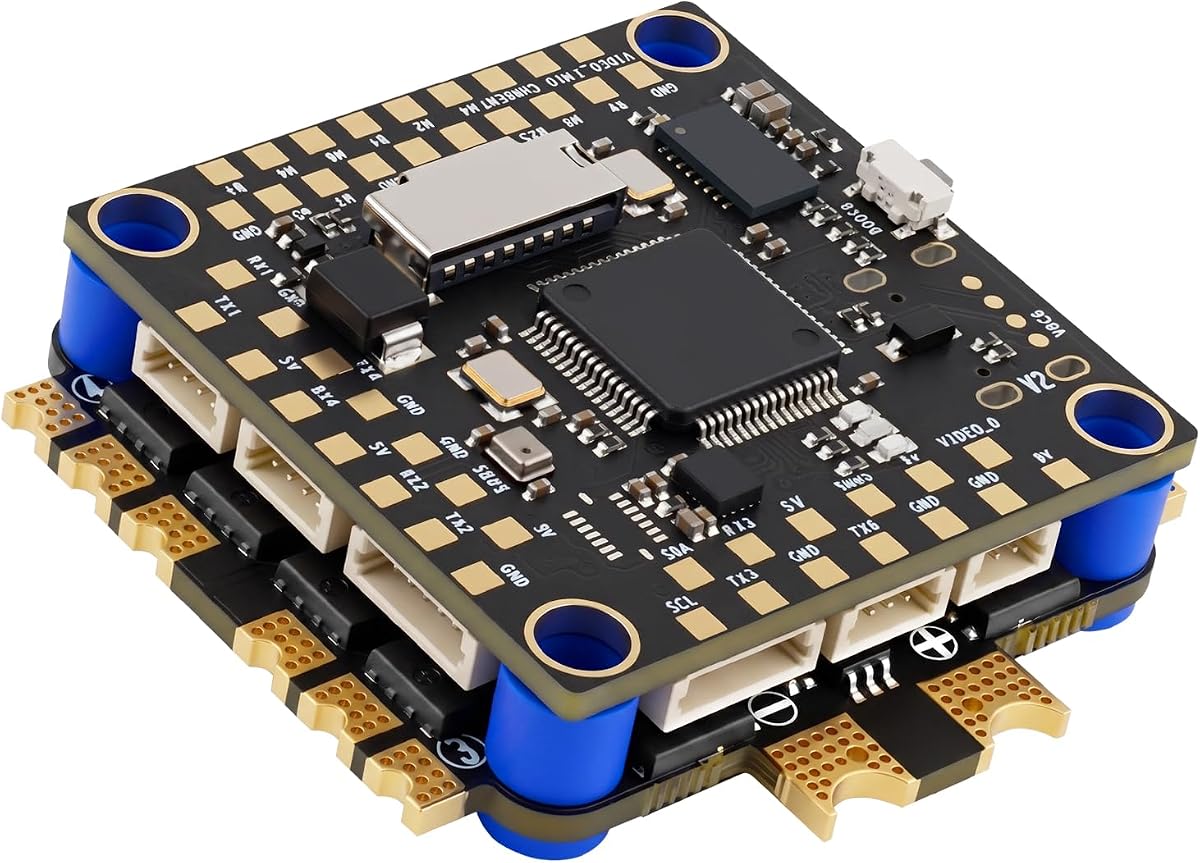
This stack brings high end H743 processing power to racing builds which can also support VTOL transitions with proper config. The dual IMU adds stability necessary for precise flight.
We may earn a commission when you buy through this link, at no additional cost to you.
Support for CAN bus enables cleaner wiring and expansion for GPS and other telemetry sensors. The 32 bit ESC delivers consistent motor response essential for quick transitions.
While it has lower user ratings its hardware features are competitive with more expensive options. Users should ensure firmware config matches their specific VTOL requirements carefully.
Recommended for builders wanting high speed processing at a competitive price. It serves well for complex builds needing CAN bus for sensor integration and reliability.
CAN bus support simplifies sensor wiring allowing robust telemetry and GPS integration without cluttering the main flight controller with multiple wires.
The 32 bit 60A ESC offers precise control signals reducing latency and improving responsiveness during dynamic VTOL maneuver transitions.
We may earn a commission when you buy through this link, at no additional cost to you.
The use of IMU 42688 sensors offers improved noise filtering which is beneficial for smoother flight in turbulent conditions. It supports O3 and O4 video interfaces for clear FPV feeds.
We may earn a commission when you buy through this link, at no additional cost to you.
While the ESC is 8bit it still supports standard racing voltage ranges for most hobby builds. The barometer ensures accurate altitude hold which helps during transition phases.
Its compatibility with major firmware makes it adaptable for various custom configurations. Users should check if 6S power is sufficient for their motor setup.
Best for pilots prioritizing sensor quality and video integration. It offers reliable performance for fixed wing VTOL setups needing precise altitude control.
The IMU 42688 sensors provide enhanced gyroscope and accelerometer data which reduces jitter and improves overall flight stability.
Compatible with O3 and O4 AIR interfaces it ensures seamless integration with modern HD FPV systems for clear visual feedback.
We may earn a commission when you buy through this link, at no additional cost to you.
This stack prioritizes weight savings with a lightweight ESC making it ideal for smaller VTOL builds where payload is limited. The H743 processor ensures fast response times for flight stabilization.
We may earn a commission when you buy through this link, at no additional cost to you.
It supports high frequency PWM and DSHOT protocols for precise throttle control during hover and forward flight. The stack is easy to integrate into frames requiring minimal space.
While the current rating is lower it suits lighter motors and smaller battery setups. Users with heavier payloads should consider the 60A version for adequate headroom.
Recommended for lightweight racing and agility builds needing modern processing in a small package. It offers flexibility for standard drone types without excessive mass.
The 21.5g total weight makes this stack ideal for small frames where reducing mass improves battery life and agility during VTOL transitions.
Support for DSHOT and ONESHOT protocols ensures precise throttle response which helps maintain steady hover during the transition phase.
We may earn a commission when you buy through this link, at no additional cost to you.
Choosing the right flight controller involves evaluating processor power, sensor redundancy, and firmware compatibility to ensure safe and efficient transitions between vertical and horizontal flight.
Modern processors like the STM32H743 or Cortex M7 provide the necessary computing power for complex VTOL transition logic and sensor fusion. Higher speeds allow more frequent control loops which improve responsiveness during dynamic maneuvers.
Look for processors with sufficient RAM and flash memory to run advanced autopilot software smoothly without lag or crashes.
Dual IMUs and barometers help filter noise and provide backup data if one sensor fails. This is critical for VTOL drones where sensor data drives the complex transition from vertical to horizontal flight.
Choose models with multiple IMU sources and integrated temperature control for consistent performance across different environmental conditions.
Ensure the controller supports firmware like PX4 or Ardupilot which offer robust VTOL flight modes. Open source options allow you to customize control laws and transition logic to your specific airframe.
Verify compatibility with your preferred firmware version to access the latest safety features and VTOL specific improvements.
A combined stack with a high current ESC simplifies wiring and reduces total weight. For VTOL builds ensure the ESC can handle the current demands of both hover and high speed forward flight.
Select an ESC rated for your motor and battery voltage to avoid overheating or stalling during high power transitions.
Multiple UART ports and CAN bus support allow you to connect GPS, telemetry, and other sensors without clutter. This is essential for autonomous operations where precise data feeds are required.
Prioritize controllers with abundant ports and standardized connectors to simplify installation and future upgrades.
Effective vibration isolation protects sensitive sensors from motor noise ensuring cleaner data for flight stabilization. This is particularly important for VTOL configurations where vibration sources are numerous.
Check if the board includes built-in dampers or if you need to add external rubber mounts to reduce high frequency vibrations.
Ensure the board supports the voltage of your battery pack. Some boards support higher voltage directly while others require separate BECs which add weight and complexity to the build.
Review the input voltage range to confirm it matches your power system and protects electronics from voltage spikes.
Standard 30×30 patterns simplify integration into most frames but ensure the controller dimensions fit your available space. Compact designs help maintain aerodynamic balance in fixed wing VTOL designs.
Measure your airframe carefully to confirm the board and ESC stack fit without interfering with other components or control linkages.
Begin by calibrating sensors and ESCs according to the manufacturer instructions using the chosen ground station software. Accurate calibration ensures smooth transitions and stable flight behavior.
Protect your controller from dust and moisture by using a conformal coating or waterproof casing. Clean the board gently with compressed air to prevent debris buildup in connector ports.
Regularly update firmware to the latest stable version to benefit from new VTOL flight modes and bug fixes. Always backup your configuration before flashing new updates to prevent settings loss.
PX4 and Ardupilot are the top choices for VTOL builds because they offer dedicated flight modes for transitioning between vertical and horizontal flight. Both have active communities and extensive documentation for customization and troubleshooting.
Yes vibration isolation is crucial to prevent motor noise from corrupting gyroscope and accelerometer data. Using rubber mounts or built-in isolation ensures cleaner sensor readings and more stable flight.
H743 offers higher processing speeds suitable for complex autonomous missions while F405 provides sufficient power for standard VTOL builds. Choose H743 if you plan heavy sensor integration or advanced computing tasks.
Basic FPV controllers work for manual VTOL flight but lack robust transition modes found in PX4 or Ardupilot. For autonomous transitions ensure the controller supports those specific firmware profiles and sensors.
A barometer measures atmospheric pressure to maintain consistent altitude during hover and forward flight. This is essential for stable vertical takeoffs and precise landing without constant pilot input.
Dual IMUs provide redundant sensor data so the flight controller can compare readings and filter noise. This improves accuracy and provides a backup if one IMU malfunctions during critical transitions.
CAN bus simplifies wiring by allowing multiple peripherals to connect to a single communication line. This reduces clutter and weight while maintaining reliable data transmission for telemetry and GPS.
Our top picks highlight the balance between processing power, sensor redundancy, and ease of use for VTOL builders. Whether you need budget friendly performance or professional grade reliability there is a model here to fit your project.
Prioritize firmware support and sensor quality to ensure safe transitions and autonomous capabilities. Always check compatibility with your specific airframe and motor setup before purchasing.
Remember that prices and stock change frequently so review current listings before finalizing your order. We hope this guide helps you build a reliable and efficient VTOL drone.