
Vogzone for MCX4121A-ACAT ConnectX-4 Lx
4.7Editor score
Mellanox ConnectX-4 Lx
Dual SFP28 ports
RDMA RoCE support
This expert guide compares the top 25GbE Network Cards for performance, compatibility, and value to help you choose the right network interface for your
High-speed networking is essential for modern data centers and storage systems. A reliable 25GbE Network Card ensures your infrastructure handles large data loads efficiently without bottlenecks or delays in critical operations.
We evaluated ten top-rated adapters based on controller performance, compatibility, and feature sets. This list covers options from Intel and Mellanox to specialized brands ensuring diverse use cases and budgets.
Each pick highlights key strengths and ideal users for that specific model. Note that availability and pricing fluctuate frequently so verify current stock before making your final purchasing decision today.
4.7Editor score

5.0Editor score

5.0Editor score
The following table provides a side-by-side overview of key specifications for each adapter to help you quickly identify the best fit for your specific server or workstation setup.


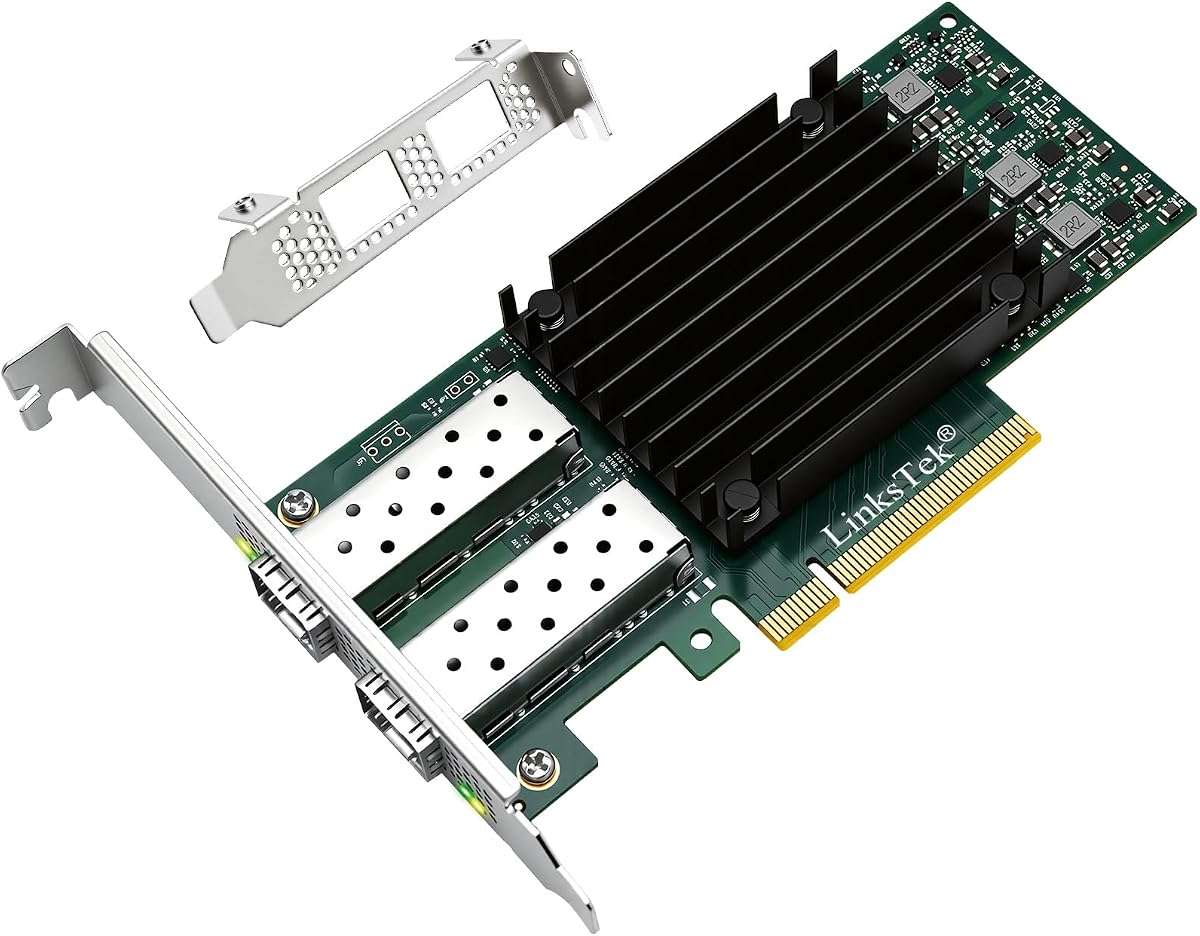


This two-port card is tailored for QNAP NAS environments needing reliable high-speed storage connectivity. It features an Intel E810 controller ensuring stable performance under heavy data loads.
We may earn a commission when you buy through this link, at no additional cost to you.
Support for FEC ensures data integrity during enterprise transfers. Port trunking allows combining both ports for up to 50Gbps aggregate speeds which accelerates file sharing significantly.
While primarily aimed at QNAP users the hardware is robust. The included low-profile bracket ensures fit in compact chassis making it versatile for different server setups.
Q NAP admins seeking seamless compatibility should choose this model. Its specific optimization reduces configuration time and ensures smooth integration into existing QTS or QuTS hero systems.
Designed for QNAP QTS and QuTS hero for easy installation and management without extra drivers.
Forward Error Correction ensures reliable data transfer essential for critical enterprise workloads and storage pools.
We may earn a commission when you buy through this link, at no additional cost to you.
This adapter is purpose-built for Synology systems ensuring maximum compatibility and stable operation within DSM environments. It provides two high-speed 25GbE ports for demanding storage applications.
We may earn a commission when you buy through this link, at no additional cost to you.
Features like port failover and load balancing enhance system reliability. It enables higher simultaneous throughput which is crucial for environments with multiple concurrent users accessing shared storage.
Compatibility is strictly tied to DSM version 7.1.1 Update 5 or above. Users must verify their current system version before purchase to ensure proper driver support and functionality.
Synology owners prioritizing seamless integration should consider this card. The five-year warranty offers peace of mind for long-term deployments despite the requirement for specific OS updates.
Engineered specifically for Synology NAS units to ensure seamless plug-and-play operation with DSM operating systems.
Supports higher simultaneous throughput allowing multiple users to access data quickly without performance degradation.
We may earn a commission when you buy through this link, at no additional cost to you.
This adapter offers an affordable alternative to original Mellanox cards. It features the ConnectX-4 Lx controller providing excellent performance for cloud and analytics workloads at a fraction of the cost.
We may earn a commission when you buy through this link, at no additional cost to you.
It supports RoCE v1 and v2 for low-latency RDMA which is vital for HPC and data analytics. The dual SFP28 ports allow flexible connection options with existing fiber or copper infrastructure.
Compatibility spans Windows Linux and VMware making it versatile for mixed environments. However users must install specific OFED or WinOF-2 drivers which adds setup steps compared to native adapters.
Budget-conscious professionals needing robust performance will find this compelling. Its cost-effective solution for Web 2.0 and database platforms without compromising on core hardware capabilities.
Delivers true hardware-based I/O isolation and unmatched scalability without the premium price tag of branded enterprise cards.
Built-in RDMA over Converged Ethernet support reduces CPU usage and latency for high-bandwidth data center applications.
We may earn a commission when you buy through this link, at no additional cost to you.
This card combines the Intel E810 controller with a modern PCIe 4.0 interface. It delivers reliable 25GbE throughput while ensuring compatibility with a broad range of server operating systems.
We may earn a commission when you buy through this link, at no additional cost to you.
Support for RDMA and PXE boot makes it suitable for enterprise deployments. It handles Windows Server Linux and VMware well providing a versatile option for virtualized environments.
Note that macOS is not supported on this specific model. Users on Mac systems will need to look at Sonnet adapters instead for similar performance and features.
System integrators needing flexibility across platforms should choose this card. Its robust driver support and modern interface ensure it remains viable for upcoming server hardware generations.
Leverages PCIe 4.0 x8 lanes for higher bandwidth potential compared to older PCIe 3.0 options available in this market.
Optimized for VMware ESXi and Windows Server ensuring efficient packet processing for virtual machine network traffic.
We may earn a commission when you buy through this link, at no additional cost to you.
This adapter offers a cost-effective solution for virtualization using the Mellanox ConnectX-4 Lx EN controller. It supports advanced overlay networks like NVGRE and VXLAN which are crucial for modern cloud deployments.
We may earn a commission when you buy through this link, at no additional cost to you.
The Intel over RoCE feature offloads data transfer operations from the host CPU. This improves overall server performance especially in storage-heavy environments requiring high throughput and low latency.
Compatibility includes Windows Server Linux and FreeBSD providing wide flexibility. However it is designed as a drop-in alternative to MCX4121A-ACAT which means users should ensure drivers are ready.
Virtualization admins seeking scalable network solutions will appreciate this card. Its ability to handle large virtual I/O pipelines efficiently makes it a strong contender for private cloud setups.
Supports NVGRE VXLAN and GENEVE protocols enabling flexible network segmentation and management in virtualized environments.
Provides a flexible and cost-effective Ethernet solution for data analytics and storage platforms without enterprise pricing.
We may earn a commission when you buy through this link, at no additional cost to you.
This adapter represents the gold standard for enterprise server connectivity. It uses the Intel E810 controller with extensive hardware offloads ensuring maximum efficiency for virtualized applications and network functions.
We may earn a commission when you buy through this link, at no additional cost to you.
Features like Adaptive link establishment and Data Plane Development Kit support allow fine-tuning for specific workloads. The Dynamic Device Personalization enables increased packet processing efficiency for NFV and Cloud deployments.
While it is priced higher than third-party options the reliability is unmatched. Intel's Flow Director ensures application traffic steering is accurate and consistent under heavy network loads.
Mission-critical enterprise environments should prioritize this model. Its extensive compliance and performance features ensure stable operation in demanding scenarios where downtime is not an option.
Optimized for small packet performance and efficient processing which is essential for network appliances and virtualization.
Offloads VXLAN GENEVE and MPLS processing from the CPU freeing resources for user applications.
We may earn a commission when you buy through this link, at no additional cost to you.
This adapter follows the Open Compute Project 3.0 standard designed for modern server designs. It features the Intel E810-XXVAM2 controller delivering stable throughput and intelligent traffic management out of the box.
We may earn a commission when you buy through this link, at no additional cost to you.
Flexible Port Partitioning allows administrators to divide bandwidth dynamically between ports. This is useful for scenarios requiring isolated network segments on a single physical card without additional hardware.
It supports RDMA and iWARP which are critical for storage over Ethernet. The OCP form factor ensures it fits seamlessly into compatible motherboards without requiring standard PCIe slots.
Data center operators using OCP hardware should choose this card. Its design minimizes latency and maximizes throughput while adhering to open standards for interoperability and ease of service.
Adheres to Open Compute Project 3.0 specifications ensuring compatibility with modern server platforms and racks.
On-chip QoS and traffic management features help prioritize critical workloads and optimize network utilization.
We may earn a commission when you buy through this link, at no additional cost to you.
This unique adapter adds dual 25GbE connectivity to Thunderbolt equipped computers. It is ideal for Mac users needing high-speed access to shared storage for media production workflows.
We may earn a commission when you buy through this link, at no additional cost to you.
It includes two optical transceivers and a Thunderbolt cable for immediate deployment. This saves significant costs and time compared to buying cables separately which is crucial for professionals starting fresh.
The Thunderbolt 5 interface ensures full bandwidth is available for both ports. It supports up to 15W power delivery allowing you to charge peripherals while maintaining high-speed network connectivity.
Media creators and Mac professionals should choose this adapter. Its seamless integration and included optics make it the premium choice for creative studios and high-performance workstations.
Comes with two 25GBASE-SR SFP28 transceivers allowing immediate use with fiber infrastructure without extra purchases.
Delivers full bandwidth for both ports simultaneously ensuring high performance for shared storage and video editing.
We may earn a commission when you buy through this link, at no additional cost to you.
This adapter provides a powerful way to add optical 25GbE to systems with PCIe slots. It is designed for Mac users specifically compatible with various operating systems and expansion enclosures.
We may earn a commission when you buy through this link, at no additional cost to you.
It includes high-performance SFP28 transceivers enabling immediate deployment. Backward compatibility with 10GbE allows easy integration into existing infrastructure while preparing for future upgrades.
Note that macOS 15.3.1 and 15.4 are currently unsupported due to system updates. Users should check Sonnet compatibility lists to ensure their OS version is supported before purchase.
Mac users needing optical connectivity will find this reliable. Its inclusion of optics ensures you have everything needed for fiber connections without searching for separate components.
Works well with Sonnet Thunderbolt expansion systems to add networking to computers lacking internal PCIe slots.
Includes two 25GBASE-SR SFP28 transceivers for immediate deployment on compatible fiber networks.
We may earn a commission when you buy through this link, at no additional cost to you.
This card uses the ConnectX-5 EN which offers advanced application offloads for cloud and storage. It supports 25GbE speeds with RDMA capabilities essential for high-performance data center environments.
We may earn a commission when you buy through this link, at no additional cost to you.
It provides intelligent RDMA-enabled capabilities that offload tasks from the host CPU. This ensures higher efficiency for Telco platforms and Web 2.0 applications needing minimal latency.
While it is an older generation compared to ConnectX-6 it remains reliable. Users should verify their motherboard supports PCIe 3.0 x8 for optimal performance and stability during operation.
Data center admins upgrading legacy systems should consider this option. Its robust RDMA support ensures efficient data transfer for virtualization and storage without requiring a full hardware overhaul.
Provides intelligent RDMA and application offloads that are essential for Web 2.0 and Telco platforms.
The ConnectX-5 EN delivers high performance for storage and cloud workloads with proven reliability.
We may earn a commission when you buy through this link, at no additional cost to you.
Selecting the right 25GbE Network Card involves evaluating performance, compatibility, and specific feature requirements for your server environment. This guide outlines key factors to consider.
The network controller dictates performance features and driver support. Intel E810 and Mellanox ConnectX are the most common reliable options. Ensure the controller matches your workload needs for virtualization or raw storage throughput.
Always choose a controller with robust enterprise features like RDMA and hardware offloads.
Most 25GbE cards use PCIe 3.0 x8 which provides sufficient bandwidth. However newer models may offer PCIe 4.0 which ensures future readiness for higher bandwidth upgrades.
Verify your motherboard slot generation to ensure compatibility and maximum performance.
Cards come in low-profile or full-height brackets to fit different chassis. If you have limited rack space ensure the card matches your server or desktop case dimensions.
Check bracket specifications to avoid installation issues during deployment.
Verify driver support for your operating system. While most support Windows and Linux Mac compatibility is rare and often restricted to specific Sonnet models.
Check official vendor compatibility lists before purchasing to avoid driver conflicts.
SFP28 is the standard connector for 25GbE allowing fiber or DAC connections. Ensure you purchase compatible transceivers or DACs as they are often not included.
Confirm connector type to match your existing cabling infrastructure.
RDMA is critical for reducing CPU overhead in storage and cloud applications. Look for cards supporting RoCE or iWARP if latency is a priority.
Enable RDMA features if your workload benefits from direct memory access.
Enterprise cards often come with 5-year warranties offering protection against defects. Third-party adapters may have shorter warranties so check vendor policies before buying.
Prioritize brands with strong support records for critical server infrastructure.
Features like SR-IOV and VXLAN offloads are essential for virtual machines. Ensure the card supports these if you run multiple VMs on a single host.
Check virtualization compatibility to maximize resource efficiency.
Install the card in a free PCIe slot ensuring it is seated securely. Attach the included bracket to match your chassis requirements to prevent physical stress.
Install the latest drivers from the manufacturer before connecting network cables. Verify OS recognition in device manager to ensure the adapter is functioning correctly.
Use high-quality DAC or fiber cables rated for 25GbE. Avoid excessive bending to prevent signal loss and ensure consistent performance over time.
Yes most 25GbE cards are backward compatible with 10GbE and 1GbE switches. They can negotiate lower speeds if necessary allowing seamless integration into existing networks.
Most do not include modules. Sonnet adapters are an exception and include optics. You must purchase compatible SFP28 transceivers or DAC cables separately.
Each port supports up to 25Gbps. Dual port cards can provide up to 50Gbps aggregate bandwidth via port trunking or aggregation depending on the configuration.
You need SFP28 DAC or optical cables. Ensure cables are rated for 25GbE and meet MSA specifications to avoid link failures or performance issues.
These cards are designed for servers and workstations not consumer gaming. Most consumer motherboards lack PCIe lanes and routers rarely support 25GbE speeds directly.
Most enterprise cards offer full Linux support with OFED or native drivers. Check the manufacturer site for kernel version compatibility before installing on Linux systems.
The Intel XXV710-DA2 offers top-tier enterprise performance while the Vogzone MCX4121A-ACAT provides exceptional value. For Mac users Sonnet adapters remain the primary reliable choice for connectivity.
Prioritize controller performance and OS compatibility when selecting a card. Ensure your server has the necessary PCIe slots and power supply before finalizing your purchase.
Prices and availability change frequently so verify current stock before ordering. Check vendor compatibility lists to ensure the selected model works with your specific hardware and OS version.